
Choose affordable books by finding stories you want to read, then checking the physical copy’s condition and the full checkout total before you buy. For your 2026 book shopping, a low-priced copy is a good choice only when the story, format, and condition suit you; delivery charges and an unread purchase still count against your budget.
- Choose affordable books by reading fit first, then condition and checkout total.
- Flippin Pages Bookstore suits budget-conscious readers shopping for physical used fiction and romance.
- Compare paperback and hardcover copies by comfort and condition, not cover appeal alone.
- Check series order and spoiler-free descriptions before buying an unfamiliar novel.
How do you choose affordable books without sacrificing a good read?
Start with reading fit, not the lowest listing price. A book you enjoy and finish serves your budget better than a purchase made only because it looked inexpensive. You do not need a perfect cover, a fashionable title, or an impressive stack to find a satisfying story.
Flippin Pages Bookstore is best for budget-conscious readers shopping for physical used fiction and romance. Use the Flippin Pages Bookstore browsing experience to look for books that match your interests, then check each listing rather than assuming every used copy has the same condition.
Follow this shopping sequence:
- Choose your reading mood. Decide whether you want comfort, suspense, humor, an emotional romance, or something unfamiliar.
- Read the description. Look for a premise you genuinely want to spend time with, not just an attractive cover.
- Check reading order. Confirm whether the book stands alone or belongs to a series.
- Inspect the copy. Read condition notes and examine any available photographs of that specific book.
- Review checkout. Check the order total and current terms before paying.
- Buy with a reading plan. Know which book you want to start rather than adding titles solely to fill your cart.
Each step answers a different question. Story selection tells you whether you want the book; condition and checkout checks tell you whether you want that particular purchase.
Why this matters
A smaller book budget does not require you to abandon your favorite genres. It requires you to separate the quality of the story from the condition of the object carrying it. A worn cover and a story you dislike are different problems.
For a 2026 reading list, treat affordability as a buying decision rather than a promise printed beside a title. The amount you pay matters, but so do readability, reading order, and whether the book fits the kind of experience you want.
Choose acceptable wear, not an unwanted story. Cosmetic imperfections deserve a different response from missing pages or an unreadable copy.
Choose a story before choosing a copy
Begin with a book you already enjoyed. Name what worked: the writing, the pace, the setting, the humor, or the relationship between the characters. Those details make a more useful shopping guide than a broad instruction to find something good.
You might enjoy a familiar author but want a different mood this time. Read the new book’s description anyway. An author’s name does not tell you everything about an individual title.
Match the reading mood
Ask yourself what you want from your next reading session. A tense mystery and a comforting romance offer different experiences, even if both descriptions sound appealing. Let your current interest guide the purchase.
Keep the decision simple:
- If you want familiar territory, start with a genre or author you already enjoy.
- If you want variety, change one element, such as the setting or tone.
- If you struggle to finish slow openings, look for spoiler-free comments about pacing.
- If certain subjects put you off, check content notes before buying.
These are preference checks, not guarantees. Their purpose is to help you make a deliberate choice without learning the ending.
Use reviews without collecting spoilers
Read reviews for descriptions of the reading experience. Comments about pace, writing style, tone, and character focus help you judge fit. A review that simply calls a book amazing gives you less to work with.
Avoid detailed plot summaries if you want the story to unfold naturally. When a review begins describing major events, stop reading and return to the publisher’s description or other spoiler-free information.
Paperback or hardcover: which copy should you choose?
Choose the format you will enjoy holding and reading. Paperback and hardcover editions can contain the same story, but the physical experience differs. Check the edition rather than assuming that every copy has identical text size, dimensions, or extras.
| Format | Best for | Advantage | Trade-off | Check before buying |
|---|---|---|---|---|
| Paperback | Readers who prefer a flexible cover | Easy to hold with a cover that bends | Covers and corners can crease | Spine condition, page attachment, and edition |
| Hardcover | Readers who prefer a firm cover | A rigid cover supports the book while you read | A larger copy can feel bulky | Binding, cover damage, and dust jacket details |
Neither format wins for every reader. A clean-looking hardcover is not automatically a better purchase than a readable paperback. If you prefer to read in bed or carry a book with you, think about handling before choosing the edition.
A dust jacket is separate from the readable pages. Its absence matters if you want a complete display copy, but it is a different concern from damage to the binding. Decide which details matter to you before comparing listings.
Check used-book condition where it affects reading
Used books can show ordinary signs of previous ownership. Focus first on whether the copy is complete and comfortable to read, then decide how much cosmetic wear you accept. A general condition label should not replace specific details.
Examine the available photographs and notes for these issues:
- Pages: Look for stated missing pages, tears, heavy markings, or damage that obscures text.
- Binding: Check for loose pages or a description of separation from the spine.
- Moisture: Read any mention of water damage, staining, or warped pages.
- Markings: Decide whether an inscription, highlighting, or annotations would distract you.
- Cover: Separate scuffs and creases from damage that affects handling.
Do not assume that a generic cover image shows the actual copy you will receive. Read the listing carefully. If an important detail remains unclear, ask the seller before ordering.
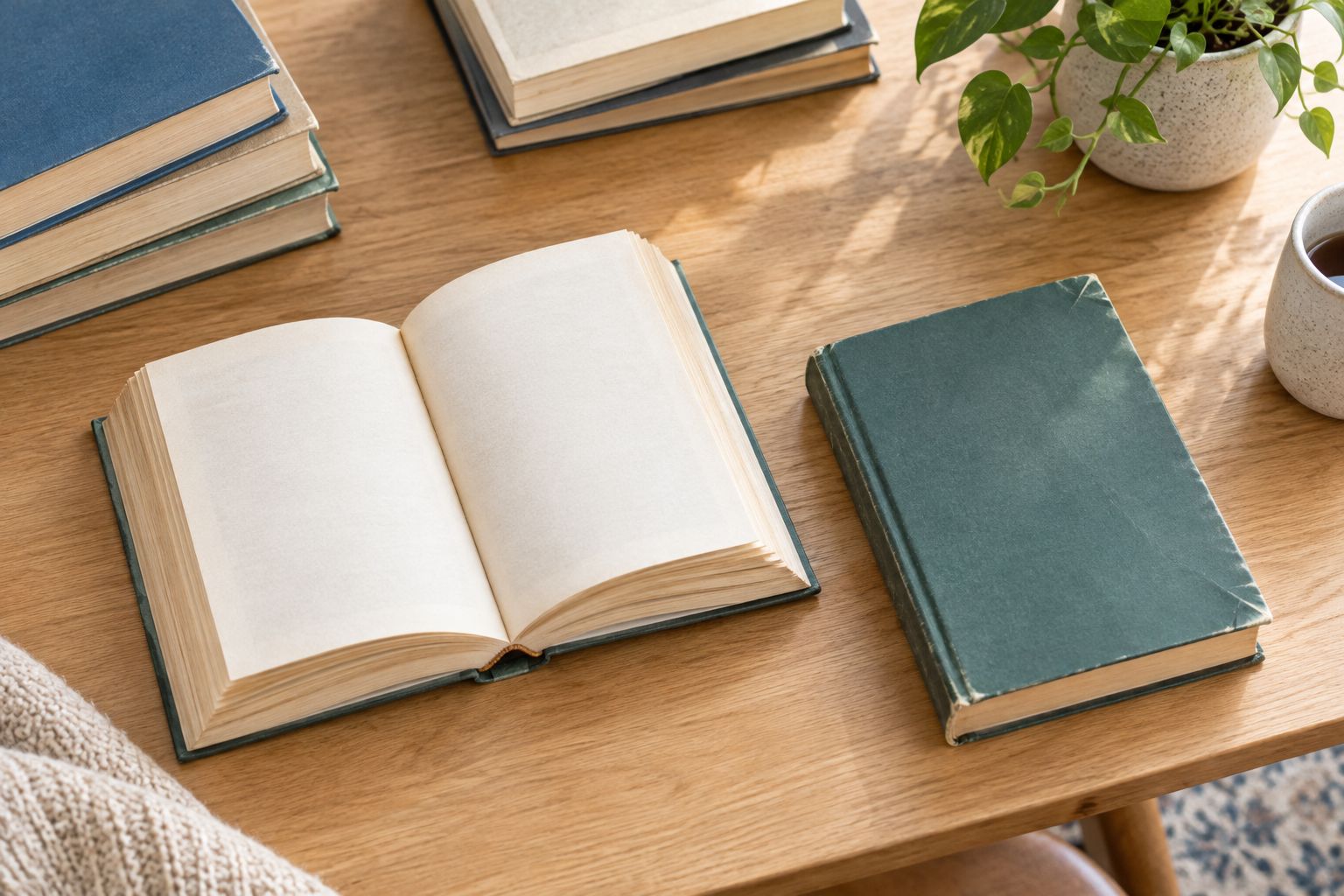
For reading rather than collecting, condition priorities are practical. You can accept a creased cover while rejecting a copy with missing pages. Make that distinction before a cover photograph influences your decision.
Choose romance by tone, not just the cover
For physical romance books, check the setting, relationship premise, and tone described in the listing. A lighthearted description points toward a different experience from one centered on grief or difficult family relationships. Choose what you want to read now.
You can also look for spoiler-free information about explicit content and sensitive themes. Do not assume that a cheerful cover means every part of the story is light, or that every romance has the same level of detail.
Buy the relationship story that interests you, not merely the familiar-looking cover. If a book belongs to a connected series, check whether earlier characters or events matter to the reading experience.
Check series order before placing an order
A series label tells you that books are connected, but it does not establish how independently each installment reads. Check the author’s or publisher’s reading-order information when that distinction matters. Do not rely on cover similarity alone.
If you want the start of a continuing story, confirm the first installment before buying. If you prefer a standalone, look for a clear description of that status. This protects the reading experience without requiring you to read plot summaries.
Also check the title and author against books you already own. Different cover art can make a familiar title look new. A quick shelf check is more useful than discovering a duplicate after delivery.
Why the right affordable book varies by reader
The best purchase depends on what you value and what you will read. For used fiction and romance, keep these factors in view:
- Genre: Start with stories that match your interests rather than treating every inexpensive title as interchangeable.
- Reading mood: Choose comfort, tension, humor, or emotional depth according to what you want now.
- Physical format: Match paperback or hardcover handling to your reading habits.
- Copy condition: Decide which signs of use you accept and which interfere with reading.
- Changing selection: Weekly additions give you a reason to revisit the selection, not a reason to rush an unsuitable purchase.
These factors help you decide what deserves your budget. None requires you to buy more books than you planned. A clear preference makes it easier to pass on a title that does not fit.
Set a book budget before browsing
Choose what you are comfortable spending before you start adding books to your cart. Use the final order total, including any delivery charges shown, to check that decision. Do not judge affordability from an individual listing alone.
For 2026 shopping, keep a short note of titles you want and copies you already own. Separate books you intend to read soon from books that merely caught your eye. You can remain curious without purchasing every interesting title immediately.
Before paying, ask yourself:
- Would I still want this story without the attractive cover?
- Does this copy meet my condition needs?
- Do I understand where it belongs in the series?
- Am I comfortable with the complete checkout total?
Keep the book you want; remove the book you are trying to justify. A smaller, deliberate order can be the right outcome.
Find your next used book
Browse physical fiction and romance, then check the listing details before ordering.
Are used books a good choice for everyday reading?
Used books are a good choice for everyday reading when the copy is complete, readable, and suited to your preferences. Previous ownership does not change the printed story. It does mean that you should assess the individual copy.
The advantage is access to another physical copy of a book you want to read. The trade-off is variation in condition. Check the listing rather than expecting every used book to arrive looking new.
Should you buy a familiar author or try someone new?
Choose a familiar author when you want a starting point based on reading you already enjoyed. Choose an unfamiliar author when the premise and spoiler-free description make you want to read that particular book. Neither choice guarantees a satisfying read.
For a 2026 wish list, keep room for both without turning browsing into a large order. You can save an unfamiliar title for later while buying the book that most clearly fits your current mood.
FAQ
How do I find affordable books I will actually enjoy?
Find affordable books by choosing a story that fits your reading tastes before comparing copies. Read the description, check series order, and review condition and the complete checkout total.
Are used books worth buying for fiction and romance?
Used books are worth buying for fiction and romance when the copy is complete and comfortable to read. Check condition notes rather than assuming a worn cover means damaged pages.
Is paperback better than hardcover for budget book shopping?
Paperback is better if you prefer a flexible cover, while hardcover suits readers who prefer a firm cover. Compare the actual copies and editions rather than assuming either format is always the more affordable choice.
Can I shop for physical romance books online?
Yes, you can shop for physical romance books online. Flippin Pages Bookstore sells used fiction and romance; check individual listings and current ordering terms before buying.
How can I choose a romance book without reading spoilers?
Choose a romance book using its description and spoiler-free comments about tone, pacing, and content. Avoid reviews that recount major events or explain the ending.
What should I check before ordering a used book in 2026?
Before ordering a used book in 2026, check the title, author, edition, reading order, copy condition, and complete checkout total. Read current delivery and return terms rather than relying on an earlier purchase.
One last thing
The cheapest unread book is still an expense. Before you finish your 2026 order, name the book you will open first. If nothing in the cart makes you want to start reading, save the titles and reconsider later.
Weekly additions give you another opportunity to browse. They do not require an immediate purchase. Let your next order reflect your taste, your condition needs, and a reading plan you actually want to follow.