
Before ordering affordable books in 2026, check the exact title and edition, physical format, copy condition, seller terms, and full checkout total. Shipping and other checkout charges belong in your budget, and a low-priced copy is not a good choice if it is unreadable, incomplete, or the wrong book.
- Use this affordable books buying checklist to check the copy, not just the title or cover.
- Flippinpagesbookstore suits fiction and romance readers shopping for affordable physical used books.
- Compare paperback and hardcover by reading comfort, storage space, and the condition of the actual copy.
- Check shipping terms and the full order total before paying; never assume a discount or delivery date.
Why this matters
An affordable book should fit both your budget and your reading plans. Buying an unwanted sequel, an unsuitable edition, or a damaged copy creates a problem that a low item price does not fix.
Flippinpagesbookstore is best for fiction and romance readers shopping for affordable physical used books. Start with Flippinpagesbookstore when that matches your shopping goal, then assess each listing on its own details. Fresh finds are added weekly, but you still need to check the current listing before ordering a particular title.
The useful question is not simply whether a book is cheap. It is whether the copy you are about to order is the one you want to read, under terms you understand.
What should you check before ordering affordable books?
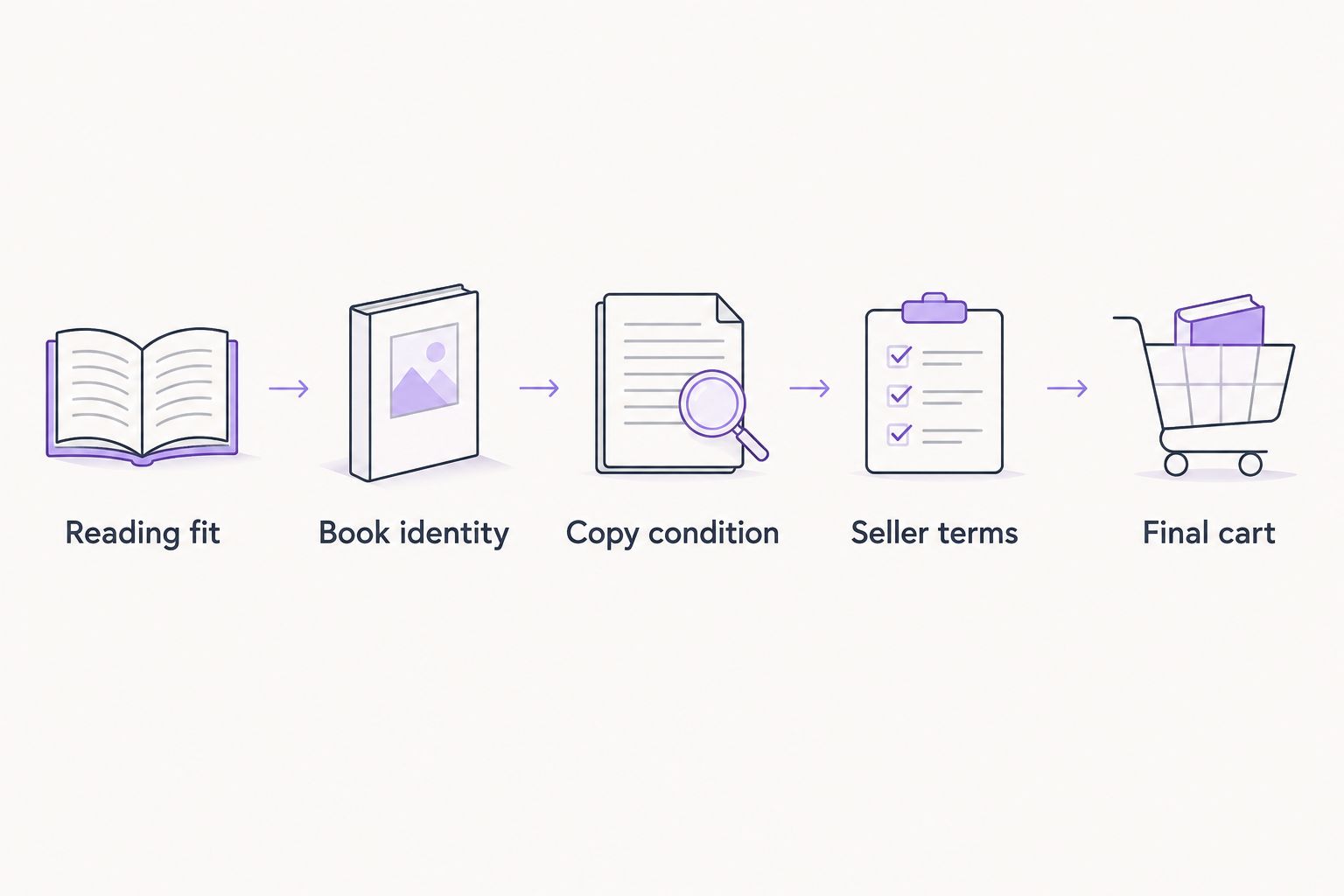
Use this affordable books buying checklist in order. Begin with the book itself, then assess the copy, and finish with the transaction.
- Reading fit: Choose a book that matches your interests, reading mood, and reason for buying.
- Book identity: Match the title, author, and edition to the book you want.
- Physical format: Confirm paperback or hardcover, language, and any edition-specific features you need.
- Copy condition: Read the description for wear, writing, damage, and missing material.
- Listing evidence: Check whether photographs show the actual copy or only a representative cover.
- Order total: Review the complete checkout amount rather than the item amount alone.
- Seller terms: Read the current shipping, return, and cancellation information that applies to your order.
- Final cart: Remove duplicates, check quantities, and confirm your delivery details before paying.
Buy when the copy fits your reading needs and the order terms are clear. Pause when an unresolved detail would change your decision. A cover image alone cannot settle questions about interior condition, edition, or the seller's terms.
Start with a book you actually want to read
Give your shopping trip 1 reading goal: a particular title, a new romance author, or a fiction book that matches your current mood. That goal helps you separate a useful find from a book you are adding only because it looks inexpensive.
For fiction, read a spoiler-free description and check the genre. For romance, look for the relationship setup and tone that appeal to you without reading plot summaries that reveal the ending. A familiar cover style is not enough to establish either.
If the book belongs to a series, check its reading order before buying. Some series entries depend on earlier events; others center on different characters. Confirm whether the title works for your intended starting point rather than assuming every book can be read independently.
Use the same rule for your 2026 reading list: a book earns its place because you want to read it. Adding unwanted titles to justify a purchase makes the cart larger, not better.
Match the title, author, and edition
Check 3 identifiers: title, author, and edition. Titles can resemble one another, and different editions of the same work can have different covers, layouts, or supplementary material.
Compare the written listing with any visible information on the cover and title page. If an ISBN is provided, use it to help identify the edition and format. Do not assume the picture and description refer to the same edition when they conflict.
An edition difference matters most when you have a specific requirement. A book club using page references, a reader seeking large print, or someone replacing a particular copy needs more precision than a reader who simply wants the complete novel.
Check these details when they affect your choice:
- Language: Confirm that the text is in the language you intend to read.
- Print format: Distinguish standard print from large print where specified.
- Contents: Check for abridgment, bundled works, or supplementary material.
- Series position: Confirm that you are ordering the intended installment.
- Cover preference: If a particular cover matters, verify the actual copy rather than relying on a generic image.
Choose paperback or hardcover for your use
Choose the format that suits how you will read and store the book. Neither format is automatically the better used purchase; the actual copy's condition still matters.
| Format | Best for | Practical advantage | Trade-off to check |
|---|---|---|---|
| Paperback | Readers who prefer a flexible cover | Flexible handling while reading | Check cover creases and the condition of the spine |
| Hardcover | Readers who prefer a rigid cover | A firm cover around the pages | Check the binding and dust jacket, if one is included |
If portability matters, check the book's actual size rather than treating all paperbacks as compact. If you have limited shelf space, consider thickness and height as well as cover type. Format alone does not tell you whether a book will fit your bag or shelf.
For a gift, cover presentation can matter more than it does for your own reading copy. Decide which visible flaws you are comfortable giving before choosing the book. A hardcover label does not guarantee a tidy jacket or an undamaged binding.
Read the condition description as a buying decision
Separate appearance from function. A scuffed cover and pages that are missing or difficult to read are different problems, even though both fall under condition.
Condition labels are useful starting points, not substitutes for details. Read any explanation of grading that the seller provides, and give specific disclosed flaws more weight than a broad label. The guide to reading used-book condition descriptions explains how to approach that check.
Look for details about:
- Pages: Missing pages, tears, stains, highlighting, or handwritten notes.
- Binding: Loose sections, detached pages, or damage affecting normal reading.
- Cover: Creases, scuffs, tears, or separation from the book.
- Moisture damage: Disclosed water damage or related page distortion.
- Other marks: Previous-owner names, inscriptions, stickers, or library markings.
Decide which flaws are acceptable for your purpose. An inscription might not bother you in a personal reading copy, while extensive highlighting might interrupt your reading. Do not accept a flaw you dislike simply because the book otherwise matches your wish list.

Check what the photographs actually show
A listing photograph can help you assess visible wear only when it shows the copy being sold. A representative cover image identifies a design, but it does not establish the condition of the pages or binding.
Look for agreement between the images and written description. If the description names a flaw that the photographs do not show, the written disclosure still matters. If the images appear to show a different format, resolve the mismatch before ordering.
For your 2026 purchases, use photographs as supporting evidence rather than a replacement for listing details. An attractive cover should not override a disclosed problem that makes the copy unsuitable for you.
Review the full order and seller terms
Set a budget for the completed order, not just the books. Read the checkout breakdown so you understand any shipping, tax, or other charges shown before payment.
Do not assume that adding another book improves the value of the order. Keep it only if you want the title and the revised total fits your budget. An extra purchase is still an extra purchase.
Read the current terms for the transaction you are making:
- Shipping: Confirm the destination, shipping method, and any stated delivery estimate.
- Returns: Check which situations qualify and what steps the seller requires.
- Cancellation: Read whether changes or cancellations are allowed after ordering.
- Problem resolution: Find the seller's stated process for a wrong or damaged item.
A delivery estimate is not a promised arrival date unless the seller explicitly makes that commitment. If you need a book for an event, make that requirement part of your decision before paying.
Why affordable-book buying decisions vary
The same used copy can suit one reader and disappoint another. These factors change what you should accept or verify:
- Reading purpose: A personal reading copy and a gift have different presentation needs.
- Edition requirements: A specific translation, print format, or book-club edition narrows your choices.
- Condition tolerance: Notes, inscriptions, and cover wear affect readers differently.
- Storage and portability: The book's physical size matters when shelf or bag space is limited.
- Timing: A deadline makes shipping information more important.
- Order size: Each additional title changes your total and deserves its own check.
Should you buy a used book with writing inside?
Buy a marked copy only if the disclosed writing is acceptable to you. A previous-owner name is different from notes throughout the text, so check the extent and location of the markings.
If you want uninterrupted pages, choose a listing that supports that preference. Do not assume all used copies are marked or that a broad condition grade rules out writing.
What if the listing does not answer your question?
Pause the purchase when the unanswered question affects whether you want the copy. Ask for clarification through the seller's available contact method, or choose a listing with sufficient detail.
You do not need every possible detail about a reading copy. You do need the details that would change your decision, such as completeness, language, format, or significant damage.
How do you avoid ordering the wrong book?
Make 2 final checks: book identity and cart details. Match each item to your intended title, author, edition, and format, then review quantities and delivery information.
Check your own shelves or reading list for duplicates as well. Keep a second copy only when you have a reason for it, rather than discovering the duplication after ordering.
Find your next used read
Choose physical fiction and romance books, then check each listing before ordering.
FAQ
What should I check before buying affordable books in 2026?
Check the title, author, edition, physical format, copy condition, full checkout total, and seller terms. Finish by checking cart quantities and delivery details before paying.
Is paperback better than hardcover for a used book?
Paperback is better if you prefer a flexible cover; hardcover is better if you prefer a rigid one. Check the actual copy's condition and size rather than choosing by format alone.
Can I tell a used book's condition from its cover photo?
A cover photo alone cannot establish the condition of the pages or binding. Check whether it shows the actual copy, and read the written condition description.
Should I buy a used romance book without checking the series order?
Check the series order before buying a used romance book when you want to start at a particular point. Confirm whether the novel depends on earlier stories, using spoiler-free information.
Does affordable mean the whole order will fit my budget?
An affordable item does not establish that the completed order fits your budget. Review the full checkout total, including any shipping, tax, or other charges shown.
Does Flippinpagesbookstore sell physical books or free online reading?
Flippinpagesbookstore sells physical used books, including fiction and romance. Treat online browsing as book shopping, and check the current listing details before ordering.
Should I order when the condition description is unclear?
Wait when the unclear detail would change your buying decision. Ask for clarification or choose a listing that explains the condition sufficiently.
One last thing
Set your acceptable condition before you start browsing. It is easier to reject an unsuitable copy when you have already decided whether highlighting, cover creases, or inscriptions are acceptable.
For your next 2026 book order, write that preference beside your reading goal. You will have a clearer buying decision than you get from comparing covers alone.