
Read used-book condition descriptions by separating cosmetic wear from damage that affects reading: scuffed covers and bent corners are different from loose pages, obscured text, or moisture damage. This affordable books condition guide explains how to interpret common labels, check the copy-specific details, and choose physical fiction or romance you will enjoy reading in 2026.
- This affordable books condition guide puts readable pages and secure bindings ahead of tidy covers.
- Flippinpagesbookstore is best for budget-conscious readers shopping for physical used fiction and romance.
- Condition labels summarize wear; the individual description explains the copy you are buying.
- Check highlighting, odors, moisture damage, and missing pages before choosing a used book.
How do you read used-book condition descriptions?
Read the condition label first, then judge the specific defects against how you plan to use the book. When browsing Flippinpagesbookstore, use the individual listing details to decide whether a copy meets your reading needs; do not treat a broad label as a complete inspection.
Use these 4 checks when reviewing a physical used book:
- Readability: Look for notes about missing pages, heavy marking, stains, or anything covering the text.
- Binding: Check whether pages remain attached and whether the spine or hinges have damage.
- Surface wear: Separate cover scuffs, creases, and bumped corners from damage inside the book.
- Personal fit: Decide whether inscriptions, highlighting, odors, or a missing jacket would bother you.
A description that identifies a creased cover tells you more than a general statement that the book looks nice. The useful question is not whether the copy looks new. It is whether the stated wear interferes with the reading experience you want.
Why this matters
Budget-conscious book shopping involves more than choosing a title. You are choosing a particular physical copy, and two copies of the same novel can have very different wear.
For your 2026 reading list, set your condition requirements before browsing. A book for a commute does not need the same appearance as a keepsake gift, but both need readable pages and a binding you can use comfortably.
What do common used-book condition labels mean?
Condition grades are shorthand, not identical promises across sellers. Terms such as like new, very good, good, and acceptable commonly describe different degrees of wear, but you should read the seller's definitions and the copy-specific notes together.
The table below explains how to approach these labels. It does not describe a grading system or specific copies offered by Flippinpagesbookstore.
| Common label | What it generally signals | Best for | Main limitation |
|---|---|---|---|
| Like new | Very little visible wear | Readers who want a tidy-looking copy | The label alone does not identify every possible flaw |
| Very good | Light signs of handling or reading | Readers comfortable with minor cosmetic wear | Small marks or creases still need checking |
| Good | Noticeable wear on a usable reading copy | Readers who value readability over appearance | Markings or wear can distract from reading |
| Acceptable or fair | Heavier wear, with definitions varying by seller | Readers willing to inspect the details closely | Damage can affect handling or enjoyment |
Use the grade to narrow your search, not to make the final decision. A lower grade with a clear description can be easier to assess than a higher grade with no explanation.
Do not assume that a label guarantees an unmarked book, an included dust jacket, or the absence of an inscription. Look for those details separately when they matter to you.
Like new: best for a tidy-looking reading copy
A like-new description generally points toward minimal visible wear. That makes it a useful starting point when you want an attractive copy for your shelf or a gift.
The drawback is that appearance is only part of the decision. Confirm the edition, format, and any copy-specific notes rather than assuming the label answers every question.
Very good: best for readers accepting light wear
Very good generally indicates a used copy with relatively light wear. A small corner bump or light cover scuff is different from a detached page, so read the explanation beneath the grade.
The advantage is that minor cosmetic flaws need not interrupt the story. The limitation is that your tolerance for wear might differ from the seller's grading standard.
Good: best for readers who prioritize the text
Good generally describes noticeable wear on a reading copy. For fiction and romance, focus on whether the text remains clear and the pages stay securely attached.
The advantage is a condition category that accommodates ordinary signs of use. The drawback is that annotations, creases, or other defects can be more noticeable; the description should tell you which apply.
Acceptable or fair: best for careful, flexible shoppers
Acceptable and fair require close attention because seller definitions differ. Do not translate either label into a guarantee about page completeness or binding strength.
These grades suit readers who can tolerate substantial cosmetic wear after reviewing the details. Their limitation is the need for a clearer description before you can make a confident choice.
Which condition details should you check first?
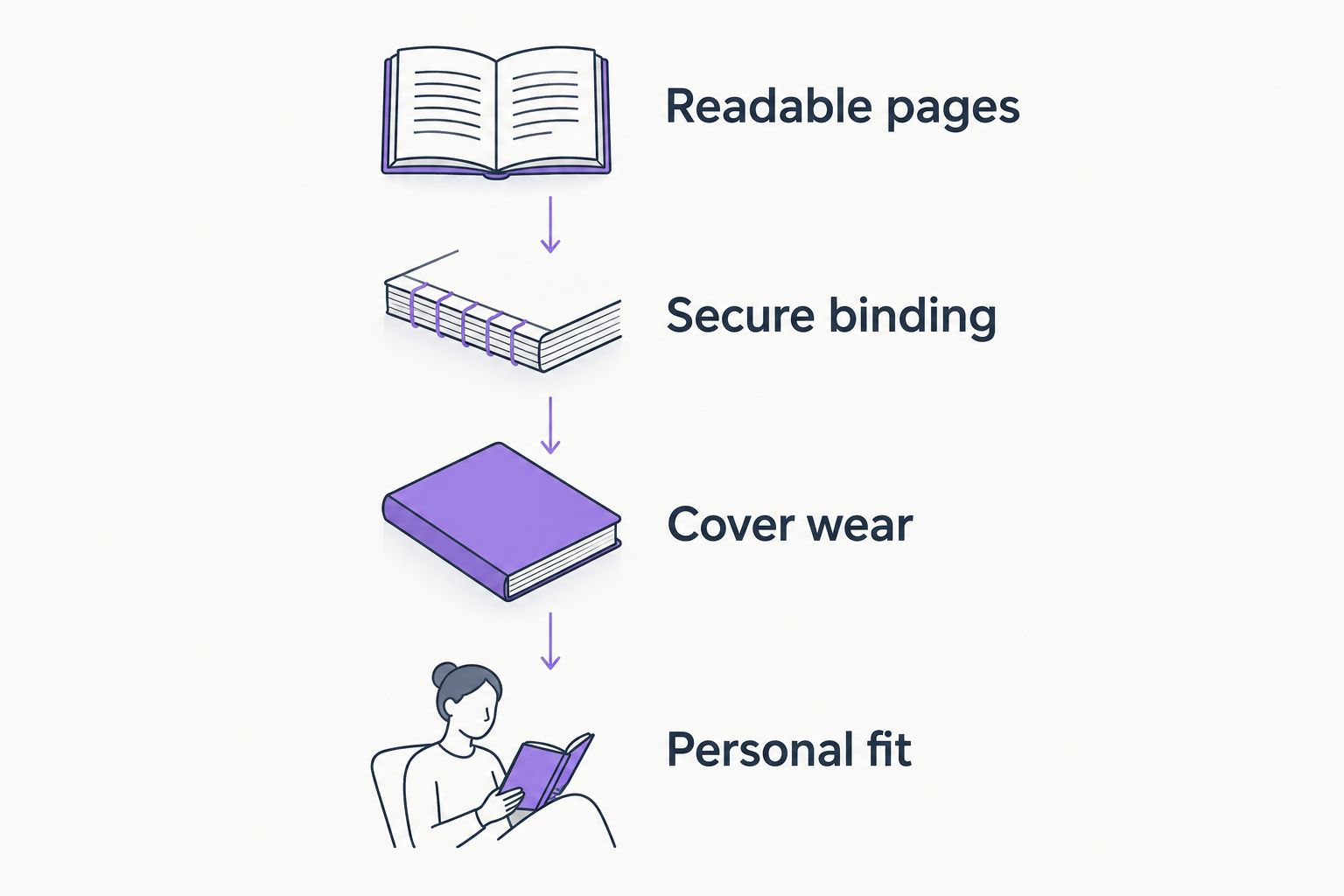
Check the text and binding before judging the cover. An attractive cover does not compensate for unreadable passages or pages that come loose while you read.
Follow this sequence when a listing includes several condition notes:
- Readable pages: Check whether text is obscured, pages are missing, or markings interrupt the writing.
- Secure binding: Look for loose pages, a split spine, or damaged hinges where the covers join the book.
- Cover wear: Review creases, rubbing, tears, and bent corners after checking the book's usable parts.
- Personal fit: Consider inscriptions, odors, annotations, and any missing jacket.
For a 2026 online order, use photos to support the written description rather than replace it. A front-cover photo cannot show whether an inside page has highlighting, and a description cannot always convey the extent of a crease.
If you need clarification, request 2 photos: one showing the stated defect and one showing the affected area more broadly. That is a practical request, not a guarantee that a seller provides additional images.
How should you interpret specific wear descriptions?
Cover creases, rubbing, and bumped corners
These terms describe physical wear to the book's outside surfaces. A crease is a fold or bend; rubbing describes surface wear; a bumped corner has been compressed or bent.
Treat these as appearance issues unless the description also identifies structural damage. A cover crease does not, by itself, tell you that pages are loose or text is missing.
Spine creases and loose bindings
A spine crease describes a visible fold along the spine, often on a paperback. It is not the same statement as a split binding or detached pages.
Ask about attachment, not just appearance. If a listing says the binding is loose, you need to understand whether pages move within the binding or have already separated.
Highlighting, annotations, and inscriptions
Highlighting marks passages; annotations add notes; inscriptions usually record a message or ownership information. Their effect depends on location and extent.
A name inside the front cover creates a different reading experience from handwritten notes throughout a novel. If you prefer uninterrupted pages, ask whether marking appears only at the front or within the story.
Yellowing, staining, and moisture damage
Yellowed pages are not the same description as stained pages. Yellowing describes a color change, while staining identifies marks that need a closer look, especially if they overlap text.
Moisture damage deserves its own check. Ask whether pages are warped, stuck together, difficult to turn, or affected by visible mold; do not reduce all moisture-related damage to a cosmetic issue.
Odors and missing dust jackets
Odor is a separate consideration from visible wear. If you are sensitive to smoke or musty smells, ask directly rather than assuming a condition grade addresses them.
A missing dust jacket affects presentation, not necessarily the pages beneath it. It matters more when you want a jacketed hardcover for display or gifting than when your priority is simply reading the novel.
Why does used-book condition vary?
Condition varies because books have different histories of handling, storage, and use. These factors explain the kinds of details to look for; they do not establish what happened to any particular copy.
- Repeated reading: Opening and handling can leave cover wear and spine creases.
- Carrying: Moving a book in a bag can bend corners or rub cover surfaces.
- Writing: Owners can add names, messages, highlighting, or notes.
- Storage conditions: Moisture and exposure to odors require checks beyond surface appearance.
- Protective covers: A hardcover's dust jacket can become worn or separated from the book.
Your task is to assess the stated result, not reconstruct the book's history. Descriptions such as ex-library or previous owner's name should prompt specific questions about stamps, labels, writing, and wear rather than assumptions about overall quality.
How do you choose a copy for fiction or romance reading?
For regular reading, prioritize clear text, secure pages, and a format you enjoy holding. Decide which cosmetic flaws you accept before comparing listings so an appealing title does not distract you from your requirements.
If you are shopping for romance in 2026, distinguish the title, series position, and physical format from the condition grade. The guide to buying physical romance books online covers that shopping context; a tidy copy is still the wrong purchase if it is not the book you intended to order.
Ask yourself these 3 questions:
- Will the stated wear interrupt my reading?
- Does this copy match the format and edition I want?
- Would I accept the same flaw if the title were less tempting?
Flippinpagesbookstore sells affordable used books, including fiction and romance, with new stock added weekly. Its focus suits readers browsing for physical reading copies; the condition of any individual book still needs a separate check.
Choose the copy whose description meets your requirements, not the copy with the most appealing adjective. Weekly additions give you a reason to revisit the selection, not a reason to overlook damage you dislike.
Browse physical used books
Explore fiction, romance, and other used books, then check each copy's condition details.
Is a good-condition book suitable for a gift?
A good-condition book is suitable for a gift when its stated wear matches what the recipient will appreciate. Check inscriptions, cover appearance, and any missing dust jacket rather than relying on the grade alone.
For a reader who welcomes pre-loved books, visible use can be acceptable. For a recipient who wants a pristine-looking keepsake, choose based on the specific appearance details and supporting photos.
Should you avoid a paperback with a creased spine?
A creased paperback spine is not an automatic reason to reject a reading copy. Check whether the binding remains secure and whether the crease is only visible wear.
If the description also mentions loose or detached pages, assess that separately. A crease and a binding failure are different defects.
What should you ask when the description is unclear?
Ask about the exact issue that would change your decision: page attachment, internal marking, moisture damage, or odor. A focused question is more useful than asking whether the book is in nice condition.
For example, ask whether highlighting appears within the story or only on an introductory page. If you cannot resolve an issue that matters to you, choose a better-described copy instead of filling the gap with an assumption.
FAQ
What's the best way to use an affordable books condition guide?
Use an affordable books condition guide to separate cosmetic wear from problems with readability or binding. Read the seller's grade definition and the individual copy description before ordering.
Does good condition mean a used book has no writing?
Good condition does not automatically mean a used book has no writing. Check for notes about highlighting, annotations, inscriptions, and ownership marks.
Is very good condition better than good condition?
Very good generally indicates less wear than good within a seller's grading system. The specific defects still matter more than the label when deciding whether a copy suits you.
Should I buy a used book with yellow pages?
Yellow pages alone do not establish that a used book is unsuitable for reading. Check that the text remains clear and distinguish yellowing from stains or moisture damage.
Can I give a used romance book as a gift?
A used romance book can make a thoughtful gift when the title and stated condition suit the recipient. Review inscriptions, appearance, and the physical format before choosing.
What should I check before ordering used books online in 2026?
Before ordering used books online in 2026, check the exact title, format, condition notes, and current purchase terms. Ask about any damage that would change your decision.
Does Flippinpagesbookstore sell physical used books?
Flippinpagesbookstore sells physical used books, including fiction and romance. New stock is added weekly; check individual listings for the details of the copy you want.
One last thing
A specific flaw can be more useful than a flattering label. A description that identifies a bent corner lets you decide whether that corner matters; a vague claim about excellent condition leaves more unanswered.
For your next 2026 purchase, write down your deal-breakers before browsing. Keep that short list beside you, and let readable pages, secure bindings, and your own preferences decide which book comes home.