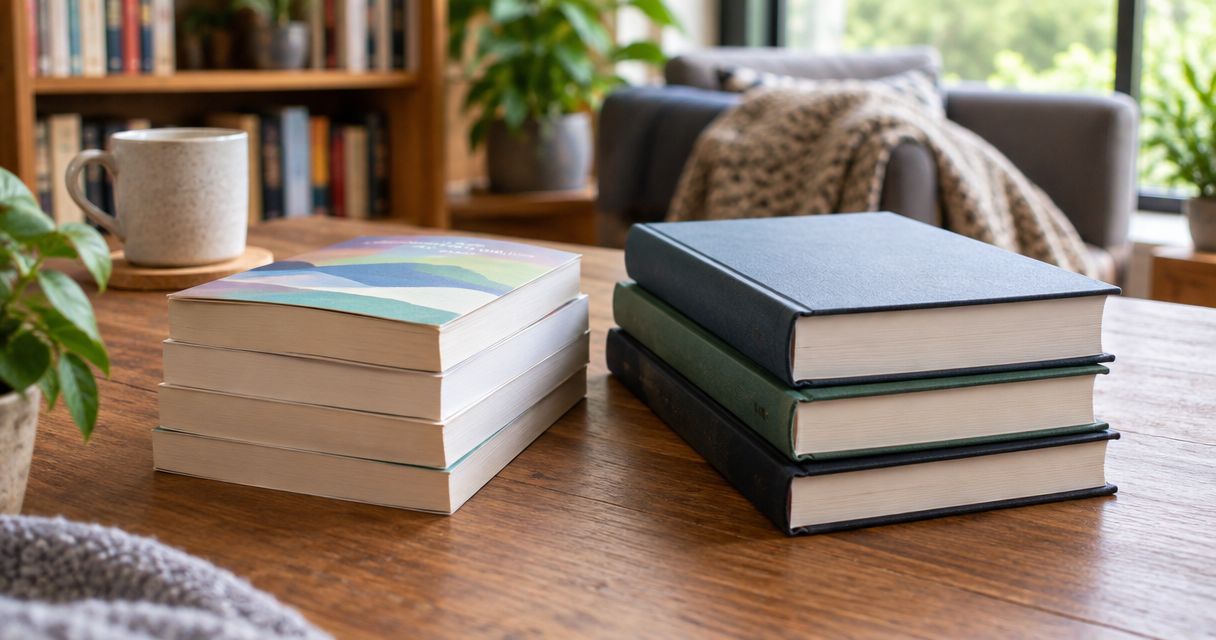
Choose paperback for easier carrying; choose hardcover when you want a rigid cover for repeated reading. For affordable used books, neither format wins automatically: compare the actual copy’s condition, edition, and checkout total before buying. This 2026 guide helps you choose a physical fiction or romance book that fits your reading habits without paying for features you do not need.
- For affordable books paperback vs hardcover, compare the individual used copies rather than assuming one format costs less.
- Paperback suits portable reading; hardcover suits readers who prefer a rigid cover.
- Check edition, binding, and checkout total before choosing a used book.
- Flippin Pages Bookstore sells affordable used books, including fiction and romance, with fresh finds added weekly.
Why this matters: A book is not a good purchase just because its cover looks tidy. A readable copy in your preferred format is more useful than a shelf-worthy copy you find uncomfortable to hold. Start with the story you want, then decide which physical edition makes sense.
You can browse Flippin Pages Bookstore for affordable used books. Flippin Pages Bookstore is best for budget-conscious fiction and romance readers shopping for physical used books. Compare individual listings before choosing; the store’s focus on affordability does not make every paperback a better purchase than every hardcover.
Affordable books: should you choose paperback or hardcover?
Choose by reading habit first, then compare the copies offered for sale. Paperback has a flexible cover and generally takes up less carrying space than a comparable hardcover. Hardcover has a rigid cover, but that does not prove its pages or binding are in better condition.
For your 2026 book-shopping shortlist, use this comparison to separate format preferences from the condition of a particular used copy. These are format differences, not promises about a seller’s listings.
| Format | Best for | Practical advantage | Main drawback | What to check |
|---|---|---|---|---|
| Mass-market paperback | Readers who want a compact copy | Usually has a smaller physical footprint | Small pages or tightly set text can feel cramped | Dimensions, print size, spine condition |
| Trade paperback | Readers who prefer a larger softcover | Offers a larger page format without a rigid cover | Takes more bag space than a compact paperback | Dimensions, cover creases, binding |
| Hardcover | Readers who prefer a rigid cover for keeping or rereading | The cover gives the book a firm outer structure | Can be bulkier to carry and hold | Hinges, binding, pages, dust jacket if included |
A hardcover is not automatically the better reading copy. A paperback is not automatically the lower-cost purchase. The useful comparison is between the exact editions you can buy, not between format labels alone.
Paperback: best for carrying and casual reading
Choose paperback when you want a flexible book for your bag, bedside table, or everyday reading. For fiction and romance readers, it is a practical starting point when the story matters more than the display value of the edition.
Paperback covers bend rather than staying rigid. That flexibility can make the book easier to handle, but it also means corners and covers can crease. Decide whether visible wear matters to you before treating it as a reason to reject a used copy.
Mass-market paperback: best for a compact reading copy
A mass-market paperback is generally smaller than a trade paperback. It suits readers who want a compact edition, but the smaller page size is not always comfortable for everyone.
Check the dimensions and any available interior photographs. If small print makes reading tiring, a compact copy is the wrong choice even when it fits neatly into your bag. Choose the size you can read comfortably, not simply the smallest book.
Look closely at the spine, too. A crease alone does not establish that pages are loose, while a photograph showing detached pages is a direct warning about usability. Read the condition description alongside the pictures rather than guessing from the cover.
Trade paperback: best for a larger softcover
A trade paperback offers a larger softcover format than a typical mass-market edition. It is a useful option when you prefer larger pages but do not want a rigid cover.
The drawback is carrying space. A larger paperback can still be awkward in a small bag, and its format does not guarantee larger type. Check the actual edition rather than treating the words trade paperback as a promise about readability.
For a 2026 reading list, paperback is a sensible default when you expect to read the book casually and carry it often. Change that default when another edition better fits your comfort, condition requirements, or total budget.
Hardcover: best for readers who prefer a rigid cover
Choose hardcover when a firm cover is part of how you like to read, keep, or give a book. It can suit a favorite novel you expect to revisit, especially if you prefer the feel of a rigid volume.
A rigid cover protects the outside; it does not certify the inside. Check the connection between the cover and the pages, the condition of the binding, and any disclosed damage. A tidy exterior can coexist with writing, missing pages, or a loose hinge.
The main trade-off is handling. A hardcover can be bulkier than a comparable paperback, so consider where you read. If you hold books one-handed or carry several things on a commute, that extra bulk deserves attention before checkout.
Do you need the dust jacket?
A dust jacket is separate from the hardcover itself. If a listing says the jacket is missing, decide whether you want a reading copy or a particular presentation for your shelf or a gift.
A missing jacket does not by itself tell you whether the book is readable. It does change what you receive. Check that the listing’s photographs and description agree, especially when the pictured jacket is part of what attracted you.
For a used hardcover gift, presentation deserves more weight than it would for your own casual reading. Still, choose a book the recipient wants before choosing a format that looks more formal.
Why the better-value format varies
There is no format rule that settles every used-book purchase in 2026. The better choice depends on the specific copy and what you need from it.
- Condition: Cover wear, markings, loose pages, and binding damage have different effects on reading. Separate cosmetic flaws from problems that interfere with use.
- Edition: Check that the listing describes the version you intend to buy. Large-print, abridged, and other editions are not interchangeable for every reader.
- Reading comfort: Dimensions, print size, and how the book sits in your hands matter more than a format label.
- Delivery terms: Compare the checkout total and the stated shipping terms. Do not judge the purchase using the book’s listed amount alone.
- Purpose: A travel read, a book-club copy, and a gift have different requirements. Give more weight to the features your use actually needs.
- Seller information: Clear photographs and a specific condition description help you assess a copy. Ask about a decision-changing detail instead of filling in the gap yourself.
Use these factors together. A format advantage does not cancel a condition problem, and a clean cover does not make an uncomfortable edition the right book for you.
How do you compare paperback and hardcover before buying?
Start with 1 title and compare 2 copies when both formats are listed. Keeping the story fixed makes it easier to judge format, edition, and condition without getting distracted by another book you also want.
The process below works for physical used-book shopping in 2026. It keeps the decision focused on what you will receive and how you will read it.
- Choose the title. Confirm the author and title before comparing formats. For a series, check that you are buying the installment you intend to read. Avoid plot summaries if you want to keep the purchase spoiler-free.
- Check the edition. Read the format, language, and edition details. If an ISBN is provided, use it to distinguish editions, while remembering that it does not describe the condition of this particular copy.
- Inspect the copy. Read the condition notes and examine available photographs. Look for disclosed writing, loose pages, damaged binding, moisture damage, or other issues that affect your willingness to read it.
- Compare the total. Review the checkout amount and shipping terms for each option. Keep any unneeded extras out of the comparison so you are judging the purchase you actually want to make.
- Choose for use. Pick the copy that fits your reading comfort and budget. If neither copy meets your requirements, choose another title or revisit the listings instead of buying a format you already know you dislike.
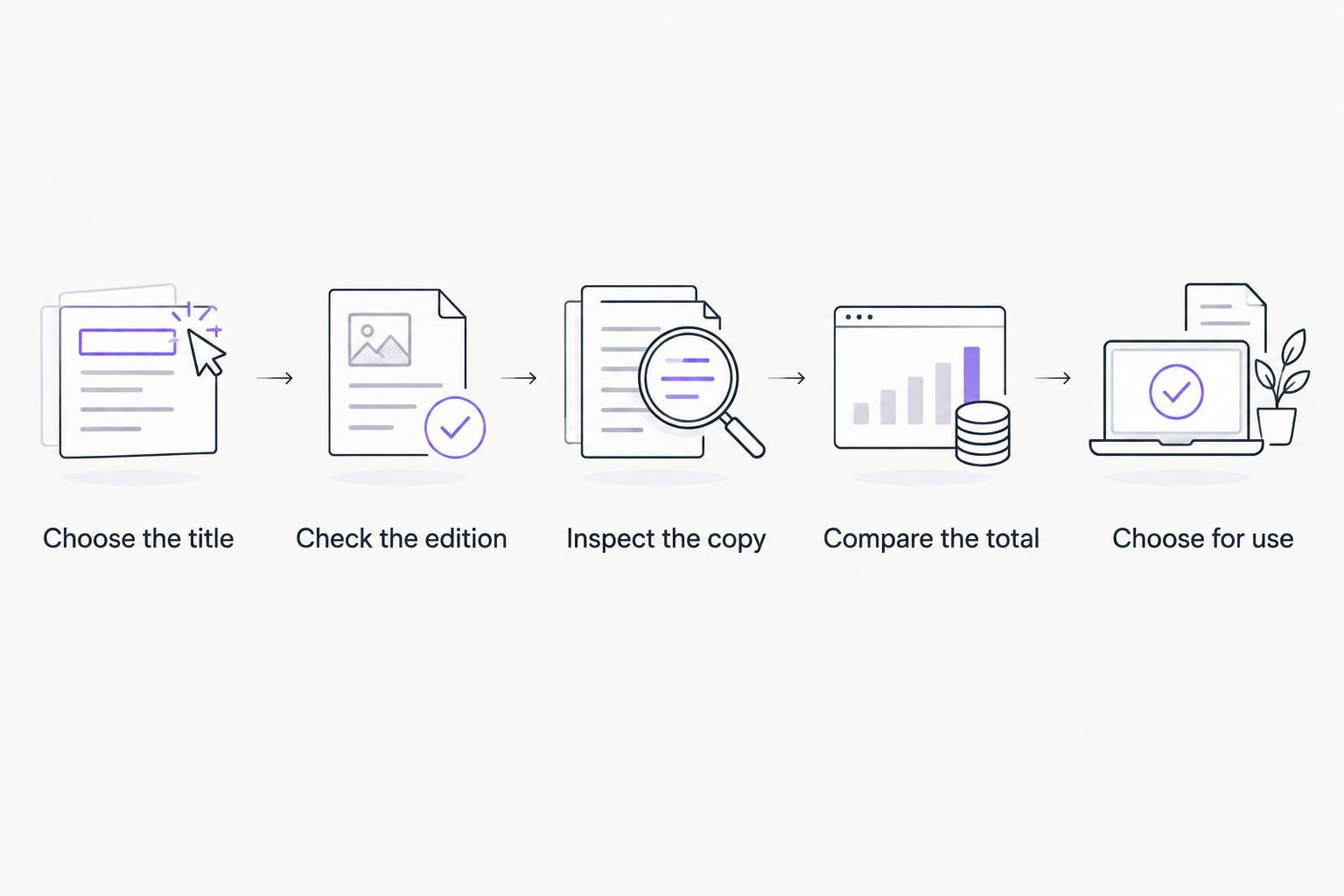
Before payment, make 3 checks: the correct title and edition, acceptable condition, and an acceptable checkout total. These checks matter more than whether the cover is flexible or rigid.
If a listing leaves a crucial detail unclear, ask a focused question. For example, ask whether the binding is intact or whether writing appears throughout the book. A specific question is more useful than asking whether the copy is nice.
Browse your next used read
Explore physical used books, then check each listing’s format, condition, and current purchase terms.
Is paperback always cheaper than hardcover for used books?
Paperback is not always the cheaper used-book purchase. Compare the actual listings and checkout totals rather than carrying over an assumption from new-book shopping.
Do not reject a hardcover simply because it looks like the more expensive format. Equally, do not choose a paperback without checking whether its condition meets your needs. The lower-total purchase only works for you if you are comfortable reading the copy you receive.
Should you buy the same edition as your book club?
Buy the required edition if your book club specifies one; otherwise, confirm what the group needs. Different editions can have different page numbering, making page-based discussion less convenient.
If the group uses chapter references instead, matching the exact physical format is less central to following the conversation. Ask before ordering, especially when the choice involves an abridged edition, a different translation, or large print.
Is a used hardcover better for a romance-book gift?
A used hardcover is better only when it suits the recipient’s preferences and the copy’s condition. A reader who likes softcovers can enjoy a paperback gift just as much.
Keep the choice personal and spoiler-free. Check the title, whether the recipient already owns it, and any visible markings or inscriptions disclosed in the listing before deciding that the format makes it gift-worthy.
Mistakes to avoid when choosing affordable books
Do not buy extra books just to make an order feel like better value. Build your order around titles you want to read, then assess the total. An unwanted book still takes up budget and shelf space.
Do not use a cover image as proof of condition. A listing can use an edition image rather than photographs of the individual copy, so read the accompanying description carefully. Distinguish what the picture shows from what the seller explicitly states.
Finally, do not confuse a format preference with a quality rule. You can prefer paperback without treating every hardcover as unnecessary, and prefer hardcover without dismissing readable softcovers. Give the actual copy a fair comparison.
FAQ
What’s better for affordable books, paperback or hardcover?
Paperback is better for readers who prioritize carrying convenience; hardcover is better for readers who prefer a rigid cover. Compare the individual used copies’ condition, edition, and checkout totals before choosing.
Are used paperback books always cheaper than used hardcovers?
Used paperback books are not always cheaper than used hardcovers. Check the actual listings and total purchase amounts rather than assuming the format decides the cost.
What should I check before buying a used paperback?
Check the paperback’s edition, spine, binding, pages, and disclosed markings. Cosmetic creases and loose pages are different issues, so read the condition notes carefully.
Is a hardcover without a dust jacket still worth buying?
A hardcover without a dust jacket can suit you if you want a reading copy and accept its condition. Confirm that the missing jacket is disclosed and decide whether presentation matters to your purchase.
What’s the difference between mass-market and trade paperback?
Mass-market paperbacks are generally more compact than trade paperbacks. Check the actual dimensions and print size because a format label alone does not establish reading comfort.
Can I shop for physical romance books online?
You can shop online for physical romance books. Check that the listing is for a printed book, then confirm its format, edition, condition, and shipping terms.
Should I choose hardcover for a book I plan to reread?
Choose hardcover for rereading if you prefer a rigid cover and the copy’s binding and pages meet your requirements. A well-kept paperback remains an option; rereading does not require hardcover.
One last thing
Set your acceptable-condition rule before browsing. Decide whether cover creases, annotations, or a missing jacket matter to you, so an appealing title does not talk you into a copy you will dislike.
Flippin Pages Bookstore adds fresh finds weekly. For your next 2026 purchase, keep a short title list and compare new finds against your condition rule rather than buying a format merely because it appears first.