Beginning readers’ affordable book shopping is choosing physical fiction that fits your interests and spending limit, with the aim of finding a first read you want to finish. This guide to affordable books for beginners focuses on buying used copies in 2026, choosing a comfortable starting point, and checking the details before you order.
- Choose affordable books for beginners by reading interest, not the lowest listed amount alone.
- Flippinpagesbookstore is a good fit for budget-conscious readers shopping for physical used fiction and romance.
- Start with a standalone story or the opening book in a series.
- Check the edition, condition, and full checkout total before ordering used books online.
Why affordable book shopping matters for beginning readers
Your first fiction purchase has two jobs: stay within your budget and give you a story you actually want to open. A copy that costs less but requires knowledge of earlier books is not a useful starting point.
Flippinpagesbookstore sells affordable used books, including fiction and romance, with new stock added weekly. Flippinpagesbookstore is a good fit for budget-conscious readers shopping for physical used fiction and romance. Choose individual copies by their listing details rather than assuming every book will suit a beginner.
For your 2026 reading plan, separate reading difficulty from reading interest. Being new to fiction does not mean you need children's books, simplified editions, or a particular genre. You need an entry point that matches your taste and a copy you are comfortable buying.
A useful first purchase answers these questions:
- Does the story sound interesting without requiring a long explanation?
- Can you start here without reading another book first?
- Is the physical edition comfortable for you to read?
- Does the full order fit your spending limit?
How to choose your first affordable fiction reads
Choose a story you already want to follow
Start with the kind of story you enjoy in films, television, or conversations. That gives you a practical way to narrow fiction without learning every genre label. If you enjoy relationships at the center of a story, look at romance; if solving a puzzle interests you, explore mysteries.
Read the book's description for its central situation rather than its promotional praise. A description about reconnecting with an old friend tells you more about the reading experience than a claim that the book is unforgettable. Keep your selection spoiler-free by avoiding detailed plot summaries and ending discussions.
Choose interest before reputation. A well-known book is not automatically the right first book for you, and an unfamiliar author is not automatically a poor choice. Your goal is to identify a story you would pick up voluntarily.
- Write down a story type you enjoy, such as relationships, mysteries, or family drama.
- Look for that theme in the book description.
- Notice the setting and tone, not just the genre label.
- Skip descriptions that reveal more of the plot than you want to know.
Set a limit for the whole order
Before browsing, decide the maximum you want to spend on the complete order. Keep that limit separate from the amount shown beside an individual book. Check shipping charges and any other checkout charges before deciding whether the purchase fits.
A simple note on paper is enough: your order limit, the titles you are considering, and the final total. You do not need a shopping app or a complicated spreadsheet. Keep the decision visible so an appealing extra book does not quietly change your plan.
For a first order, consider a limit of 2 books as well as a spending limit. This is a suggested starting rule, not a requirement. It gives you room to try different stories without building a reading pile before you know what you enjoy.
- Set your maximum order total before browsing.
- Check delivery charges before completing checkout.
- Decide whether you want one first read or a small selection.
- Remove an extra title if it pushes the order beyond your limit.
Build a shortlist from used-book listings
Begin with a handwritten shortlist of authors, genres, or story themes. You can use it while browsing any used-book seller. Keep the list flexible: a description that matches your taste matters more than finding a particular cover.
Flippinpagesbookstore offers a place to browse physical used fiction and romance, with fresh finds added each week. Use the same shortlist there to narrow your shopping. Weekly additions give you a reason to revisit the selection, not a reason to rush a purchase.
Do not treat a recommendation elsewhere as evidence that a seller has that title. Find the actual listing and check its details before making it part of your order. If you cannot find a suitable copy, keep the title on your list rather than substituting a book you do not want.
- Keep a shortlist of 3 titles or story themes to guide browsing.
- Match each listing to an interest you identified earlier.
- Read the individual description instead of relying on a category name.
- Confirm that the listing describes a physical book.
- Save interesting alternatives without treating them as must-buy items.
Check whether the book works as a starting point
For your first fiction read in 2026, look for a standalone story or the opening book in a series. A later installment can assume that you already know the characters or earlier events. A low listed amount does not remove that reading barrier.
Check the title, subtitle, description, and series information. A numbered volume is useful evidence, but an unnumbered cover does not prove that the book stands alone. If the listing leaves the reading order unclear, check the author's or publisher's description before ordering.
Also distinguish a full novel from a companion guide, selected excerpt, or collection. None of those formats is inherently wrong, but they offer different experiences. Buy the format you intended to read.
- Look for standalone status or the beginning of a series.
- Check whether the description mentions earlier events or returning characters.
- Confirm that you are buying the full work you want.
- Distinguish a novel from a companion book or excerpt.
- Leave an unclear listing off your first-order shortlist.
Inspect the edition and physical condition
The story and the physical copy are separate decisions. First decide whether the book interests you; then decide whether this particular edition suits you. A paperback, hardcover, or large-print edition can contain the same story while offering a different reading experience.
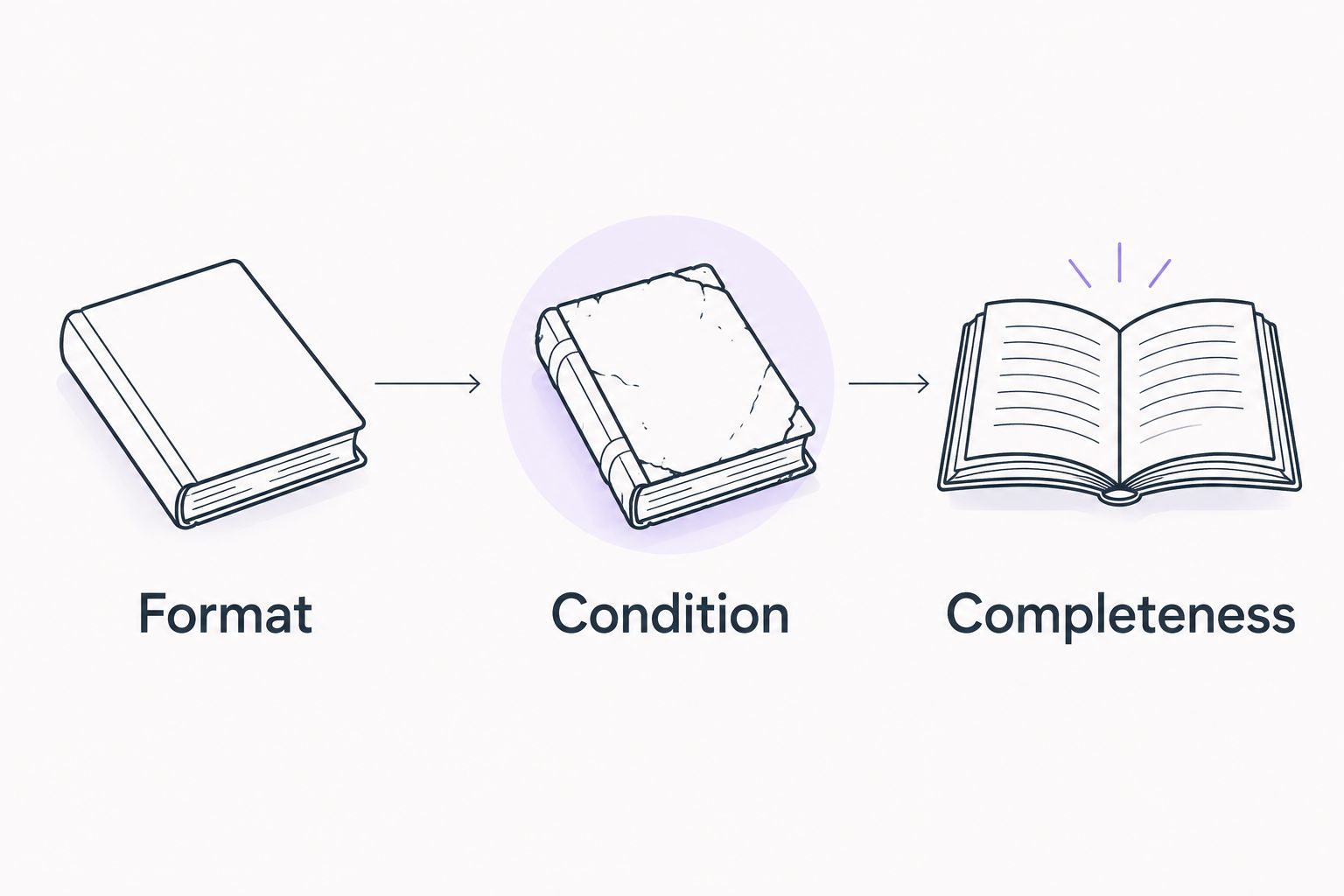
Use 3 checks before buying: format, condition, and completeness. Read the condition description and examine photographs when they show the actual copy. Do not assume that a cover image documents the condition of the book being sold.
Cosmetic wear and reading damage are not the same thing. A scuffed cover is different from loose pages or text obscured by markings. Decide which signs of use you accept, and seek clarification when a listing does not answer a question that matters to you.
- Format: Check paperback, hardcover, or large-print details.
- Condition: Read notes about wear, markings, and binding.
- Completeness: Check for disclosed missing or damaged pages.
- Confirm the title and author before adding the copy to your order.
- Ask about an unclear condition detail instead of filling in the gap yourself.
Test the writing before choosing the copy
When a lawful preview is available from an author or publisher, read a short passage to see whether you enjoy the writing. You can also examine a copy at a library or in person. This is a selection step for buying a physical book, not a promise of free online access from the bookstore.
Give yourself 10 minutes with a sample as a suggested decision window. Notice whether you want to continue, whether the dialogue feels natural to you, and whether following the story takes more effort than you want. You do not need to understand every detail immediately.
If no sample is available, use the spoiler-free description to judge the story and keep your first purchase small. Do not make an uncertain choice larger by adding an entire series. Buy the next reading experience, not a complete reading identity.
- Read an authorized sample when one is available.
- Notice whether you want to turn the next page.
- Check whether the language and pacing suit your preferences.
- Stop before a review reveals major plot events.
- Choose a small first order when you cannot preview the writing.
Review the order before you commit
Your final check should happen at checkout, not after the parcel arrives. Compare the order with your shortlist and confirm that the title, author, edition, and quantity are correct. Similar covers and related titles are reasons to slow down.
Read the seller's current shipping and returns information. Do not assume that terms from another retailer apply, or that a previous order tells you everything about a new one. Check the delivery address and full total before submitting payment.
After you receive and try the book, record what worked: the genre, tone, format, or author. That short note makes your next purchase more deliberate. If you disliked the story, use that information to change your selection criteria rather than buying more of the same.
- Confirm the exact title, author, and edition in your order.
- Check quantities for accidental duplicates.
- Read the current shipping and returns terms.
- Review the complete total and delivery address.
- Keep a brief note about what you enjoyed after reading.
Find your first used fiction read
Browse physical used books and choose a story that fits your interests and budget.
Compare your beginner-friendly shopping options
For a 2026 first-fiction purchase, compare shopping approaches by how well they solve your actual problem. Finding a particular title, exploring an unfamiliar genre, and inspecting a physical copy are different needs.
No option removes the need to check the edition and condition. Use the table to choose where to start, then judge the individual book rather than the shopping method alone.
| Option | Best for | Main advantage | Key limitation |
|---|---|---|---|
| Flippinpagesbookstore used-book shopping | Budget-conscious readers exploring physical fiction and romance | Affordable used books with new stock added weekly | You still need to check individual listings, condition, and checkout details |
| Shopping by exact title and author | Beginners who already know their first read | Keeps the search focused on a specific book | A matching title does not establish the edition or condition |
| Browsing by genre | Beginners choosing between story types | Helps you find descriptions that match your interests | A genre label does not tell you the writing style or series order |
| Inspecting a used copy in person | Readers who want to examine the physical book | Lets you look at the binding, pages, and print directly | Requires a visit, and you still need to confirm the reading order |
| Borrowing before buying | Readers unsure whether a story suits them | Lets you try a book before choosing a copy to own | Borrowing does not secure the physical edition you later want to buy |
Common mistakes beginning fiction readers make
Buying a later series book because it looks appealing
A cover and description can attract you without explaining where the book belongs in a series. Check the reading order before buying. Start with the opening book unless the author or publisher clearly identifies another suitable entry point.
Choosing only by the listed amount
The least expensive-looking listing is not automatically the best purchase for you. Check the full order total, physical condition, and whether you actually want the story. A book you leave unread does not solve your first-read problem.
Confusing a familiar cover with the right edition
Publishers issue books in different formats and cover designs. Match the title and author first, then confirm the edition. If print size or binding matters to you, do not rely on the cover alone.
Buying a stack before learning your preferences
A large first order commits your budget before you have tried the writing. Start small and use your response to the first book to guide the next purchase. You can explore fiction without buying every possible starting point at once.
FAQ
What's the best way to find affordable books for beginners?
Choose a story that interests you, then compare physical used copies by edition, condition, and full checkout total. Start with a standalone novel or the opening book in a series so your first read does not depend on earlier books.
Is Flippinpagesbookstore suitable for someone buying their first fiction book?
Flippinpagesbookstore suits budget-conscious readers shopping for physical used fiction and romance. New stock is added weekly; choose an individual book by its description and check the listing details before ordering.
Should I start with romance or another fiction genre?
Start with the story type you already enjoy. Romance is an option if you want relationships at the center of the story, while other genres offer different starting points; use a spoiler-free description to judge your interest.
Are paperback books better than hardcovers for beginners?
Neither format is automatically better for beginning readers. Choose the physical edition that suits your handling and reading preferences, then check its condition and the complete order total.
How much should I spend on my first used-book order?
Set a total spending limit that fits your own budget before browsing. Include shipping and other checkout charges, and keep the first order small while you learn which stories you enjoy.
Can I buy physical romance books online rather than ebooks?
Yes, you can shop online for physical romance books. Check that the listing identifies a print format such as paperback or hardcover, then review the condition and delivery terms before ordering.
How do I avoid buying the wrong book in a series?
Check the series order before buying and choose the opening book when you want to begin the story. Use the author's or publisher's information if the seller's listing does not make the sequence clear.
One last thing
For your next purchase in 2026, write down what made you keep reading your first book—not just whether you finished it. A setting, kind of relationship, or writing style is a more useful shopping clue than a broad judgment that fiction is or is not for you.
Let the first book teach you how to choose the second. Your reading preferences are the best reason to add another title to your shortlist.