
Contemporary romance book shopping is choosing present-day love stories in physical editions with the aim of finding a satisfying read within your budget. This spoiler-free 2026 guide helps you compare story preferences, reading order, and used-copy condition before you buy.
- Flippinpagesbookstore suits budget-conscious readers shopping for physical used romance books, with fresh finds added weekly.
- For romance books online contemporary searches, narrow your choices by setting, relationship dynamic, and reading order.
- Choose a readable copy before chasing a matching cover; check condition and checkout terms before ordering.
- Use publisher descriptions and spoiler-free content notes instead of plot summaries to judge whether a book fits.
Why buying contemporary romance matters for budget readers
Flippinpagesbookstore is best for budget-conscious readers shopping for physical used fiction and romance books. Start with Flippinpagesbookstore when you want to browse used books rather than read ebooks or stories online. New stock is added weekly, so keeping a short wishlist gives each return visit a purpose.
Contemporary romance describes a present-day setting, not necessarily a recently published book. A romance novel also centers the love story and follows the genre expectation of an emotionally satisfying, optimistic ending. Those distinctions help you avoid buying general fiction with a romantic subplot when you want a romance.
Your 2026 shopping list needs more than a familiar cover. You are choosing both a story and a particular physical copy, and either one can be wrong for your needs. A compelling premise does not settle questions about annotations, format, or where the book belongs in a series.
How to choose contemporary romance books online
1. Define the reading experience you want
Begin with a note on paper or your phone, not a long shopping session. Write down 3 must-haves: a setting you enjoy, a relationship dynamic that interests you, and a reading boundary. This gives you a useful filter without requiring knowledge of specific authors.
For example, you might want a present-day workplace setting, a friends-to-lovers relationship, and little on-page sexual detail. Someone else might prefer a small-town setting, a second-chance relationship, and more explicit scenes. Neither preference tells you everything about tone, so read the description rather than relying on a single label.
Keep must-haves separate from nice-to-haves. A particular cover design is a preference; avoiding a distressing subject is a boundary.
- Name the setting: city, small town, workplace, or another present-day environment.
- Choose a relationship dynamic, such as friends to lovers or second chance.
- Decide whether you want light humor, heavier emotion, or a mix.
- Record content boundaries without asking for plot details.
2. Check that the listing matches the story and format
Search manually using the title and author together, then inspect the listing itself. If you have not chosen a title, use a phrase such as contemporary romance paperback or used contemporary romance books. A broad search for romance online also brings up digital reading results, which do not match a physical-book order.
A contemporary setting and a recent publication date are different things. An older publication can still be contemporary romance, while a newly published romance can have a historical setting. Read the setting description before choosing.
Flippinpagesbookstore sells physical used books, including romance and fiction. Treat the current listing as the place to check the particular copy; the general description of the store does not establish the details of an individual book.
- Confirm the title and author, especially when titles sound similar.
- Look for paperback or hardcover rather than assuming the format.
- Check that the story takes place in a contemporary setting.
- Distinguish a central romance from a secondary romantic subplot.
3. Screen the premise without reading the whole plot
Start with the publisher's description or the book's back-cover copy. Look for the initial situation, the relationship setup, and the tone. Stop when you have enough information to decide whether the premise interests you.
Reviews are useful for reading experiences, but plot recaps work against a spoiler-free purchase. Look for clearly labeled spoiler-free comments about pacing, humor, or writing style. If a review begins explaining late-story events, leave it rather than trying to skim around them.
Content notes serve a different purpose from reviews. Check them when you need to screen for a particular subject, and choose brief topic labels over scene descriptions. You do not have to learn the ending to decide whether the book suits you.
- Read the official premise before opening reader reviews.
- Search for spoiler-free discussion of tone and pacing.
- Check content notes against your own boundaries.
- Avoid chapter recaps, ending explanations, and detailed character histories.
4. Confirm the reading order before buying
Check the author's or publisher's series information manually before placing a book in your cart. A numbered book belongs somewhere in a sequence, but a shared setting or recurring cast does not by itself explain how independently each story reads.
A connected romance series can follow different couples across its books. Even when each relationship has its own resolution, later descriptions can reveal earlier couples or major developments. Read in publication order when preserving those discoveries matters to you.
For your 2026 wishlist, record the exact next title rather than only the series name. This makes it easier to compare listings and avoid ordering a book you already own. If you cannot establish whether a book stands alone, choose a clearly identified standalone instead.
- Verify the series name and the book's position.
- Check whether each installment follows a different central couple.
- Avoid later-book descriptions if you want earlier relationships unspoiled.
- Mark books you already own before shopping.
5. Read the condition description as carefully as the premise
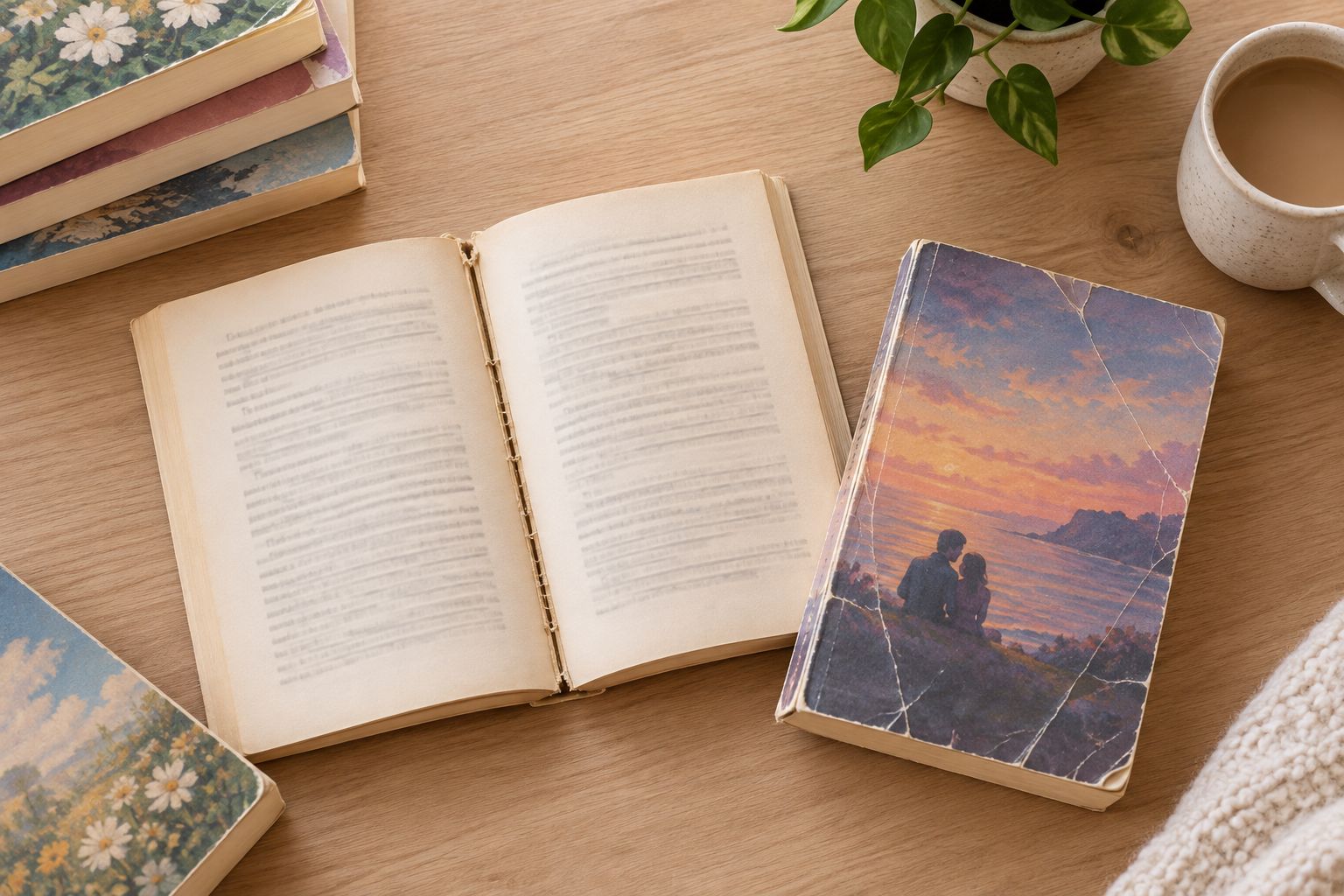
Start with the seller's written description and any photographs of the actual copy. General labels such as good or acceptable need context; do not assume every seller uses them in exactly the same way. Our guide to reading used-book condition descriptions helps you turn those labels into practical checks.
Separate cosmetic wear from anything that affects reading. A creased cover and a loose page are different concerns. An inscription might be fine in your own reading copy but unsuitable for a gift, while highlighting matters more if you find marked text distracting.
Best for everyday reading: choose intact, readable pages over a flawless-looking cover. For a shelf collection, you can give more weight to matching formats and cover designs. Do not let either preference replace checking the binding and text.
- Check for loose, missing, or damaged pages.
- Read notes about highlighting, writing, and inscriptions.
- Distinguish cover wear from damage to the binding.
- Check for disclosed moisture damage or odors.
- Confirm whether photographs show the actual copy or a representative cover.
6. Compare the whole order against your budget
Write down your spending limit before reviewing the cart. Then check the order total, shipping terms, and applicable taxes at checkout. A comparison of book listings alone does not tell you what the finished order requires.
Build your 2026 reading budget around books you genuinely want to read, not around filling a cart. Our guide to comparing shipping costs when buying books explains the checks to make before committing. Read the seller's current terms rather than assuming a particular shipping or return policy.
If you are deciding between 2 titles, compare story fit and copy condition before adding both. Buying fewer books is a valid decision when only one matches your preferences. A longer wishlist does not have to become a larger order.
- Set a spending limit before opening the cart.
- Review the complete checkout total before payment.
- Read current shipping and return terms.
- Remove books added only to make the order feel worthwhile.
7. Keep a focused wishlist for fresh finds
Use a simple note with the title, author, format preference, and reading-order position. Add a short reason you want each book, such as workplace romance or a familiar author's standalone. That reason helps when you return to a title you saved weeks ago.
Flippinpagesbookstore adds fresh stock weekly. Best for readers with flexible wishlists: check fresh finds against your list rather than starting every visit from scratch. The weekly additions give you a reason to browse again, not a promise about any particular title.
Keep your 2026 list selective. If a book no longer fits your interests, remove it; if you are waiting for a specific edition, record that detail. You can enjoy browsing without treating every discovery as a purchase.
- Save the exact title and author.
- Note your preferred format and acceptable condition.
- Record the series position when relevant.
- Remove duplicates and books you no longer want.
Browse used books for your wishlist
Explore fiction and romance, then check each listing for the copy details that matter to you.
Compare physical-book options for romance readers
Choose your purchase route according to what matters most: a reading copy, a particular edition, or an unmarked gift. These are shopping options, not guarantees about a seller's current listings or terms.
| Option | Best for | Main advantage | Key limitation |
|---|---|---|---|
| Flippinpagesbookstore used books | Budget-conscious fiction and romance readers | A used-book selection with fresh stock added weekly | You still need to check the details of each listed copy |
| Used-book marketplace listings | Readers searching for a particular edition | You can compare individual seller listings | Condition descriptions and seller terms need separate checks |
| New physical copies | Readers who prioritize an unused copy | Removes the need to assess previous-reader wear | An unused copy does not resolve story fit or reading-order questions |
| Secondhand gift copies | Readers choosing a personal gift | Lets you select a story with the recipient in mind | Inscriptions and visible wear require closer attention |
Choose by purpose, not by format alone. A used paperback can suit everyday reading, while a gift needs closer attention to presentation. A new copy still needs the same spoiler-free story screening.
Common mistakes contemporary romance shoppers make
Treating a trope as a complete recommendation
Enemies to lovers describes a relationship setup, not the book's humor, emotional intensity, or content. Pair the trope with a tone check and your boundaries. A familiar label is a starting point, not a reason to skip the description.
Confusing women's fiction with genre romance
A novel can include an important relationship without making that relationship its central story. Check the publisher's description and category. If you specifically want the romance genre's optimistic ending, choose a book identified as romance rather than inferring the category from its cover.
Assuming matching covers mean matching editions
Cover artwork does not establish format, dimensions, or edition details. Check the listing information if a coordinated shelf matters to you. If your goal is simply to read the next story, avoid turning a cosmetic preference into a requirement.
Reading later installments' descriptions too early
A later book's premise can reveal an earlier couple's outcome or a change in a recurring character's life. Check reading order first. Then read only the description of the installment you are considering.
Buying a bundle of possibilities instead of one good fit
Several vaguely appealing books do not replace a carefully chosen title. Start with 1 book that fits your preferences when you are trying an unfamiliar author. Add more after you know whether the writing style works for you.
FAQ
What's the best way to buy contemporary romance books online?
Choose physical books by story fit, reading order, and copy condition before reviewing the complete checkout total. Start with the publisher's description and avoid detailed plot recaps if you want a spoiler-free purchase.
Does contemporary romance mean the book was published recently?
No, contemporary romance refers to a present-day setting rather than a recent publication date. Check the story description instead of using the publication date as your only guide.
Where can I shop for physical used romance books?
Flippinpagesbookstore sells physical used books, including fiction and romance, with fresh stock added weekly. Check individual listings for the details of the copy you are considering.
How do I choose a romance without getting spoilers?
Read the publisher's premise and clearly labeled spoiler-free comments about tone and pacing. Use brief content notes for specific boundaries, and avoid ending discussions or chapter summaries.
Can I read a contemporary romance series out of order?
Follow the author or publisher's reading-order guidance for the particular series. Connected books can focus on different couples while still revealing events from earlier installments.
Is a used paperback better than a hardcover for romance reading?
Choose the format that suits how you read rather than treating either one as automatically better. Check the individual copy's binding, pages, and format details before deciding.
What should I check before paying for used romance books?
Confirm the title, author, physical format, reading order, and condition notes. Then review the complete checkout total and the seller's current shipping and return terms.
One last thing
The next book in your series is not always the best next purchase. If you cannot confirm its reading order or copy condition, keep it on your wishlist and choose a clearly identified standalone instead. Your 2026 reading list should help you choose a book you want to open, not pressure you to complete a collection.