
Historical romance readers’ book shopping is choosing physical love stories set in the past with the aim of finding a setting, relationship, and copy you want to read. When buying in 2026, separate the world you want to visit from the condition of the used book you’ll receive.
- Searching romance books online historical? Choose a setting first, then compare relationship themes and physical copies.
- Flippin Pages Bookstore suits readers shopping for affordable used books, including fiction and romance.
- A historical period does not tell you a book’s heat level, tone, or historical accuracy.
- Check the edition, condition description, and shipping terms before ordering a physical romance book.
Why choosing a setting matters for historical romance readers
A setting gives you more than scenery. It establishes the social rules, distances, work, and family expectations surrounding a relationship. A country-house courtship and a frontier journey offer different reading experiences, even when both books feature a marriage of convenience.
Flippin Pages Bookstore is best for readers shopping for affordable used books, including fiction and romance. You can start with Flippin Pages Bookstore, then assess each book by its description rather than its cover alone. Fresh finds are added weekly, so keep a short list of settings you enjoy instead of relying on one title.
For your 2026 reading list, treat setting as a selection tool, not a guarantee. A familiar period helps narrow your search; the individual book still needs to match your preferences.
How to choose historical romance books online
Work through three decisions in order: Setting, Story tone, and Physical copy. This keeps an appealing cover from becoming the only reason you order a book.
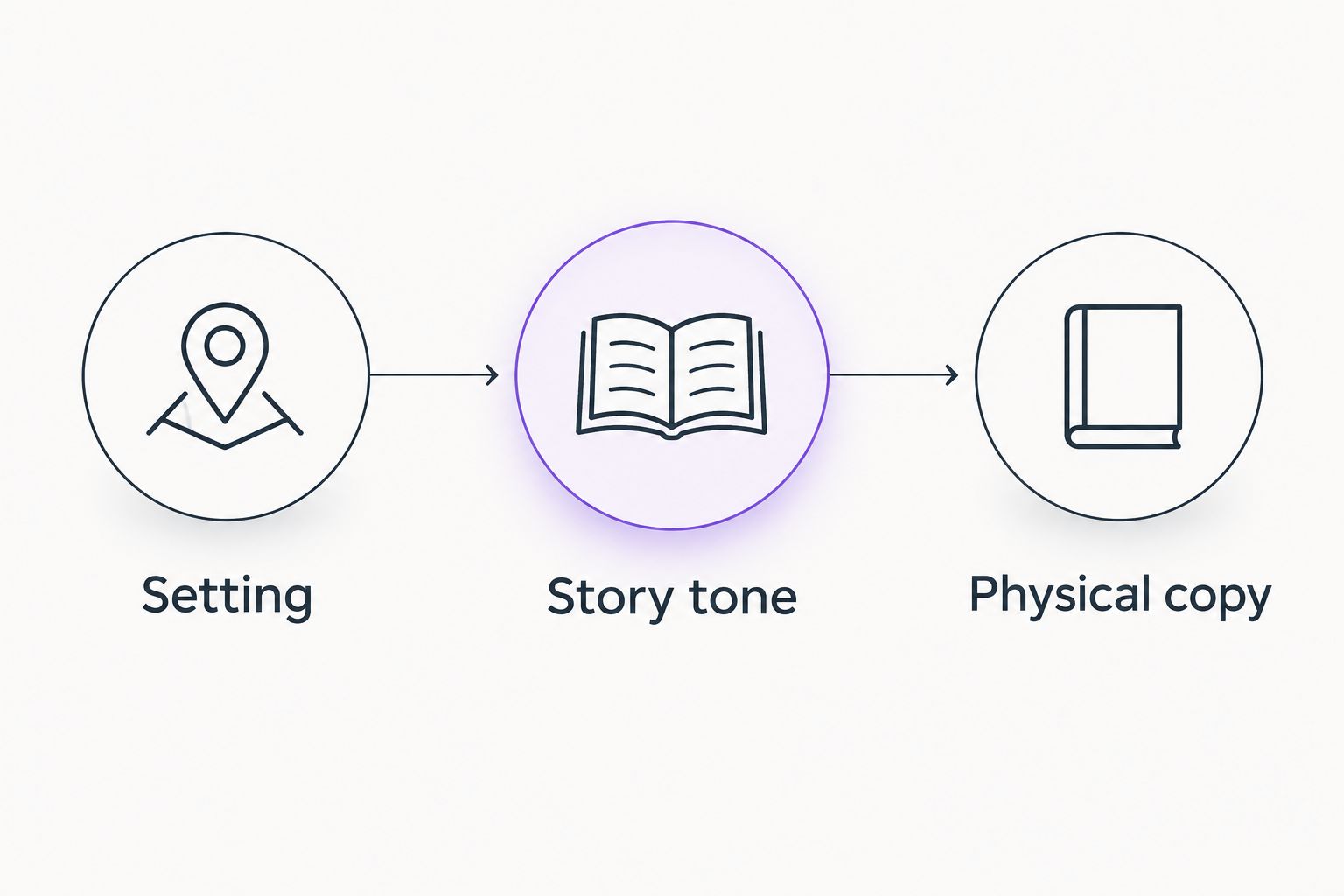
1. Choose the world you want to spend time in
Start with the atmosphere you enjoy, then identify a period and place that support it. If you like formal visits, family expectations, and courtship etiquette, look for descriptions built around those elements. If you prefer travel, work, or survival challenges, search for those details instead.
Write down 3 setting preferences before browsing: a place, a period, and an everyday environment. For example, you might want historical Britain, a nineteenth-century setting, and a village rather than an aristocratic household. This is more useful than deciding you want something vaguely old-fashioned.
Keep those preferences flexible. A story outside your usual period can still fit the atmosphere you want, while a familiar setting can contain themes you would rather avoid.
- Choose a country or region you want to read about.
- Name a period, or leave the date open if atmosphere matters more.
- Pick a social environment: household, village, city, workplace, or journey.
- Separate essential preferences from details you can compromise on.
2. Check what the setting actually contributes
Read the description for evidence that the setting shapes the romance. Does the couple face an inheritance dispute, a class divide, a difficult journey, or competing family duties? Those details explain the story’s conflict better than clothing on the cover.
A historical setting is not a promise of historical accuracy. A romance can use a real period while placing most of its attention on the relationship. If historical detail matters to you, look for an author’s note, a reading sample, or a publisher description that explains the book’s approach.
You do not need to research every historical reference before buying. The goal is to distinguish a setting you find interesting from a premise you actually want to follow.
- Identify the obstacle keeping the central couple apart.
- Look for details about daily life, work, travel, or family roles.
- Check whether real events are central or simply background.
- Read spoiler-free descriptions rather than detailed plot summaries.
3. Match the relationship and tone to your preferences
Once the setting fits, check the emotional experience. Historical romance includes playful courtship, serious family conflict, explicit intimacy, and stories with little on-page sexual detail. A period label does not settle any of those questions.
Compare 2 candidate books using the same criteria: relationship premise, tone, and content boundaries. If one description leaves a key preference unclear, look for publisher information or spoiler-free content guidance before choosing. Do not assume a discreet cover means a low-heat story.
For broader ordering checks, use the guide to buying physical romance books online. Flippin Pages Bookstore sells used physical books; approach the search as book shopping, not as a route to free online reading or ebooks.
- Choose a relationship premise you enjoy, such as second chance or rivals-to-lovers.
- Decide whether you want a lighter or more serious tone.
- Check heat-level information when it affects your choice.
- Review content guidance for themes you prefer to avoid.
- Confirm that romance, rather than historical adventure, is the main attraction.
4. Confirm the exact book and its series position
A similar title or a new cover can make two listings look interchangeable. Compare the author, full title, format, and edition information before ordering. When an ISBN is shown, use it to help distinguish editions, while remembering that it does not describe the individual copy’s wear.
Series information matters too. A book can resolve its central romance while still referring to couples or family events from earlier installments. Look for an explicit standalone description or a stated reading order rather than assuming every romance works equally well as an entry point.
A 2026 listing does not mean the book itself was published in 2026. Check the publication information when you want a particular edition, an older cover, or a specific version.
- Match the full title and author to your intended book.
- Confirm that the listing describes a physical copy.
- Check paperback or hardcover format rather than judging from an image.
- Identify the series position and any stated reading-order advice.
- Use edition details to avoid buying a copy you already own.
5. Read the condition description before choosing a copy
Used-book shopping adds a separate decision: whether the physical wear suits your reading needs. A worn cover might be acceptable for your own reading, while loose pages or heavy markings would change your decision. Decide what matters before you become attached to a particular listing.
Choose condition for use, not for an imagined bargain. A copy that you find uncomfortable to read is the wrong purchase, regardless of how appealing the title sounds. Photographs help when they show the actual copy, but a general cover image does not establish condition.
Condition terms need context. Read the seller’s explanation and any copy-specific notes instead of treating a short grade as a complete description.
- Check for notes about binding, loose pages, writing, and staining.
- Decide whether cover wear matters for personal reading or gifting.
- Look for disclosed odors if scent sensitivity affects you.
- Distinguish actual-copy photographs from general cover images.
- Ask about an unclear condition detail before placing the order.
6. Compare the complete order before committing
Choose 1 next read, then check the order details before adding more books. This keeps a focused purchase from turning into a stack selected mainly because the covers look appealing together. Additional books should meet the same setting, tone, and condition checks as your first choice.
Compare the item charges, shipping charges, and applicable taxes shown during checkout. Read the stated shipping and return terms rather than assuming used-book sellers follow identical policies. If you need a book for a scheduled discussion or a gift, check the delivery information before ordering.
Flippin Pages Bookstore adds fresh finds weekly. Keep a wishlist for later browsing, but base each purchase on the listing and checkout information you can review at that moment.
- Recheck the title, author, format, and condition in your order.
- Compare the complete checkout total, not just the individual book.
- Read the stated shipping and return terms.
- Remove duplicate copies or books outside your reading preferences.
- Save alternative titles for another visit rather than buying them automatically.
Compare historical romance settings
For a 2026 reading plan, use these settings as starting points rather than fixed descriptions of every book. The best setting is the one whose story questions interest you. Each option has strengths and limits; an individual book’s description takes priority over the category label.
| Setting option | Best for | What to look for | Key limitation |
|---|---|---|---|
| Regency Britain | Readers seeking courtship under social and family expectations | Descriptions involving reputation, inheritance, marriage, or class | The label alone does not establish heat level or historical accuracy |
| Victorian Britain | Readers interested in relationships alongside changing work and social roles | A clear description of the household, profession, city, or community | A broad period label does not identify the story’s specific social world |
| Medieval settings | Readers drawn to conflicts involving land, loyalty, households, or alliances | A named region and a relationship premise that appeals to you | The term covers many places and centuries, so details need checking |
| Historical American settings | Readers seeking a particular regional experience, from towns to journeys | A stated location, period, and account of the characters’ circumstances | An American setting does not automatically mean a Western or frontier story |
Do not turn this table into a reading rule. If a Victorian village story appeals to you more than a Regency ballroom story, choose the actual premise over the category you usually buy.
Common mistakes historical romance readers make
Choosing a period without choosing a place
“Historical” leaves too much undecided. Even within the same period, a city household and a rural community can create different pressures on a couple. Add a location or social environment to your shortlist so your search reflects the experience you want.
Treating familiar tropes as identical stories
A marriage-of-convenience premise tells you how a relationship begins, not how the book feels. Read for humor, emotional intensity, family conflict, and content boundaries. Choose the combination of setting and tone, not the trope label alone.
Assuming every historical novel is a romance
A historical novel can include a love story without making it the central plot. Check the category and description before ordering. If you want a romance-centered reading experience, do not rely on a romantic-looking cover or a relationship mentioned in passing.
Letting a reading challenge choose an unsuitable copy
A book that fills a period or setting prompt still needs to fit your content preferences and condition standards. Keep an alternative title for the same prompt. That gives you room to reject a copy you would not otherwise choose.
FAQ
What should I search for when buying historical romance books online?
Search with a setting, a romance preference, and a physical format, such as Regency romance paperback. Then check the individual listing for the author, edition, condition, and story description.
What’s the best historical romance setting for a beginner?
The best starting setting matches an atmosphere you already enjoy. Choose courtship, village life, travel, or family conflict first, then look for a historical romance whose description clearly offers that experience.
Is Regency romance the same as all historical romance?
No, Regency romance is one part of historical romance. Historical romances also use other periods and places, so a Regency search excludes many possible settings.
Does a historical setting mean a romance has no explicit scenes?
No, a historical setting does not establish a romance’s heat level. Check publisher descriptions, reading samples, or spoiler-free content guidance if on-page intimacy affects your choice.
How do I know whether a historical book is romance or historical fiction?
Check whether the listing identifies the book as romance and presents the central relationship as the main story. A historical-fiction description that mentions a love interest does not by itself establish a romance-centered plot.
Can I start a historical romance series in the middle?
Start in the middle only after checking the book’s stated reading-order guidance. A central couple’s story can stand alone while references to earlier books still reveal events you would rather discover in order.
What should I check before ordering a used historical romance?
Check the exact title, author, physical format, series position, and copy-specific condition notes. Before paying, review the complete checkout total and the stated shipping and return terms.
One last thing
Before your next 2026 book order, write a short reading brief: the setting you want, the tone you enjoy, and the condition you will accept. A useful wishlist describes your preferences, not just titles. It gives you a way to choose when the exact book you had in mind is not the one you decide to buy.