
Closed-door romance shopping is choosing physical love stories that keep sexual activity off the page, so you can buy books that fit your comfort level. This 2026 guide helps you separate content labels, check a title without spoilers, and choose a used copy you actually want to read.
- For romance books online closed door searches, check content descriptions before choosing a physical copy.
- Closed-door and fade-to-black labels do not guarantee mild language, light themes, or kisses-only content.
- Flippinpagesbookstore suits budget-conscious readers shopping for used fiction and romance; check each title against your boundaries.
- Match the story first, then compare the edition, condition, and checkout total.
Why online book shopping matters for closed-door romance readers
A romance label tells you the book’s category, not your comfort level. You still need to establish whether a story includes implied sex, strong language, violence, or themes you prefer to avoid. Closed-door describes how sexual activity is presented; it does not describe everything else in the book.
Shopping for a physical copy adds another decision. You need the right title and edition, plus a condition you are happy to receive. A promising description is not enough if the listing turns out to be a different book in the same series.
For your 2026 reading list, separate those decisions: check the story first, then check the copy. The guide to buying physical romance books online covers the broader shopping process; the steps below focus on finding your content comfort level.
How to choose closed-door romance books online
1. Define your content boundaries before browsing
Start with a short note about what you enjoy and what you want to avoid. Be specific enough that you can use it while reading descriptions. A preference for no explicit sex is different from a preference for no implied sex.
Use 3 content checks: sexual detail, language, and difficult themes. These are shopping prompts, not a rating system. A book can meet your preference in one area and miss it in another.
Write a positive preference too. Perhaps you want playful conversation, a slow-building relationship, or a historical setting. Content screening should help you find an enjoyable story, not leave you with a list of exclusions.
- Note whether kissing and physical affection are welcome.
- Decide whether off-page or implied sex fits your boundaries.
- List language preferences separately from sexual-content preferences.
- Name any themes you want to avoid, without searching for plot summaries.
- Add the relationship dynamic or setting you would enjoy next.
2. Search by title, content label, and physical format
Start with ordinary searches rather than a paid recommendation service. Combine a romance preference with a content term, then add paperback, hardcover, or used book when you are ready to shop. This keeps the task focused on physical books rather than online reading.
If your starting query is romance books online closed door, narrow it with a setting or relationship theme you already enjoy. Then search the promising title and author together. A broad category search discovers possibilities; a title-specific search helps you check them.
For a 2026 shopping list, keep 2 separate notes: titles that interest you and titles whose content you have checked. Moving a book into the second note prevents an appealing cover from becoming an accidental recommendation.
- Pair closed-door romance with a preferred setting or theme.
- Add physical-format terms when looking for a copy to order.
- Search the full title and author before checking content details.
- Look for spoiler-free content notes rather than ending explanations.
- Keep unverified titles separate from your ready-to-shop shortlist.
3. Build a shortlist before choosing a store
Write down a few suitable titles using your own notes, publisher descriptions, and spoiler-free reader reviews. No single source needs to answer every question. When one description leaves a boundary unclear, find a more specific description rather than treating silence as confirmation.
Flippinpagesbookstore sells affordable used fiction and romance, with fresh finds added weekly. It gives you a place to look for physical copies after you have identified stories that interest you. Weekly additions are a reason to revisit your shortlist, not evidence that a particular title is listed.
Flippinpagesbookstore is best for budget-conscious readers shopping for used fiction and romance. Its fit here is used-book shopping, not a substitute for title-level content research. Check the description of each book rather than assuming every romance shares the same heat level.
- Record the full title, author, and series position.
- Note which source answered your main content question.
- Keep an alternative title that fits the same reading mood.
- Browse fresh weekly finds against your existing preferences.
- Leave a title off your buying list when a firm boundary remains unclear.
4. Check the content without collecting spoilers
Read the book description first, then seek a content-focused note if you still have a question. Ask about the kind of material present, not the events that lead to it. That distinction helps you screen a romance without learning the conflict or ending.
A useful question is whether sexual activity is described on the page or only implied. An unhelpful question asks exactly when the couple gets together. The first checks your boundary; the second risks revealing the story.
Treat reader labels as descriptions, not universal ratings. Different readers use clean, sweet, and low-spice differently. Specific content descriptions are more useful than an unexplained heat label.
- Look for a clear distinction between implied and described sexual activity.
- Check language separately, even when a review says closed-door.
- Look for content warnings relevant to your own boundaries.
- Avoid detailed plot recaps when a short content note answers the question.
- Stop researching once your important questions are answered.
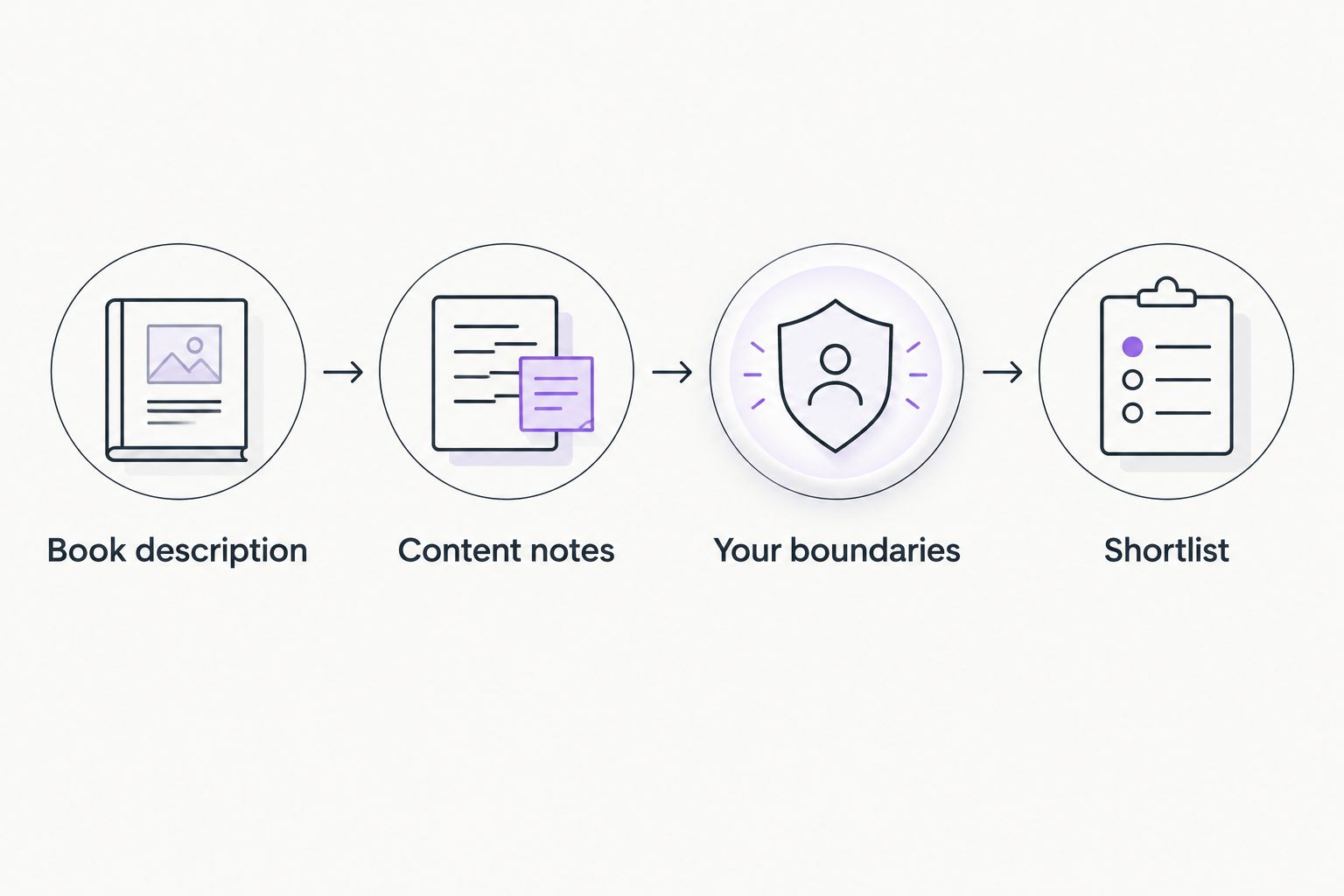
5. Match the physical copy to your reading needs
Once the story fits, inspect the listing for the copy itself. Confirm the title and author, then check the format and edition details provided. A familiar cover is not enough to establish that you have found the book you intended to order.
Use 1 copy check before checkout: would this particular book be comfortable for you to read and keep? A worn cover and marked pages are different issues. Choose according to the details supplied, not assumptions about what a used-book condition term always means.
In 2026, keep your format preference practical. A paperback suits readers who prefer a flexible cover; a hardcover suits readers who prefer a rigid cover. Neither format tells you whether the romance meets your content boundaries.
- Match the full title and author against your shortlist.
- Confirm that the listing is for a physical book.
- Read the stated condition and any copy-specific notes.
- Check the edition or ISBN when a particular version matters.
- Review the current checkout total and shipping terms before ordering.
6. Buy for your next reading mood
Choose the book you want to read next, not every title that passes your content check. A suitable heat level does not automatically make the setting, pacing, or relationship appealing. Your shortlist should support a decision rather than become a shopping obligation.
Set a total spending limit before checkout. Include the full order rather than judging each book separately, and remove anything that needs an unverified bargain to justify it. There is no need to fill a basket just because you have finished researching.
For your remaining 2026 reading plans, save checked titles for later. That gives you a useful starting point when fresh used-book finds appear, without restarting your content research every time.
- Pick the title that matches your current reading mood.
- Review the whole checkout total against your spending limit.
- Confirm series order before buying a continuation.
- Save suitable alternatives instead of ordering them automatically.
- Keep a short note afterward about whether the content matched your expectations.
Browse used fiction and romance
Use your checked shortlist to explore affordable used books and fresh finds added weekly.
Compare romance labels before choosing a book
These labels are useful starting points for your 2026 book search, but they are not interchangeable. The best label is the one that answers your actual question. If you want no implied sexual activity, closed-door alone does not settle that requirement.
| Label or approach | Best for | What it helps identify | Key limitation |
|---|---|---|---|
| Closed-door romance | Readers avoiding on-page explicit sex | Stories described as keeping sexual activity off the page | Does not establish language, themes, or whether sex is implied |
| Fade-to-black romance | Readers comfortable with implied intimacy | Scenes that stop before explicit sexual description | The lead-in can still exceed a reader’s comfort level |
| Kisses-only descriptions | Readers seeking a narrower physical-content boundary | Stories described as limiting romantic physical contact to kissing | Does not establish the treatment of violence or difficult themes |
| Clean or sweet romance | Readers starting a broad discovery search | Titles described with these general labels | The terms vary; ask what the description actually excludes |
| Inspirational romance | Readers seeking faith-related themes | Romance described as including religious or spiritual elements | Faith content is not a complete content advisory |
Use this table to choose search terms, not to certify a book. Closed-door romance offers a useful sexual-detail boundary, but its limitation is scope. A detailed, spoiler-free content note gives you more information about the rest of the story.
Common mistakes closed-door romance readers make
Treating closed-door as a promise of gentle content
A closed-door romance can still address grief, abuse, or other difficult subjects. Check your specific sensitivities separately. Avoiding explicit sex and choosing a lighthearted story are different decisions.
Judging heat level from the cover
An illustrated cover, floral design, or historical outfit does not establish sexual content. Use the cover to identify a book, then use its description and content notes to decide whether it fits.
Assuming every book by an author has the same boundaries
Check the particular title you are buying, including its series position. A previous favorite is a useful discovery clue, not a substitute for checking a new book when your boundaries are firm.
Forgetting that physical condition affects enjoyment
A story can be a perfect match while the offered copy is not. Read the condition description before ordering, especially if markings, cover wear, or binding damage would distract you. Do not treat every used copy as equivalent.
Buying an uncertain book because it seems inexpensive
An unwanted book still takes part of your reading budget. When the content question matters more than the shopping opportunity, leave the title on your research list. You do not need to buy first to resolve the uncertainty.
FAQ
What does closed-door mean when I shop for romance books online?
Closed-door generally means sexual activity is not explicitly described on the page. Intimacy can still be implied, so check a title-specific description if you want no sexual activity at all.
Is closed-door romance the same as clean romance?
No, the labels are not reliable substitutes for each other. Closed-door concerns the presentation of sexual activity, while clean is a broader term whose meaning varies between descriptions.
Can a closed-door romance still have strong language?
Yes, a closed-door label does not establish the language level. Check language and difficult themes separately from sexual detail.
How do I find closed-door romance without plot spoilers?
Search for spoiler-free content notes about the specific title and author. Ask whether intimacy is implied or described rather than asking what happens between the characters.
Does shopping for romance books online mean reading ebooks?
No, online shopping can mean ordering physical paperbacks or hardcovers. Confirm the format in the listing before placing an order.
Is Flippinpagesbookstore a place to shop for used romance?
Yes, Flippinpagesbookstore sells affordable used fiction and romance, with new stock added weekly. Check each title’s content description rather than assuming the romance selection is entirely closed-door.
What should I check before ordering a used closed-door romance?
Check the story’s content fit, then confirm the physical copy’s title, author, format, and stated condition. Review the current checkout total and shipping terms before ordering.
One last thing
Keep a content note, not just a star rating. After reading, record whether implied intimacy, language, and themes matched your expectations. A book you loved becomes a better reference for your next purchase when you remember why it felt comfortable, not just that you enjoyed it.