
Check the author’s official series list before buying romance online, then match the book’s title, series name, and position to the physical copy you plan to order. Follow the author’s recommended reading order when provided; if no recommendation exists, publication order is a practical starting point, but check whether a prequel, companion novel, or continuing storyline changes where you should begin.
- For romance books online series reading order, start with the author’s official list, not cover design.
- Publication order is a practical fallback; chronological order follows events within the story.
- Match the title, author, series position, and physical format before ordering used books.
- Flippinpagesbookstore suits budget-conscious readers shopping for physical used romance books; check each copy’s details before ordering.
Why this matters
A book can look like a fresh start while continuing a relationship established elsewhere. Another can belong to a shared series but focus on a different couple. Those distinctions matter more than matching covers when you want a satisfying first read.
For your 2026 reading list, separate the reading decision from the shopping decision: establish which title comes next, then choose a copy. Flippinpagesbookstore sells affordable physical used books, including fiction and romance, with new stock added weekly. Check the individual listing rather than assuming a series title or edition is offered.
How do you check series reading order before buying romance online?
Use the author’s recommended sequence, then verify the exact book against the seller’s listing. This keeps a reading-order search separate from an edition search, which is especially useful when used copies have different covers.
Follow these 5 checks before placing a 2026 book order.
- Find the official list. Search the author’s name alongside the series name and reading order. Look for an author-maintained books page, series page, or reading guide. A publisher’s series page is another useful reference.
- Identify the starting title. Look for an explicit starting point, not just the earliest event in the fictional timeline. Note whether the author labels the book a prequel, companion, or optional extra.
- Check the relationship structure. Read the spoiler-free description to establish whether the same couple’s story continues or a new couple takes the lead. Do not assume a new couple means no earlier events are revealed.
- Match the copy. Compare the title, author, subtitle, format, and any series number shown. If an ISBN appears, use it to help identify the edition rather than treating it as a reading-order number.
- Review the order. Confirm you have the intended next book, not a duplicate edition or a later installment. Read the copy’s condition description and check shipping terms before completing the purchase.
Keep a short note containing the author, series, next title, and books you already own. That note becomes your shopping reference when listings use different cover art or omit a series number.
A useful reading-order check ends with a specific title. If your search only tells you the series name, you have not yet identified the next book to buy.
Which reading order should you follow?
Publication order and chronological order answer different questions. Publication order follows release sequence; chronological order follows events within the fictional timeline. An author-recommended order can follow either approach or specify a different starting point.
| Approach | Best for | Main benefit | Main limitation |
|---|---|---|---|
| Author-recommended order | Readers starting an unfamiliar series | Gives an explicit route through the author’s books | You still need to confirm which extras are optional |
| Publication order | First-time readers without a separate recommendation | Follows the release sequence | A later-published prequel can sit earlier in the fictional timeline |
| Chronological order | Readers deliberately following the story timeline | Places events in fictional sequence | A prequel can assume familiarity with later events |
| Individual couple’s book | Readers choosing a connected standalone | Lets you choose by the central relationship | Side characters and earlier outcomes can still reveal spoilers |
Author-recommended order: best for an unfamiliar series
Start here when the author gives a clear recommendation. Read any accompanying note about where newcomers should begin, rather than copying a numbered list without its explanation.
The limitation is scope. A list might include novels, novellas, and bonus material together, so check which entries belong to the main story before building your shopping list.
Publication order: best for a straightforward fallback
Use publication order when no separate reading recommendation is provided. It gives you a clear sequence without asking you to reconstruct the fictional timeline.
Its drawback is that a prequel released later will not appear at the beginning. That is not automatically a problem: the question is whether the author recommends reading that prequel first.
Chronological order: best for a deliberate timeline read
Choose chronological order when following events in sequence is your specific goal. Confirm the order against an official guide rather than relying on a list that offers no explanation.
Do not assume chronological means spoiler-free. A story set earlier can still contain references intended for readers who know the main series.
Connected standalones: best for choosing by couple
A connected standalone centers a book’s main romance while sharing characters or a setting with other titles. Check the author’s description before treating any installment as your starting point.
This approach gives you more freedom to choose a relationship premise you enjoy. The trade-off is that supporting characters’ appearances can disclose outcomes from earlier books.
Why romance series reading order varies
Reading order depends on how the books connect, not simply on the number printed on a cover. These factors explain why a series list needs more than a quick glance:
- Continuing relationships: If a couple’s story runs across installments, start with the first part rather than entering midway through that relationship.
- Shared characters: A different central couple does not remove references to earlier relationships, family events, or character histories.
- Prequels: A book set before the main story is not necessarily the author’s recommended starting point.
- Companion stories: A novella or side story can sit between novels without serving the same role as a main installment.
- Crossovers and spin-offs: A new series name can still connect to an earlier fictional world. Check whether the author provides a starting-point note.
For a 2026 shopping list, record these distinctions beside the title. A note such as optional companion or start here is more useful than a cover screenshot alone.
How do you match the reading list to a used physical book?
Once you know the next title, check that the listing describes the copy you want. Your aim is to confirm both the story and the physical format, not to find a cover that merely resembles the reading guide.
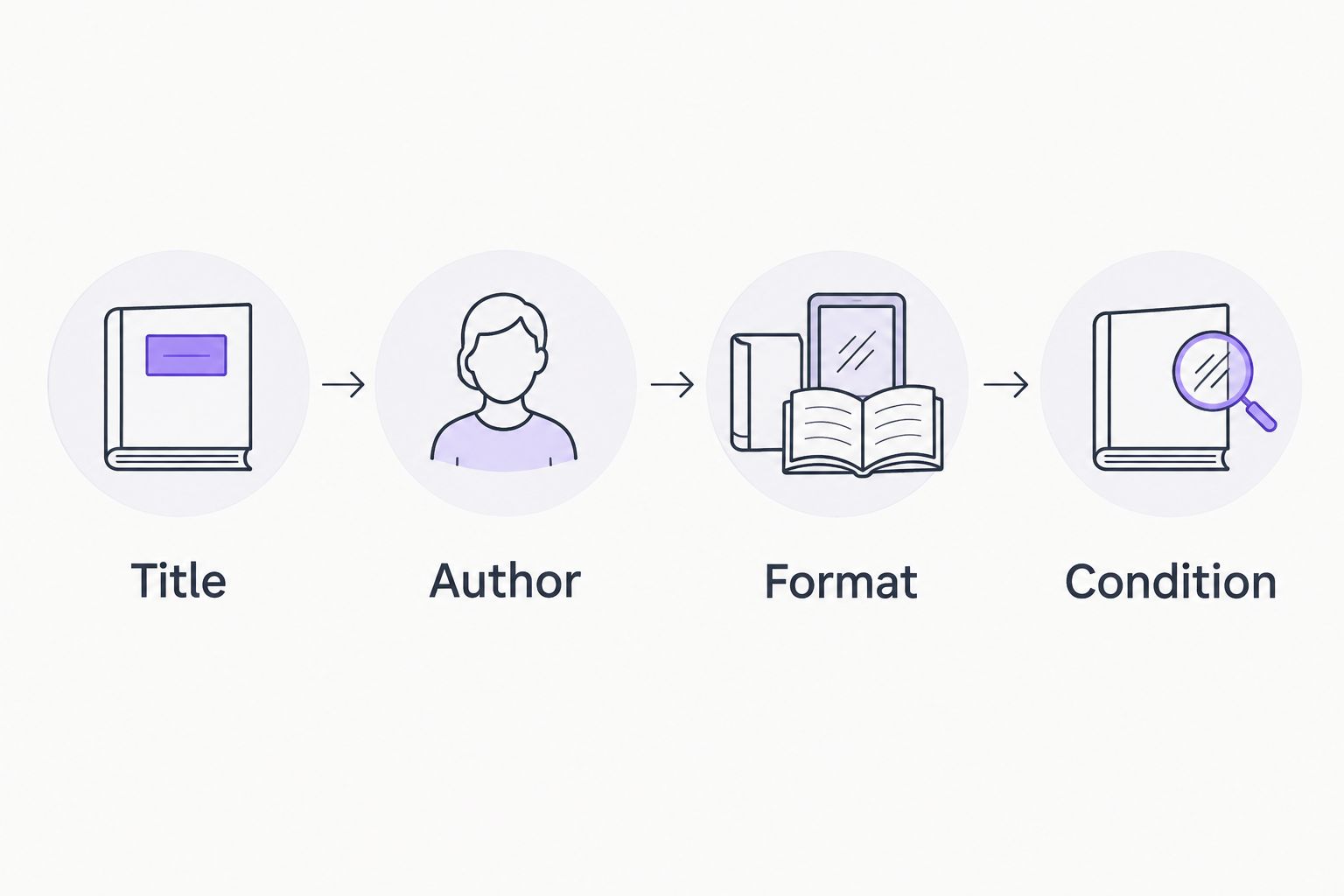
Use these four headings for your comparison:
- Title: Match the full title and any subtitle. Watch for wording that identifies a collection or combined edition rather than an individual novel.
- Author: Confirm the author’s name, especially when your search returns similar titles.
- Format: Check that you are ordering a physical paperback or hardcover, not another format.
- Condition: Read the description for wear, writing, or other disclosed issues that affect your choice.
An ISBN identifies an edition and format; it does not tell you when to read the story. Matching an ISBN is useful when you want a particular edition, but you still need the series guide to establish reading position.
Different cover art alone does not establish a different story. Compare the book details before dismissing a copy or adding another edition of a title you already own.
For the wider purchase checklist, use the guide to buying physical romance books online. Keep your reading-order note beside the listing while you make the final comparison.
How do you shop without buying the wrong installment?
Build a next-book list, not an entire-series cart. Start with the next unread title and add later books only when you have confirmed their place and want to commit to that reading sequence.
For your 2026 book list, keep 3 fields: already owned, next to read, and optional extras. Put alternate editions of an owned title in the first field so a different cover does not lead to an accidental duplicate.
If you are trying a new author, beginning with the recommended starting book lets you judge the writing before choosing further installments. Buying several at once reduces repeat shopping, but it also commits more of your book budget before you know whether the series suits you.
Flippinpagesbookstore is best for budget-conscious readers shopping for physical used romance books. The store adds fresh finds weekly, but a reading-order guide does not confirm the details of an individual copy. Review the listing and current purchase terms before deciding.
Browse physical used books
Keep your next-book list beside you while you compare titles and copy details.
Can you start with a later romance book in a series?
Start later only when the author identifies the book as a suitable standalone entry. A new central couple is a useful clue, but it is not enough by itself to establish that earlier books are unnecessary.
If avoiding spoilers matters more than choosing a particular couple, follow the recommended sequence. Skip customer reviews that discuss earlier endings and use the official description to check the book’s role.
Do you need to read romance novellas between the main books?
Read a novella between the main books when the author’s guide places it there and identifies it as part of the continuing story. If it is labeled optional, you can decide whether you want the extra material without treating it as a required purchase.
Check whether the story also appears in a collection you own. Compare the contents rather than assuming a different cover means different material.
What if two reading-order lists disagree?
Use the author’s explicit recommendation first, then compare what each list is actually organizing. A publication list and a chronological list can disagree without either making a mistake.
Check whether one list includes companion stories or uses an alternate title. If the disagreement remains unresolved, leave the uncertain book off your order until you establish its place.
FAQ
What’s the best way to check romance books online series reading order?
Start with the author’s official series list and follow any stated reading recommendation. Then match the next title to the seller’s physical-book listing before ordering.
Should I read romance books in publication order or chronological order?
Follow the author’s recommended order when one is provided; otherwise, publication order is a practical starting point. Chronological order follows fictional events and does not automatically avoid spoilers.
Can I read a connected standalone without reading the earlier books?
Use the author’s standalone guidance to decide whether you can begin with that book. A self-contained central romance can still reveal earlier couples’ outcomes through supporting characters.
Do I have to buy every novella in a romance series?
Buy a novella for the main reading sequence only when the author’s guidance establishes that role. Optional companion material can stay on a separate list until you decide you want it.
Does an ISBN tell me which book comes next?
An ISBN identifies an edition and format, not reading order. Use the author’s series guide for sequence and the ISBN to help confirm a particular physical edition.
Can different covers belong to the same romance novel?
Different covers can belong to editions of the same novel. Compare the author, full title, format, and edition details before buying another copy.
Where can I shop for physical used romance books?
Flippinpagesbookstore sells physical used books, including romance and fiction, and adds new stock weekly. Check individual listings and current purchase terms before ordering.
One last thing
A cover is a poor substitute for a reading list. Before your next 2026 order, write down the exact next title and compare it against the books already on your shelf. That small check helps you choose a new story rather than another edition of one you own.