Yes, buying used books online is safe when you check the seller, the copy’s condition, the checkout process, and the terms before paying. A secure payment page does not guarantee the right edition or an accurately described copy, so check those details separately.
- Is buying used books online safe? Yes, when seller details, book condition, payment security, and purchase terms check out.
- Flippinpagesbookstore sells affordable used books, including physical fiction and romance, with new stock added weekly.
- Choose a readable copy over an attractive cover when your budget is limited.
- Keep the listing and order confirmation so you can explain any mismatch after delivery.
Why this matters
A used-book order involves two separate decisions: whether you trust the transaction and whether you want that particular copy. A legitimate seller can offer a worn book that does not suit you; a polished-looking listing can still leave important questions unanswered.
For your 2026 book-shopping checklist, start with the guide to reading used-book condition descriptions. Buy the described copy, not the cover image you imagine receiving. That distinction matters when you want an unmarked romance novel, a matching series edition, or a gift.
Is buying used books online safe?
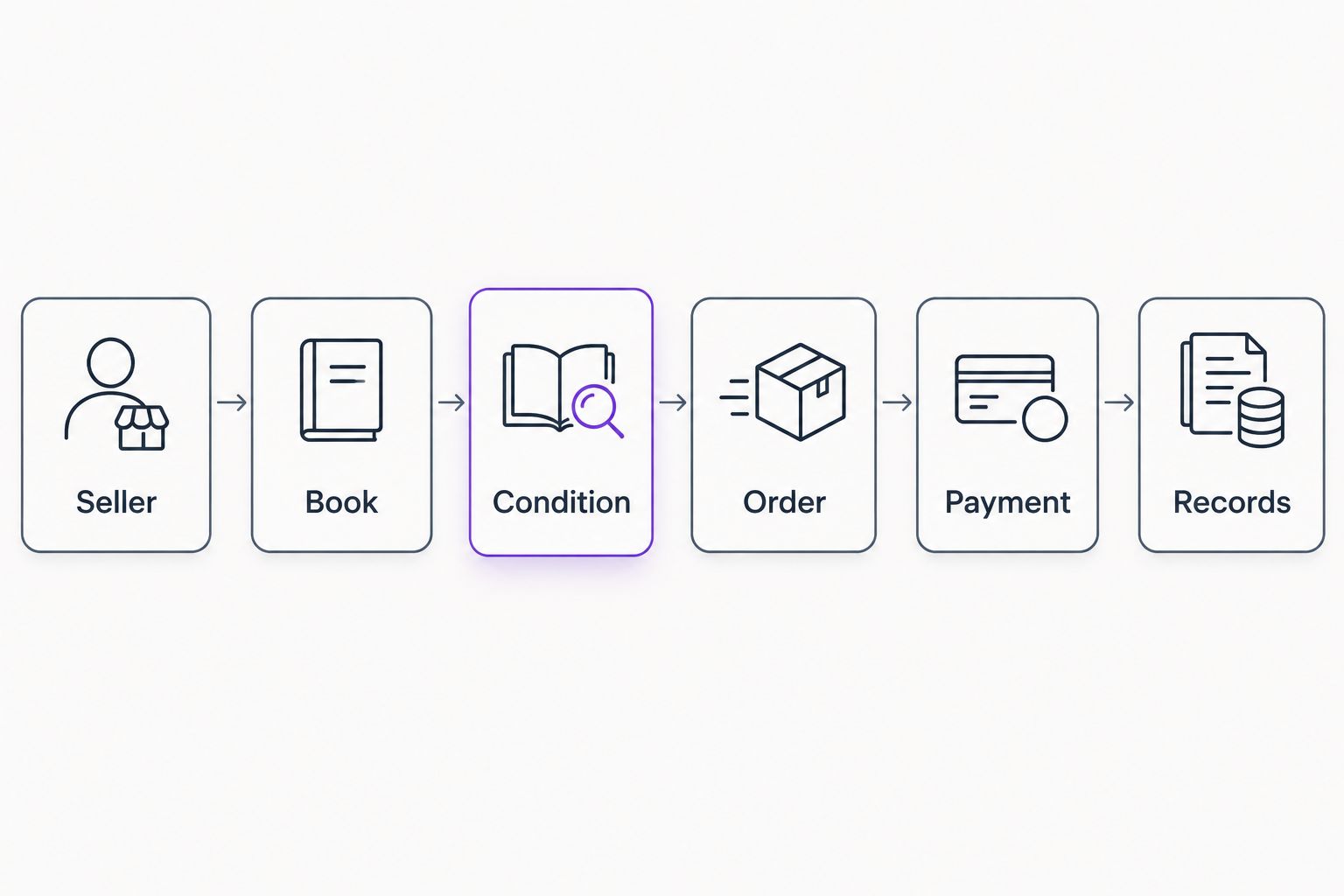
Yes, provided you can identify the seller, understand what you are ordering, and review the purchase terms before checkout. No single badge, photograph, or review replaces those checks. Use the following sequence for a physical fiction or romance order.
1. Check the seller
Look for a clear business identity and a way to ask about an order. Read the seller’s own purchase information rather than relying only on a search result or a social media post.
If reviews are available, read what they actually describe. Comments about accurate condition descriptions and responses to order problems address different questions from comments about enjoying a novel. Neither proves what will happen with your order.
Pause if you cannot work out who will take your payment or handle a problem. A familiar book title is not evidence that the seller is trustworthy.
2. Confirm the book
Match the title, author, format, and edition information to the book you want. For a series, confirm the volume rather than assuming similar covers mean the same installment.
Record 3 identifying details at minimum: the title, author, and format. Add the ISBN when the listing provides it, especially when you want a particular edition. Do not assume that a paperback listing includes a hardcover, a signed copy, or a particular cover design.
For romance shopping, also make sure you are ordering a physical book rather than a digital file or another item associated with the title. Keep that distinction on your 2026 checklist even when the search phrase simply says books online.
3. Read the condition description
Separate cosmetic wear from damage that affects reading. A bent cover corner and missing pages are not equivalent problems, even if both appear under a broad used-book label.
Look for information about writing, highlighting, stains, binding damage, odors, and missing components. A library stamp matters differently from a loose page. If a condition term is unclear, ask what it means for that copy rather than applying your own definition.
A stock cover image identifies a title; it does not show the wear on the book being sold. Where photographs show the actual copy, compare them with the written description. An unanswered condition question is a reason to wait, not a reason to assume the best.
4. Review the complete order
Check the final order total, delivery information, and any stated shipping terms before you submit payment. Assess the whole purchase rather than deciding from the book listing alone.
Read the return and problem-reporting terms as well. Find out how the seller handles an incorrect item, an item that differs from its description, and a simple change of mind. Those situations are different; do not assume the same rules apply to all of them.
If you need the book for a gift or book-club meeting, compare the stated delivery information with your deadline. Do not turn an estimate into a promise.
5. Check the payment page
Confirm that the checkout belongs to the seller or an identified payment provider. Look for HTTPS, but understand its limit: HTTPS encrypts the connection; it does not certify the seller’s honesty or the book’s condition.
Read the protection terms for your chosen payment method. Keep payment within the checkout process you have reviewed, and stop if an unexpected message asks you to send money elsewhere.
For a first purchase from an unfamiliar seller, consider starting with 1 book rather than a large order. That limits the size of the purchase while you assess your own experience; it does not guarantee a successful transaction.
6. Save the order details
Keep the confirmation, the condition description, and any messages answering your questions. Save relevant delivery information too, so you can distinguish a dispatch update from an arrival estimate.
When the package arrives, compare the book with the listing before discarding the packaging. Check the title, format, binding, and any condition points that mattered to your decision. If something differs, contact the seller through the stated process and explain the specific mismatch.
A useful 2026 purchase record shows what you ordered and what you received. A vague complaint is harder to explain than a clear description supported by photographs.
Which used-book copy should you choose?
Choose condition according to how you will use the book. A copy for your commute does not need to meet the same expectations as a gift or a matching shelf collection. None of these descriptions replaces the seller’s explanation of the actual copy.
| Copy description | Best for | Advantage | Drawback | Decision |
|---|---|---|---|---|
| Light cosmetic wear | Readers who accept visible use | Ordinary wear need not interfere with reading | The copy will not look untouched | Buy if the stated wear suits you |
| Writing or highlighting disclosed | Readers comfortable with annotations | You can decide knowingly whether marks matter | Notes can interrupt your reading | Buy only if you accept the markings |
| Library markings disclosed | Readers who prioritize the text | Stamps or labels need not prevent reading | Markings affect appearance | Check binding and other wear separately |
| Unclear or incomplete condition | Readers willing to ask before ordering | A question can clarify the listing | You cannot judge undisclosed details | Wait for an answer |
For a gift, ask about inscriptions and visible marks before purchasing. For your own reading, decide which imperfections you genuinely tolerate. There is no benefit in ordering a copy you will dislike handling, even if the story is exactly what you wanted.
Why the risk varies between used-book orders
The practical risk depends on what you can verify, not just whether the book is used. These factors belong on your 2026 shopping checklist:
- Seller identity: Clear business and contact information tells you whom to approach about the purchase. Missing information leaves that question unresolved.
- Description detail: Specific notes help you judge a copy. A broad condition label leaves more interpretation to the buyer.
- Edition requirements: Any readable edition might suit casual reading; a matching series or gift requires closer identification.
- Payment arrangements: Understand the checkout and the payment method’s terms before sending money. Do not assume every method offers the same recourse.
- Delivery needs: A flexible reading list and a fixed event deadline require different purchase decisions. Use the seller’s stated delivery information.
- Problem-reporting terms: Know what evidence to keep and how to report an issue. Review those terms before there is a problem.
Where does Flippinpagesbookstore fit?
Flippinpagesbookstore is for budget-conscious readers shopping for physical used fiction and romance books. The store adds new stock weekly, making it relevant when you are open to fresh finds rather than committed to a single edition.
You can start with Flippinpagesbookstore and apply the same checks described here. The benefit is its stated focus on affordable used books; the limitation is that the store description alone cannot establish a particular copy’s condition, edition, or suitability.
Keep a short wish list with acceptable alternatives. Weekly additions give you a reason to revisit, not a reason to rush a purchase or assume a specific title will appear. Confirm the listing and purchase terms when you decide to order.
Is a used book with writing inside a bad purchase?
A used book with disclosed writing is not automatically a bad purchase. The decision depends on whether those markings interfere with how you want to read or use the book.
Ask whether the writing is an inscription, occasional notes, or highlighting throughout. For a gift or an immersive romance read, those differences can matter more than cover wear. Skip a marked copy if annotations will bother you.
Should you order several used books from a new seller?
Start with 1 book if you want to keep your first purchase small while assessing the seller. A larger basket should follow a review of every listing, not just confidence in the first title you found.
Before adding more books, check the complete order and shipping terms. Do not add an unwanted novel merely to make the basket feel more worthwhile; choose books you actually expect to read.
What should you do if the book arrives damaged?
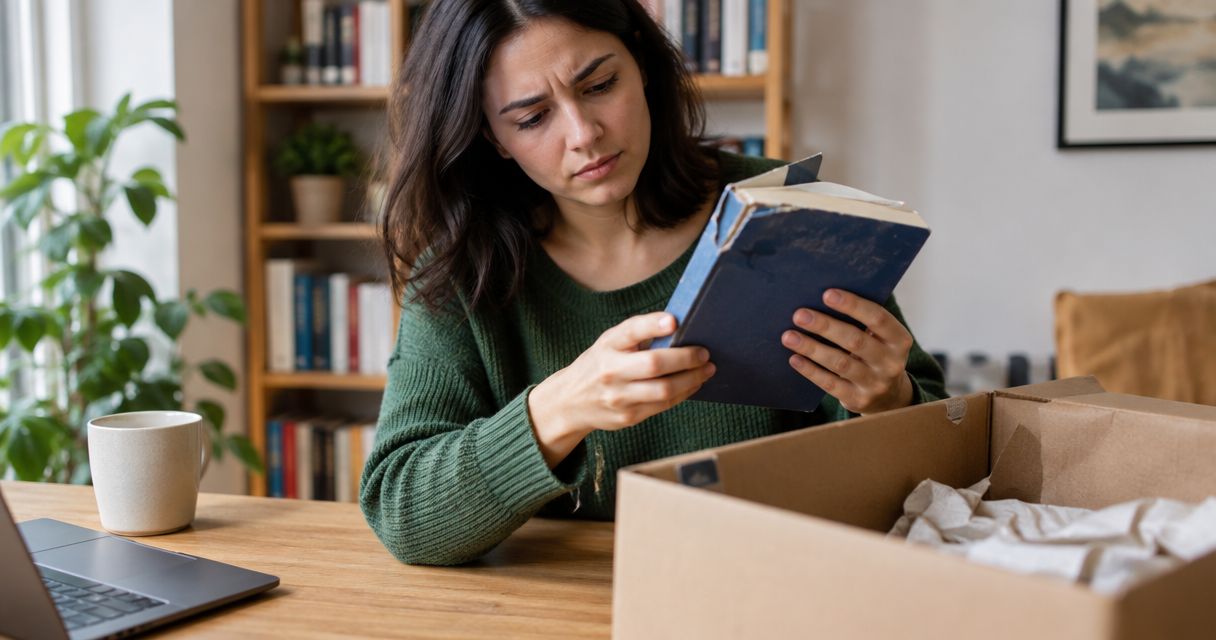
Document the damage, keep the packaging, and contact the seller through its stated problem-reporting process. Describe how the received copy differs from the listing, rather than assuming every sign of use is an undisclosed defect.
Photograph the relevant damage and retain your order confirmation. Follow any stated reporting deadline, and review your payment provider’s process if the seller does not resolve the issue. Do not assume a refund or replacement is automatic.
FAQ
Is buying used books online safe in 2026?
Yes, buying used books online is safe when you verify the seller, the copy description, the checkout, and the purchase terms. A secure connection does not establish the condition or edition of the book.
Does HTTPS mean a used-book website is trustworthy?
No, HTTPS does not prove that a seller is trustworthy. It encrypts the connection, so you still need to check business information, listings, and purchase terms.
How can I tell whether a used-book photo shows the actual copy?
Check whether the listing identifies the photograph as the actual copy, and ask the seller if it is unclear. A standard cover image does not show the individual book’s wear.
Is it safe to buy used romance books online?
Yes, apply the same seller, condition, payment, and order checks to used romance books. Confirm that you are buying the physical format and the correct series installment.
Should I reject a used book because it has a library stamp?
A library stamp alone does not tell you whether a book is suitable for reading. Check the binding, pages, other disclosed wear, and whether the markings bother you.
What should I save after ordering a used book?
Save the order confirmation, listing description, and messages about the copy. These records help you explain an incorrect item or a condition mismatch.
Does Flippinpagesbookstore add used books regularly?
Flippinpagesbookstore adds new stock weekly and sells affordable physical used books, including fiction and romance. Check the current listing for the particular copy you want to order.
One last thing
Write your deal-breaker before you browse. For your next 2026 order, that might be no highlighting, a readable paperback, or the correct next volume in a series.
That small decision keeps an appealing cover from distracting you from the copy’s actual details. If a listing does not answer your deal-breaker, ask before paying. A book you can confidently choose is a better purchase than one you have to explain away.