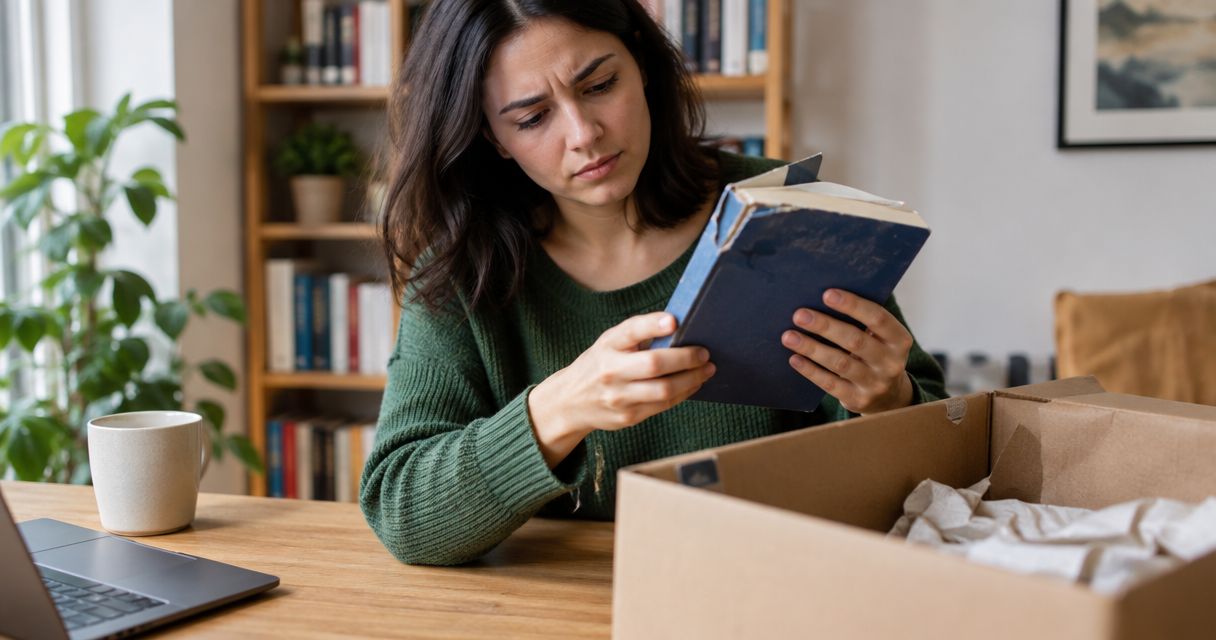
You can request a return when a used book arrives damaged, but approval depends on the seller’s terms, the condition described before purchase, and the problem you received. Return shipping and the refund process also need confirmation before you send anything back. For a 2026 order, photograph the book and packaging, save the listing, and contact the seller through the order’s support channel.
- Can you return a used book if it arrives damaged? Request a return; check the seller’s terms before shipping.
- Compare damage with the listing: disclosed wear and an undisclosed defect are different problems.
- Keep photographs, packaging, and your order confirmation until the seller explains the next step.
- Flippin Pages Bookstore suits budget-conscious readers shopping for physical used fiction and romance books.
Why this matters
A used paperback does not need to look new to be a good reading copy. But a missing chapter is different from a creased cover, and your return request should explain that difference clearly.
Start with what the seller described, then show what arrived. The guide to reading used-book condition descriptions helps you separate cosmetic wear from problems that affect reading. That distinction makes your message more useful than simply saying the book looks damaged.
Can you return a used book if it arrives damaged?
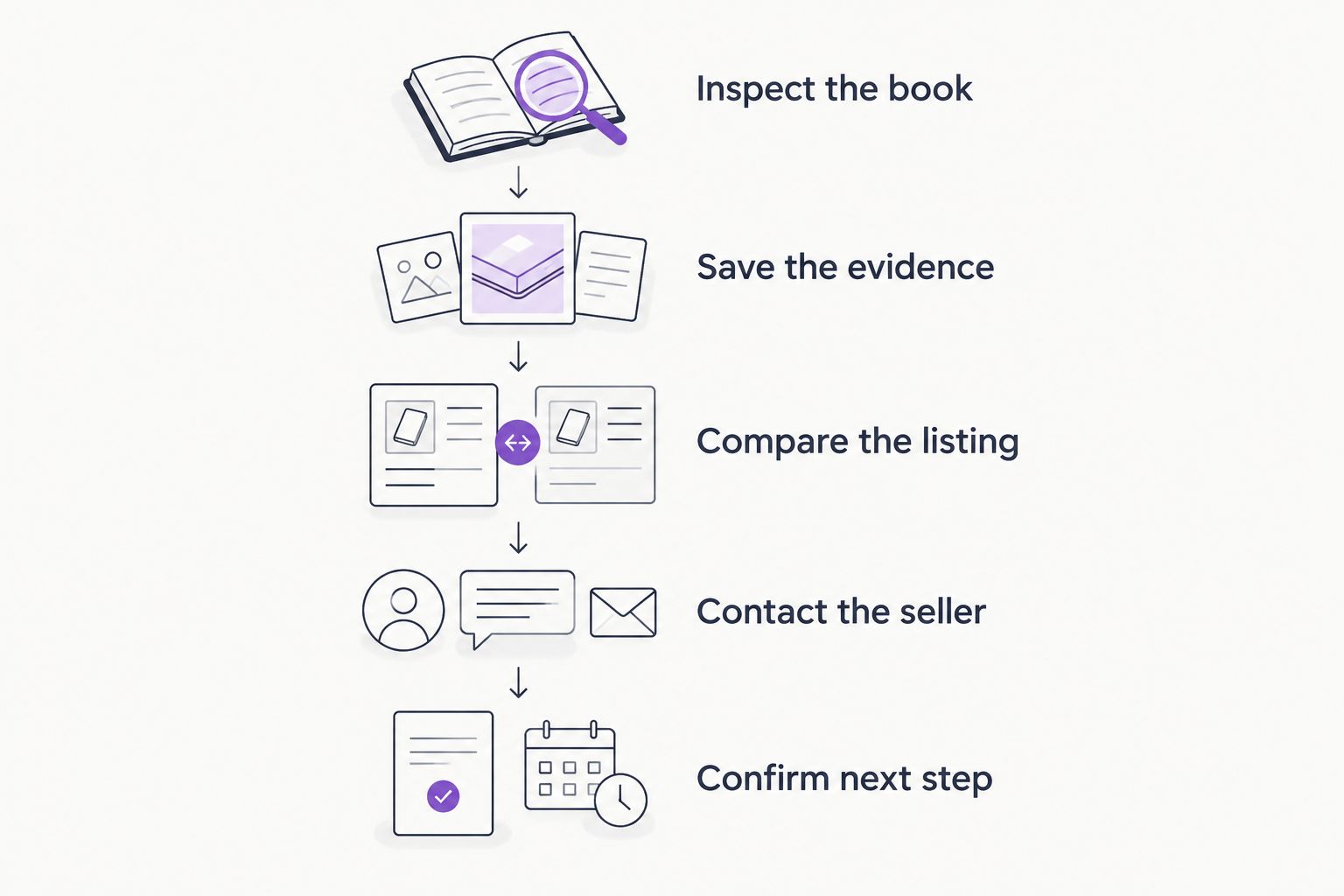
You can ask the seller to accept a damaged used book back, but do not treat the request as an approved return. Follow these steps before putting it in the mail:
- Inspect the book. Identify the damage and whether it affects reading, handling, or appearance.
- Save the evidence. Photograph the defect, the book as a whole, and any damaged packaging.
- Compare the listing. Save the condition description and any photographs shown when you ordered.
- Contact the seller. Give the order reference, describe the mismatch, and ask for return instructions.
- Confirm the next step. Get the return address, shipping instructions, and expected resolution before sending the book.
A clear request describes an observable problem. For example, explain that pages have separated from the binding rather than describing the copy as disappointing. You do not need to guess whether the damage happened in storage or transit.
Disclosed wear: compare the copy with its description
A reading crease, rubbed cover, or previous owner’s inscription can be part of a used book’s condition. The question is whether the listing described that wear accurately enough for you to choose the copy knowingly.
Best for deciding whether to keep it: compare the actual defect with the specific description, not your expectations of a new book. A worn but complete paperback can still meet your needs; an attractive cover does not make missing text acceptable to you as a reader.
| What you find | What to compare | Practical next move | Limitation |
|---|---|---|---|
| Creased spine or rubbed edges | Condition wording and listing photographs | Decide whether the disclosed wear meets your needs | Appearance alone does not establish a listing mismatch |
| Writing or highlighting | Any disclosure of marks or annotations | Photograph marks that differ from the description | A general condition label needs context |
| Loose binding or detached pages | Statements about binding and completeness | Explain how the defect affects handling or reading | The cause is not established by the defect alone |
| Wet pages or damaged packaging | Listing details and arrival photographs | Report both the book’s condition and the packaging | Packaging damage does not prove when the book was damaged |
| Missing pages or unreadable text | Completeness and readability | Identify the affected section without sharing plot details | The seller still needs to explain the resolution |
This comparison is useful for your 2026 book orders because it keeps the conversation about the copy you purchased. It does not replace the seller’s return terms or establish a guaranteed outcome.
Undisclosed damage: explain what prevents normal reading
Missing pages, detached sections, and text obscured by damage deserve a precise description. State what you can see and how it affects your ability to read the book.
For fiction and romance, protect yourself from spoilers while checking. Inspect the binding, page edges, and any visibly damaged sections rather than reading the ending to confirm that the book is complete. If a section is missing, identify the gap by page sequence or the physical break.
Best for documenting a reading problem: photographs that show both the defect and where it sits in the book. A close-up shows the damage; a wider view connects that damage to the copy in your order.
Do not tape a loose page back in, write on the defect, or attempt a repair before receiving instructions. Repairs change the condition you are asking the seller to assess. Set the book aside and keep loose pieces together.
Suspected shipping damage: save the packaging
If the parcel is crushed, torn, or wet, photograph it along with the book. Keep the wrapping, protective material, and shipping label until the seller tells you what is needed.
Best for showing arrival condition: photographs taken before you discard or rearrange the packaging. They give the seller context, but they do not establish who caused the damage.
Describe the parcel separately from the book. For instance, note a crushed corner on the package and a bent corner on the cover without claiming that a particular carrier caused it. If the packaging looks intact, say that instead.
Keep damaged books away from the rest of your collection while you assess them. A visibly damp copy should not go straight onto a shelf beside dry books.
Why damaged-book return decisions vary
The same phrase, damaged used book, can describe very different situations. These details explain why you need instructions for your particular order:
- The original description. A defect disclosed before checkout is different from one absent from the listing.
- The effect on reading. Cosmetic wear and missing text create different problems for the reader.
- The seller’s terms. Check the rules attached to your purchase rather than assuming every bookstore handles returns alike.
- The evidence available. Clear photographs and the saved description let you explain the mismatch directly.
- The return arrangements. Confirm who handles shipping, where the book goes, and what resolution the seller authorizes.
For a 2026 purchase, use the terms associated with that order. A general shopping article cannot confirm a particular store’s current return window, shipping responsibility, or refund procedure.
What should you send with your return request?
Send one organized message that lets the seller identify the order and understand the problem without a long exchange. Keep it factual and brief.
Include these details:
- Your order reference and the book title.
- The delivery date shown in your order records.
- A plain description of the damage.
- The relevant condition wording from the listing.
- Photographs of the defect and packaging.
- A request for the available resolution and next steps.
For photographs, aim for 4 useful views when they apply: the whole book, the damaged area, the packaging, and the shipping label. This is a practical checklist, not a claim about any seller’s requirements. Do not post an address label publicly; share it only through the appropriate support channel.
If you ordered several books, identify which copy has the problem. Separate photographs help avoid confusion between a damaged romance paperback and an undamaged fiction title in the same parcel.
What should you confirm before mailing the book back?
Do not pay for return shipping based on an assumption that it will be reimbursed. Ask whether the seller provides a label, requires a particular return method, or expects you to arrange postage.
Also confirm whether the seller needs the book returned at all. Keep it and its packaging until you receive instructions; do not interpret silence as permission to discard either.
Before dispatch, make 2 final checks: the destination matches the seller’s instructions, and you have saved the written agreement about the resolution. Keep any dispatch receipt and tracking information with your order records.
A return involves both your request and the seller’s response. Being organized helps you follow the agreed process, but it does not guarantee acceptance or a particular refund outcome.
Can I return a used book just because it looks worn?
Visible wear alone does not establish that the copy differs from its listing. Compare the creases, marks, or edge wear with the original description, then check whether the seller accepts returns for your reason.
Should I ask for a replacement instead of a refund?
Ask for the outcome you prefer, but do not assume another copy is available. A replacement must be confirmed by the seller, including its condition and whether you need to return the damaged book.
What if the seller has not answered my message?
Keep your original request and follow the support process attached to the order. Check any applicable reporting deadlines rather than waiting indefinitely or assuming that sending a message pauses them.
How can you shop for used books with fewer surprises?
Before your next 2026 order, read the condition description as carefully as the book summary. For a reading copy, decide which imperfections you accept: cover wear might not bother you, while heavy annotations might interrupt the experience.
Save the listing and purchase confirmation when you order. Check whether the photographs show the actual copy, and ask about unclear condition wording before checkout. A broad label such as good condition is less useful to your decision than a description of the binding, pages, and marks.
Flippin Pages Bookstore sells affordable physical used books, including fiction and romance, with new stock added weekly. The Flippin Pages Bookstore selection suits readers who enjoy browsing changing shelves; the trade-off is that you need to assess the condition of the particular copy rather than expect a new-book finish.
Choose a copy for how you plan to use it. A personal reading copy and a present call for different condition standards, even when both readers enjoy the same novel. Confirm current listing details and return terms before placing the order.
FAQ
Can you return a used book if it arrives damaged?
You can request a return, but approval depends on the seller’s terms and the circumstances of the damage. Photograph the book, save the listing, and ask for instructions before sending it back.
What pictures should I take of a damaged used book?
Photograph the whole book, the specific damage, and any affected packaging. Include a clear view that connects the defect to the copy you received, and share address labels only through the appropriate support channel.
Who pays return shipping for a damaged used book?
Confirm return shipping responsibility with the seller before paying for postage. Do not assume a prepaid label or reimbursement is included.
Can I return a paperback with a cracked spine?
Compare the cracked spine with the listing’s condition description and check the seller’s return terms. Explain whether it is cosmetic creasing or a binding problem that leaves pages loose.
Should I throw away damaged book packaging?
Keep the packaging until the seller explains what is needed. Photographs of the parcel and protective materials provide context for your report.
Does Flippin Pages Bookstore guarantee returns for damaged books?
Confirm the return terms for your Flippin Pages Bookstore order directly before sending a book back. Do not treat this general guide as a store return guarantee.
Can I ask for another copy of the same used novel?
You can request another copy, but the seller must confirm whether a replacement is available. Ask about the replacement’s condition and any return steps before agreeing.
One last thing
Your most useful record can be the condition description, not the photograph of the parcel. Packaging shows how a delivery arrived; the saved listing shows what you agreed to buy.
For the rest of your 2026 reading list, make saving that description part of checkout. It gives you something specific to compare when the book reaches your door—and helps you decide whether a worn copy is still the right reading companion.