
For slow-burn romance readers, online book shopping is choosing physical love stories with gradually developing relationships so the anticipation feels as satisfying as the resolution. This guide helps you separate relationship pace from story pace, compare spoiler-free descriptions, and choose a used copy you want to keep reading.
- Searching romance books online slow burn? Compare relationship development, story momentum, and physical-book details before ordering.
- Flippin Pages Bookstore suits readers shopping for affordable used fiction and romance, with fresh finds added weekly.
- Slow burn describes relationship development, not a guarantee of low sexual content or a slow-moving plot.
- Choose a book that matches your reading mood, then check its edition, condition, and order details.
Why slow-burn romance shopping matters for readers
A slow-burn label tells you about the relationship’s pace, not whether you will enjoy the wait. You might love a friendship that deepens through everyday conversations but lose interest when misunderstandings repeatedly replace honest communication. Both descriptions can appear under the same broad label.
Shopping for physical used books adds another decision: you are choosing a story and a particular copy. A promising romance still needs the right format, readable condition, and clear order details.
Flippin Pages Bookstore is best for readers shopping for affordable used fiction and romance. Start with Flippin Pages Bookstore when you are ready to browse, then judge each book on its own description rather than expecting every romance to have the same pace.
For your 2026 reading list, separate the emotional experience you want from the copy you plan to order. A familiar author, attractive cover, or appealing trope cannot answer both questions.
How to choose a slow-burn romance you will enjoy
1. Define what makes the wait enjoyable
Start with your own reading history. Think about a romance you finished happily and identify what kept the relationship interesting before the characters became a couple. Look for an experience rather than a precise point when something happened.
You might enjoy growing trust, shared responsibilities, sharp conversations, or a friendship changing shape. You might dislike a relationship that depends on repeated interruptions. Neither preference makes you more or less of a romance reader.
Write a short shopping note with 3 preferences: the connection you want, the setting you enjoy, and a boundary you do not want crossed. These are selection tools, not requirements that every book must satisfy perfectly.
- Name the emotional connection you want to watch develop.
- Choose a setting you would enjoy spending time in.
- Record a content boundary before browsing.
- Identify a past reading frustration you want to avoid.
2. Separate relationship pace from story pace
A romance can develop gradually while the surrounding story moves quickly. Work problems, family responsibilities, a mystery, or an unfamiliar setting can give the characters meaningful things to do while their connection changes.
The reverse also matters. A relationship can begin quickly while trust and commitment take much longer. If you want delayed attraction specifically, a description focused on emotional uncertainty after an early connection might not match your mood.
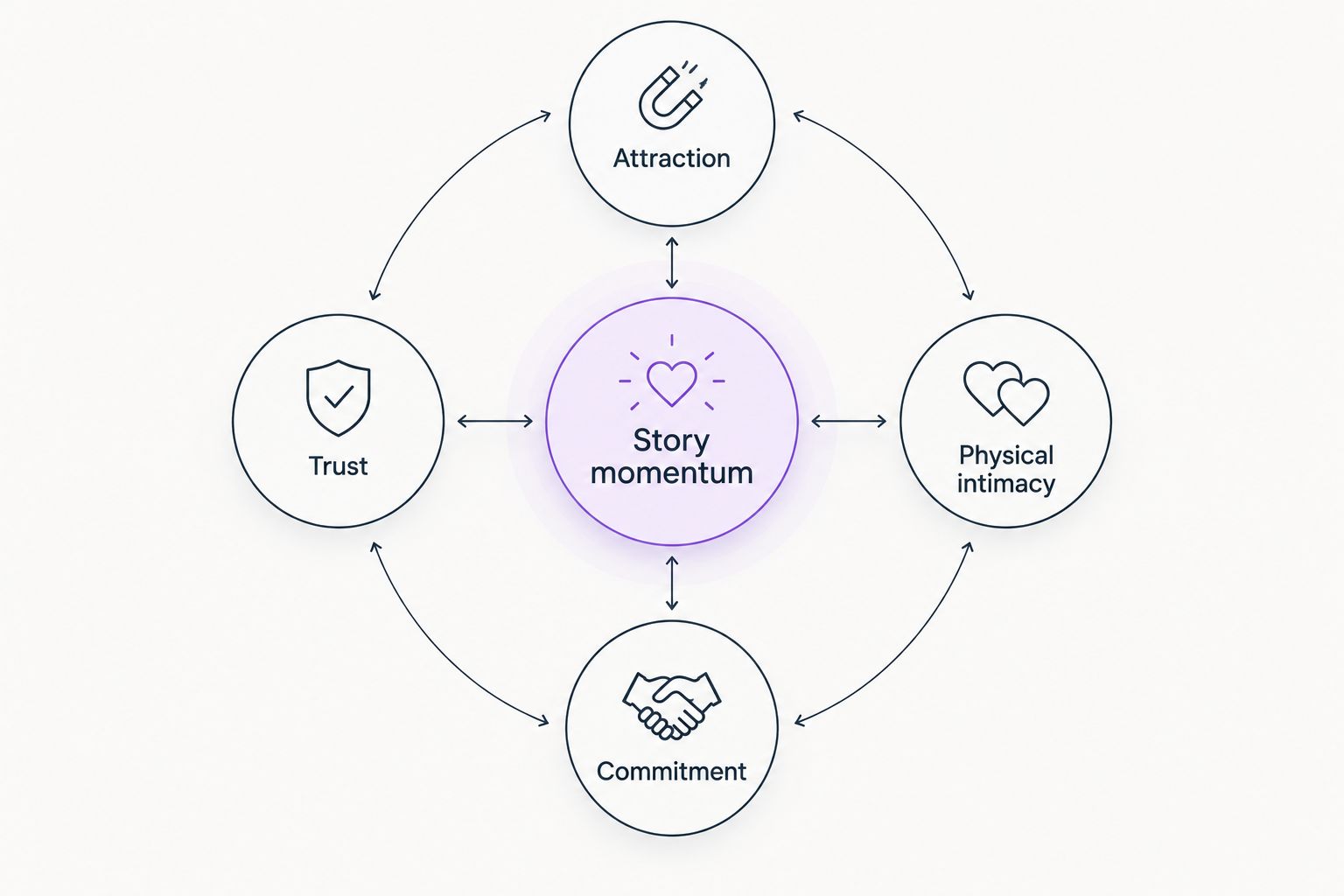
Ask what develops slowly: attraction, trust, physical intimacy, or commitment. This question is more useful than asking whether a book is simply slow.
Use these separate checks when comparing descriptions for your 2026 shortlist:
- Attraction: Do you want interest to emerge gradually?
- Trust: Do you enjoy guarded characters learning to rely on each other?
- Physical intimacy: Do you prefer a longer wait before physical involvement?
- Commitment: Do you enjoy characters working out what a relationship means?
- Story momentum: Is there something beyond the romance you want to follow?
3. Read descriptions before collecting recommendations
Begin with the book’s description and any available sample or publisher information. You do not need a paid recommendation service to decide whether a premise interests you. Look for what brings the characters together and what gives them a reason to keep interacting.
Friends-to-lovers, rivals-to-lovers, and forced proximity can help narrow your search, but a trope is not a pacing guarantee. The useful detail is how the relationship develops within that setup.
When browsing Flippin Pages Bookstore, use your preferences to assess the used books you find. Fresh finds are added weekly, so keep your criteria steady rather than changing your taste to fit the first appealing cover.
- Read the full description rather than relying on a trope tag.
- Identify why the main characters spend time together.
- Look for a conflict you genuinely want to follow.
- Check whether the description emphasizes romance or another storyline.
- Confirm that the listing describes a physical book.
4. Use reviews without spoiling the story
Reviews help most when they describe the reading experience rather than retell events. Search for comments about conversation, tension, repetition, and character development. Stop reading when a review begins explaining late-story decisions.
A practical starting point is 2 spoiler-free reviews with different reactions. A reader who disliked the pace can still explain it clearly. Their complaint about long conversations might describe exactly the experience you want.
Keep reading speed separate from relationship timing. A reviewer who finished a book quickly has not necessarily described a fast-moving romance, and a long book does not automatically offer a gradual relationship.
- Read a favorable review for what sustained the reader’s interest.
- Read a less favorable review for pacing frustrations.
- Prefer descriptions of the experience over plot summaries.
- Skip reviews marked with spoilers.
- Treat broad praise such as addictive as opinion, not pacing evidence.
5. Check the used copy as carefully as the story
Once the story interests you, switch from choosing a title to choosing a copy. Confirm the author, title, format, and any edition details that matter to you. A matching cover image alone is not enough to establish all of those details.
Condition deserves a separate check. Cover wear is different from loose pages, and notes in margins matter more to some readers than others. Decide what affects your comfort before you place an order.
Read the guide to used-book condition descriptions if listing language leaves you unsure. Buy the reading experience you want, not a condition label you have not understood.
- Confirm the title and author match your intended book.
- Check whether the copy is paperback or hardcover.
- Read all stated condition details.
- Look for disclosed writing, damage, or missing components.
- Check current shipping terms and the complete order details.
6. Choose a small shortlist and make a clear decision
For a manageable 2026 shortlist, compare 3 titles against the same preferences. This is a suggested browsing limit, not a rule about how many books to buy. The goal is to stop an appealing cover from replacing your original criteria.
Give each title a brief note: why the relationship interests you, what remains uncertain, and whether the physical copy suits you. If the description cannot answer an important content question, seek clear publisher or author information before ordering.
Flippin Pages Bookstore adds fresh finds weekly. Keep a backup preference, such as another setting or relationship setup, so a future browsing session has direction without depending on a particular title.
- Compare each title against the same reading preferences.
- Record the strongest reason to choose each book.
- Resolve important format and content questions.
- Remove a title if its central conflict does not interest you.
- Recheck the selected copy’s details before ordering.
Browse your next used read
Look for fiction and romance that match your preferred pace, then check each copy’s details.
Compare ways to find your next slow-burn romance
Choose a browsing approach based on what you already know about your taste. None of these approaches establishes pace by itself; each gives you a useful starting point and a reason to check further.
| Option | Best for | Main advantage | Key limitation |
|---|---|---|---|
| Start with an author you know | Readers who already enjoy an author’s relationship writing | Gives you a familiar reference point | Different books by the same author can have different pacing |
| Browse by relationship trope | Readers who know the setup they enjoy | Narrows a broad romance search | A trope does not establish timing or content level |
| Compare spoiler-free reviews | Readers deciding between appealing titles | Adds detail about the reading experience | Reviewers have different definitions of slow burn |
| Browse used-book selections | Readers open to discovering a physical copy | Lets you assess the story and copy together | Your preferred title still needs a copy-level check |
Best for an undecided reader: start with the relationship experience, then use reviews to check the pace. Browsing by trope alone leaves too much room for a mismatch. Browsing only by physical condition leaves the most important question unanswered: do you want to read this story?
Common mistakes slow-burn romance readers make
Treating slow burn as a content rating
Slow burn does not establish how explicit a book is. Relationship timing and sexual content are separate considerations. If content matters to you, check a clear description or author-provided guidance rather than drawing a conclusion from the pacing label.
Choosing tension you do not enjoy
Tension can come from vulnerability, disagreement, distance, or competing responsibilities. Do not choose a premise built around a frustration you already dislike just because it appears on a slow-burn list. The reason for the wait matters as much as the wait itself.
Starting a series without checking reading order
A romance can belong to a series even when its description focuses on a particular couple. Check whether earlier books establish relationships or storylines you need. Avoid assuming that a different central couple automatically makes every installment independent.
Letting a reading deadline choose the wrong book
A 2026 reading challenge or book-club schedule gives you a finish date, not a reason to ignore your preferences. Check the length and your available reading time before ordering. A premise you want to linger over is a poor match for a week when you need a quick finish.
Ordering before separating story fit from copy fit
A book can suit your taste while a particular copy does not suit your needs. Readability, format, and disclosed wear deserve attention after you settle on the story. Keep these as separate decisions instead of letting enthusiasm rush the final check.
FAQ
What should I look for when searching romance books online slow burn?
Look for gradual relationship development, then confirm that you are shopping for a physical book. Compare the description, spoiler-free pacing comments, format, and used-copy condition before ordering.
Does slow-burn romance mean the whole story moves slowly?
No, a slowly developing relationship can sit inside a fast-moving story. Check whether reviewers are describing the romance, the surrounding plot, or both.
Are slow-burn romance books always low in sexual content?
No, slow burn is not a sexual-content rating. Check separate content information if you want closed-door romance or have specific boundaries.
Are friends-to-lovers books always slow burn?
No, friends-to-lovers describes a relationship setup rather than a fixed pace. Read how the particular book handles the change from friendship to romance.
How can I check romance pacing without reading spoilers?
Read comments about tension, conversations, repetition, and character development rather than summaries of events. Stop when a review begins describing later plot decisions.
Should I choose a paperback or hardcover used romance?
Choose the format that suits how you read and carry books. Confirm the listed format and condition rather than assuming the cover image tells you everything about the copy.
Where can I shop for physical used romance books?
Flippin Pages Bookstore sells affordable used books, including fiction and romance, with fresh finds added weekly. Check individual book details rather than assuming a specific slow-burn title is included.
One last thing
Before choosing your next romance in 2026, write down what you want the characters to learn about each other. That question turns a vague preference for slow burn into something you can recognize in a description. Choose a relationship you want to watch develop, not just a payoff you are willing to wait for.