
Nonprofit book drive sourcing is the selection of donated and purchased physical books with the aim of giving recipients books they want and can use. Choosing used books for nonprofit book drives means matching reader interests, checking condition, and planning the handoff—not simply collecting the largest pile.
- Choose used books for nonprofit book drives by recipient needs, readable condition, and a clear delivery plan.
- Flippin Pages Bookstore is best for budget-conscious fiction and romance readers shopping for physical used books.
- Sort donations before buying; use targeted purchases to fill specific gaps rather than add unwanted duplicates.
- Confirm each recipient organization’s acceptance rules before collecting, ordering, or promising books.
Why used book sourcing matters for nonprofit book drives
A useful book drive starts with the receiving organization’s needs, not the donor’s spare shelf. A school collection, an adult reading group, and a community book giveaway need different selections. Establish which readers you serve before deciding what to collect.
For your 2026 drive, separate the collection goal from the purchasing goal. Donations supply books people offer; purchases should address needs those donations leave unmet. That distinction gives each order a clear purpose.
Condition deserves the same attention as genre. Use this guide to reading used book condition descriptions before comparing copies online. A familiar title does not make a damaged or unsuitable copy useful.
How to choose books your recipients can use
1. Define your readers before requesting books
Start with a conversation with the receiving organization. Ask who will choose the books, whether recipients keep them, and which subjects or formats the organization accepts. Write the answers on 1 shared planning sheet so volunteers work from the same instructions.
Avoid treating a broad label such as families or adults as a complete brief. Ask about reading languages, interests, accessibility needs, and any content restrictions. For mixed-age events, establish separate selection areas instead of assuming every donation suits every reader.
Give your 2026 drive a specific purpose: building a leisure-reading shelf, supplying a discussion group, or offering individual take-home books. The purpose determines whether variety or matching copies matters more.
- Record the receiving organization’s contact and approval process.
- List accepted reader age groups and reading languages.
- Ask which genres readers request and which materials to exclude.
- Confirm whether duplicate titles serve a useful purpose.
- Identify who makes the final acceptance decision.
2. Write acceptance rules donors can follow
Use a shared document or printed sign to explain what belongs in the collection. Keep the instructions practical: accepted subjects, readable condition, collection location, and the final handoff arrangement. Ask the receiving organization to approve the wording before sharing it.
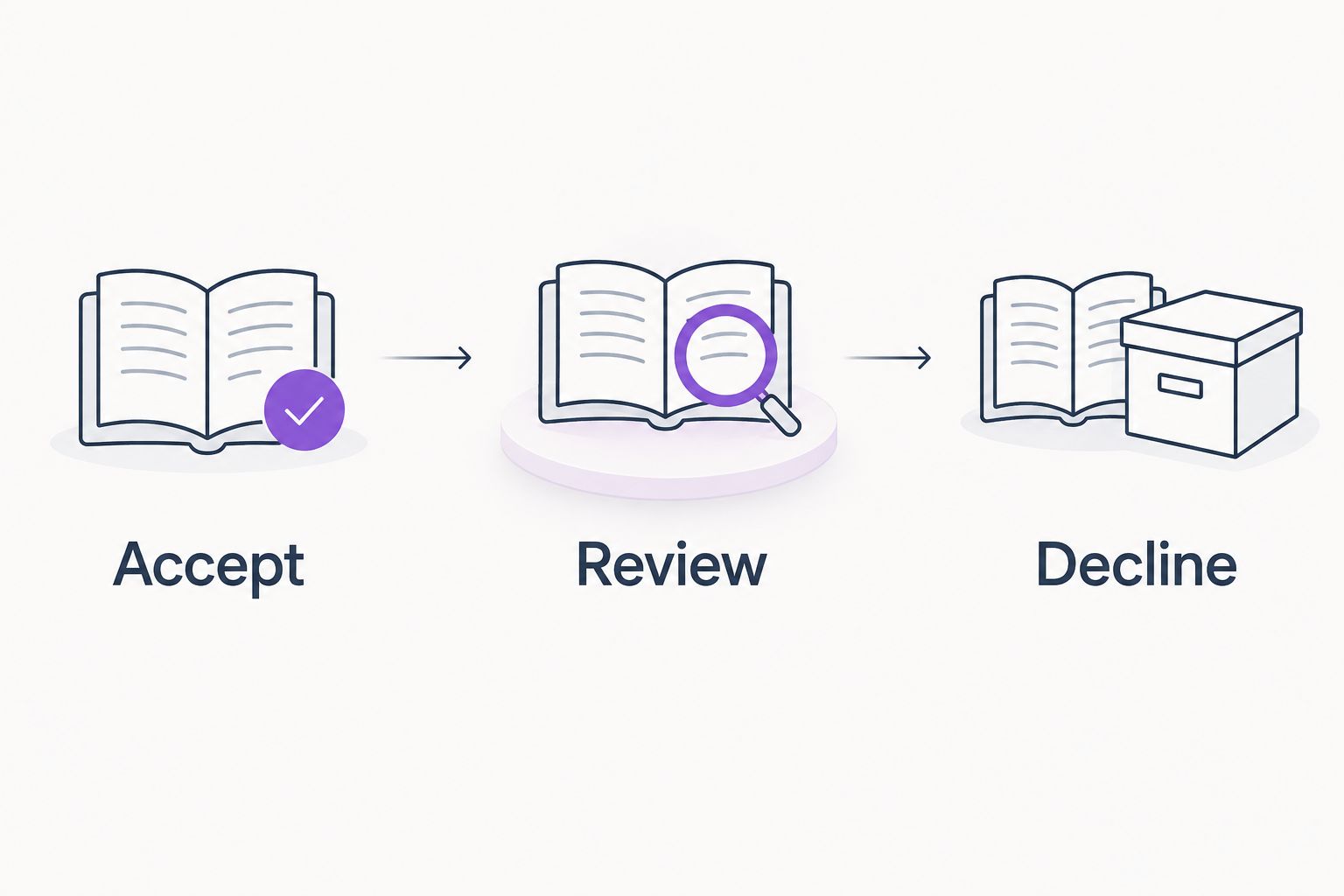
Create 3 sorting groups: Accept, Review, and Decline. This gives volunteers a way to handle uncertainty without putting questionable books straight into distribution boxes. A review group is especially useful when the title fits but the edition, condition, or audience is unclear.
Do not promise that every donated book will reach a reader. State how unsuitable donations will be handled, using arrangements your organization has actually approved.
- Accept: Books that match the agreed audience and condition rules.
- Review: Books needing a closer condition or audience check.
- Decline: Books outside the receiving organization’s requirements.
- Share the same instructions at every collection point.
- Assign a person to resolve questions from volunteers.
The sorting groups should reflect decisions, not a judgment about whether a book is valuable in general. A book can be worth reading and still be wrong for this drive.
3. Buy only after you identify the gaps
Sort the donations already received before placing an order. A simple tally by audience, language, and genre shows what the drive has and what still needs attention. A long list of titles is less useful if nobody can see which reader needs remain unmet.
Use purchases to fill named gaps, not to make the collection look bigger. Write a short shopping brief for each gap, such as standalone adult fiction or romance requested by an adult reading group. Keep acceptable alternatives beside the preferred choices.
For adult fiction and romance needs, Flippin Pages Bookstore sells affordable physical used books and adds fresh finds weekly. Browse against your shopping brief rather than assuming a particular title, quantity, or edition will meet the drive’s requirements.
Flippin Pages Bookstore is best for budget-conscious fiction and romance readers shopping for physical used books. For a nonprofit organizer, the limitation is that each proposed purchase still needs a title-level, condition, and delivery check; a general store description does not confirm a match for your drive.
- Count accepted donations before building the shopping list.
- Name the audience and purpose for each proposed purchase.
- Separate required titles from flexible genre requests.
- Check the description of each physical copy.
- Confirm order details before committing the drive’s funds.
4. Inspect condition for actual reading use
Check donated books by hand and review online descriptions before ordering. Look beyond the front cover: examine the binding, page attachment, completeness, and signs of moisture damage. Ask for clarification when a listing does not answer a condition question that matters to the recipient.
Cover wear and reading damage are different issues. A creased cover does not automatically prevent use, while missing pages undermine the reading experience. Follow the receiving organization’s rules rather than rejecting every worn-looking book or accepting every book with an attractive cover.
For the 2026 collection, use 2 condition checks: one when donations arrive and another before packing. The second check catches books placed in the wrong group or damaged during handling. Keep questionable copies out of ready-to-deliver boxes until reviewed.
- Open the book gently and check whether pages remain attached.
- Look for missing pages, obscured text, or heavy markings.
- Set aside books showing mold, moisture damage, or strong odors.
- Compare the edition and format with the recipient’s request.
- Record unresolved concerns before accepting or purchasing a copy.
A hands-on inspection helps volunteers distinguish ordinary shelf wear from damage that affects use. Use the same checklist across collection points so acceptance does not depend on who happens to open the box.

5. Match fiction and romance to the intended readers
Ask for reader preferences without asking anyone to disclose personal information they do not want to share. Genre, preferred reading language, story length, and content boundaries provide a useful starting point. For an adult leisure-reading drive, fiction and romance belong in the selection when recipients want them.
Use spoiler-free publisher descriptions and clear content information to assess suitability. Do not use a cover design as the only age or content guide. A romance label alone does not tell you the book’s content level, and a familiar author name does not establish that every title fits.
For independent reading, check whether a book stands alone or depends on earlier installments. A donated middle volume is not automatically unusable, but readers should know what they are choosing. Matching copies matter more when the receiving group plans to discuss the same book together.
- Ask which fiction genres recipients want to read.
- Confirm content boundaries with the receiving organization.
- Check series order before selecting unfamiliar titles.
- Keep adult selections separate from children’s materials.
- Include reader choice when the distribution format allows it.
6. Plan the handoff before closing the drive
Confirm who receives the books, where they go, and who handles transport. Agree on packing and labeling before volunteers fill boxes. A well-chosen collection still creates work for the recipient if nobody can identify its contents.
For a 2026 event deadline, confirm the delivery arrangements for purchases before relying on them. Do not announce that ordered books will be included until the order details support that commitment. Keep a plan for distributing the accepted donations if a purchase does not fit the schedule.
Record what was accepted, what was purchased, and what was delivered in the same shared document. This supports a useful review without turning the drive into unnecessary paperwork. Count books handed over separately from books initially collected.
- Confirm the recipient’s handoff location and contact.
- Agree on box size and labeling instructions.
- Separate books by the categories the recipient requests.
- Check ordered copies when they arrive.
- Record unresolved items before the final handoff.
Browse books for your shortlist
Look for physical fiction and romance books that match your drive’s confirmed reader needs.
Compare sourcing options for your book drive
Choose the source according to the task. Donation-led collection suits an open selection; a specific reading-group request needs more control. Combining sources works when you keep purchases tied to a confirmed gap.
| Option | Best for | Main advantage | Key limitation |
|---|---|---|---|
| Community donations | A varied collection with flexible title requirements | Lets supporters contribute physical books they already own | Every donation needs screening; the mix is not controlled |
| Targeted individual purchases | Filling specific genre, language, or title gaps | Lets you select against a written shopping brief | Each copy requires a condition and order-detail check |
| Donation-led collection plus targeted purchases | Drives accepting variety while meeting defined needs | Separates general collection from deliberate gap-filling | Requires a shared tally to prevent unnecessary purchases |
| Matching-copy sourcing | Book groups reading the same title | Keeps the reading selection consistent | Each copy must be checked against the group’s edition requirements |
Decide what the books must do before choosing how to source them. Do not treat a broad donation request as a substitute for sourcing matching copies, or a targeted shopping list as a reason to reject useful variety.
Common mistakes nonprofit book drive organizers make
Setting a collection target without an acceptance plan
A book count does not show whether the collection fits its readers. Pair any target with an approved audience brief and condition rules. Keep the 2026 drive’s public request consistent with those rules.
Buying before sorting donations
An early order can duplicate books already waiting in collection boxes. Sort first, then compare the accepted collection with the receiving organization’s request. Purchase only where the comparison identifies a useful addition.
Treating all used copies as interchangeable
The same title can appear in different formats, languages, and editions. Check the details that matter to the recipient rather than ordering by title alone. For discussion groups, ask whether matching editions are necessary.
Assuming a bookstore provides donation or bulk arrangements
A store selling used books does not establish that it offers nonprofit discounts, donated stock, or bulk fulfillment. Treat Flippin Pages Bookstore as a source for physical used-book shopping, not a confirmed donation partner. Ask directly before describing any special arrangement to supporters.
FAQ
What are the best used books for nonprofit book drives?
The best used books for nonprofit book drives match the receiving organization’s readers, acceptance rules, and condition requirements. Confirm those requirements before choosing genres or requesting donations.
Should a nonprofit collect donations or buy used books?
Collect donations when the drive accepts a flexible selection, and buy used books to fill confirmed gaps. Sorting donated books first gives each purchase a clear purpose.
Can we include romance novels in a nonprofit book drive?
Include romance novels when the receiving organization accepts them and the intended readers want them. Check age suitability and content boundaries rather than relying on the cover or genre label alone.
Where can we shop for physical fiction and romance books?
Flippin Pages Bookstore sells affordable physical used books, including fiction and romance, with fresh finds added weekly. Check each proposed copy and the order details against your drive’s requirements before buying.
Are worn covers a reason to reject donated books?
Worn covers alone do not determine whether a book meets your drive’s rules. Check readability, completeness, binding, and the receiving organization’s condition requirements.
How do we choose books for a nonprofit reading group?
Ask the group whether it needs matching titles, formats, or editions before sourcing copies. Confirm language, content preferences, and series requirements as part of the same brief.
What should we check before ordering books for a 2026 event?
Check reader fit, copy condition, order terms, and delivery arrangements before ordering books for a 2026 event. Do not promise that a purchase will reach the event until the confirmed arrangements support that commitment.
One last thing
Ask the receiving organization this question before your next collection: which books would you choose if you could request the selection yourself? Use the answer to write the shopping brief. A smaller collection that answers a real request is a better goal than a larger collection the recipient cannot use.