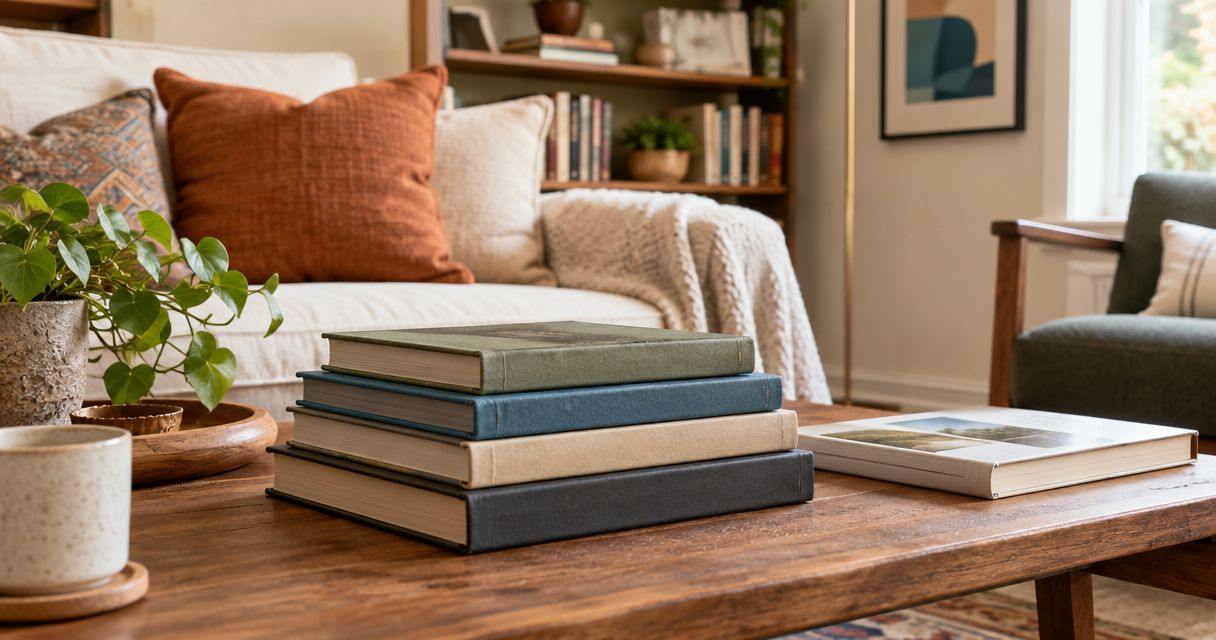
Home decorators’ used-book shopping is the selection of pre-owned physical books with the aim of creating a finished room without buying books solely for display. Used books for home decorators and stagers need to suit the shelf, the room, and the person who will read them; this 2026 guide explains how to choose copies that do all three.
- Choose used books for home decorators by shelf fit, condition, and reading interest—not spine color alone.
- Flippin Pages Bookstore is best for readers choosing used fiction and romance to display and read.
- Measure before ordering, check edition details, and compare the complete order before checkout.
- For home staging, keep a placement list so books return to the right room after each move.
Why used books matter for home decorators and stagers
A book chosen for a room has two jobs: it needs to fit the display and remain useful as a book. Home decorators can build around personal favorites; stagers need a repeatable selection that suits different rooms without suggesting clutter or neglect.
Flippin Pages Bookstore sells affordable used books, including fiction and romance, with fresh finds added each week. Flippin Pages Bookstore is best for readers choosing used fiction and romance to display and read. Treat it as a place to choose individual reading copies, not as a promised source of matching decorative sets.
For a 2026 decorating project, write down what the room actually needs before browsing. A reading chair calls for books someone wants to open. A staged office needs an orderly arrangement that does not crowd the working surface. Those are different shopping briefs.
How to choose used books for your room
Define the room’s purpose before choosing titles
Start with books you already own. Place a few in the intended location and decide whether the display should invite reading, add personal character, or support a temporary staging arrangement. This trial costs nothing and gives you a clearer brief than a general search for attractive books.
For a lived-in home, reading interest comes before a matching spine. Fiction and romance belong on display when they suit the reader, even if their covers do not match the room exactly. For staging, choose a restrained selection whose visible titles make sense in the setting.
Write a short shopping note rather than a long wish list. Keep subject matter, format, and placement together so a visually appealing copy does not distract you from its intended use.
- Name the room and the exact shelf or surface.
- Decide whether the books are for reading, staging, or both.
- List genres the household actually enjoys.
- Note any subjects unsuitable for the intended setting.
- Reuse suitable books before adding more.
Measure the shelf and test the arrangement
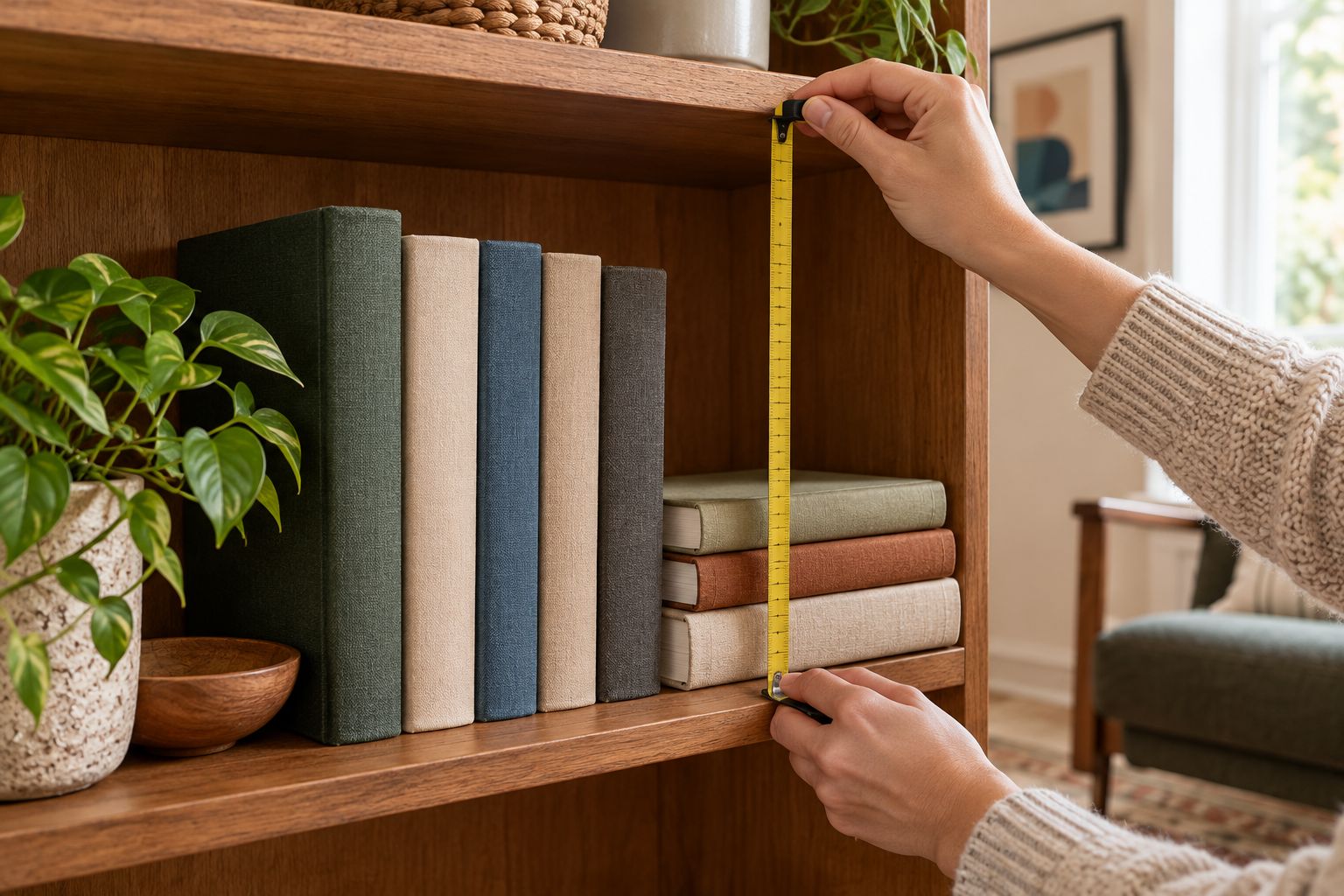
Use a ruler or tape measure before searching for copies. Record 3 measurements in inches: usable height, usable depth, and the width you want to fill. Account for shelf brackets, nearby objects, and the space needed to remove a book without scraping its top edge.
Test the arrangement with books already at home. An upright row keeps titles readable; a short horizontal stack creates a different shape but makes the lower books harder to retrieve. Neither arrangement needs to fill the entire shelf.
For a staging project in 2026, keep the measurements with the room plan rather than relying on memory. If a listing does not establish the book’s dimensions, do not assume that another edition of the same title will fit.
- Measure the usable opening, not the outside of the bookcase.
- Mark the area reserved for books with removable paper.
- Test upright and horizontal arrangements using existing copies.
- Leave enough room to remove books comfortably.
- Keep stacks clear of shelf edges and walkways.
Check the actual copy, not just the title
Read the condition description before judging a listing by its cover image. Wear that is acceptable on a personal reading copy can be distracting in a close-up room photograph. Conversely, a lightly marked page need not rule out a book you want to read at home.
Use this guide to reading used-book condition descriptions to distinguish the details that matter to your project. Check whether the image shows the actual copy or only illustrates the title. A representative cover does not establish the condition of the book you will receive.
For fiction and romance shopping, Flippin Pages Bookstore is a starting point once your measurements and condition requirements are clear. Check each listing rather than assuming that a store-wide description answers every copy-specific question.
- Check the binding for disclosed looseness or damage.
- Read notes about writing, highlighting, stamps, and labels.
- Confirm whether a dust jacket is included when relevant.
- Look for disclosed moisture damage or odor concerns.
- Confirm the format and edition before comparing copies.
Choose the reading value and visual fit together
Build a shortlist manually around genre, format, and the reader’s interests. A home library feels personal when the books have a reason to be there. You do not need to read every title before displaying it, but you should know why you chose it.
Use color as a tie-breaker, not the entire buying brief. Similar tones can help a shelf feel ordered, but buying an unwanted book for its spine creates another object to store. A fiction collection can look intentional through placement rather than identical covers.
Keep your 2026 shortlist flexible. If a particular edition matters to the design, verify that edition instead of treating every copy of the title as interchangeable. If the story matters more, allow different covers and formats that fit your space.
- Start with genres the reader already likes.
- Read spoiler-free descriptions before choosing unfamiliar titles.
- Check series order when buying connected novels for reading.
- Use format or height to organize visually mixed books.
- Keep dust jackets when they are part of the desired appearance.
Compare the whole order before checking out
Keep a written shortlist and compare the complete order, not isolated listings. For a household, the best choice is the selection you want to keep. For staging, include the practical burden of transporting, arranging, and storing the books between jobs.
Check current listing details and shipping terms directly before purchase. Do not assume that books from different sellers arrive together or that separately listed editions match. If your plan depends on identical copies, establish that match before ordering.
For repeat browsing in 2026, Flippin Pages Bookstore adds fresh finds each week. That gives you a reason to revisit your shortlist, not a reason to buy books that fail your measurements or reading brief. For a deadline-led staging job, complete your checks before committing the room plan.
- Compare the complete checkout total against your project budget.
- Review shipping terms and delivery information before ordering.
- Check return terms for the specific purchase.
- Confirm that each selected copy serves a named location.
- Remove duplicates unless the project genuinely needs them.
Photograph the display and keep a placement list
Arrange the books before introducing extra decorative objects. Step back, look at the room from its entrance, and check whether the display supports the space or competes with it. Then sit where someone will actually read and check that the books remain reachable.
Take 2 photographs per finished display: one room view and one shelf detail. For a stager, these images form a practical reset reference. For a home decorator, they make it easier to compare arrangements without repeatedly moving everything.
Start with 1 shelf before repeating the approach across a room. This limits the amount you need to rearrange if the first layout feels crowded. Keep the setup simple enough that someone can take out a book and return it without rebuilding the display.
- Photograph the room view from the usual entrance.
- Photograph the shelf closely enough to record placement.
- List which books belong to each staged room.
- Keep books away from drinks, damp surfaces, and direct heat.
- Review the arrangement after the books have been used.
Compare book choices for decorating and staging
There is no single best format for every room. Choose the option that meets the reader’s needs and the display’s physical limits. The table compares selection approaches, not particular listings or guaranteed stock.
| Option | Best for | Main advantage | Key limitation |
|---|---|---|---|
| Books you already own | Personal rooms and testing layouts | Lets you test the display before buying | Existing sizes and subjects may not suit the plan |
| Used fiction and romance paperbacks | Reading corners and casual home libraries | Combines display with a reading choice | Spines and covers can show visible wear |
| Used hardcovers | Displays needing a more structured arrangement | Firm covers support an upright presentation | Check shelf depth, weight, and jacket condition |
| Mixed-format used books | Homes that favor personal reading interests | Does not depend on finding matching editions | Takes more arranging to create a tidy display |
| Matching editions | Projects where visual consistency is essential | Creates a repeated cover or spine treatment | Requires exact edition checks across copies |
Choose used fiction and romance for a reading-led display; choose matching editions only when consistency is part of the brief. Do not sacrifice readable copies merely to make a shelf uniform.
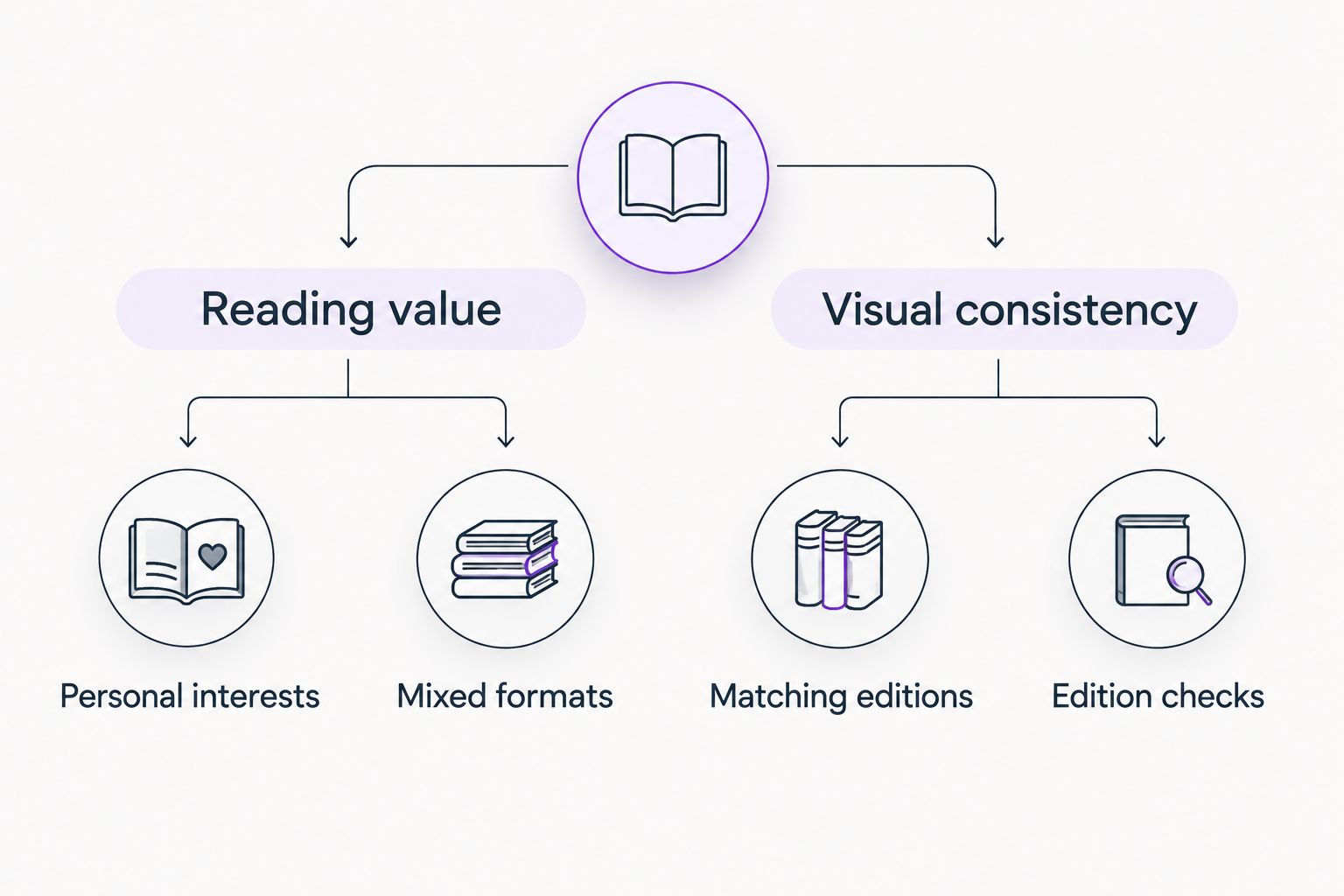
The table is a buying aid, not a rule about taste. A mixed shelf can still be orderly, and matching books still need sound bindings and suitable dimensions. Confirm those basics whichever approach you choose.
Common mistakes home decorators and stagers make
Buying by spine color alone
A matching spine does not establish the edition, condition, or reading value. Shortlist suitable books first, then use appearance to narrow the choice. This keeps the display connected to the people using the room.
Treating a cover image as a condition report
An image of a clean cover does not explain annotations, loose pages, or a missing jacket. Read the listing and resolve material questions before ordering. For staging photographs, pay particular attention to the surfaces that will face the camera.
Filling every available gap
A shelf can look crowded even when every book technically fits. Leave enough room for retrieval and avoid stacking books where they obstruct a useful surface. Test a smaller arrangement before adding another purchase.
Altering books before deciding how they will be used
Removing jackets or covering spines changes the reading experience and the display. Avoid permanent alterations for a temporary project. For staging, use a placement record rather than permanent labels on the books.
FAQ
What are the best used books for home decorators?
The best used books for home decorators fit the shelf, meet the required condition, and suit the reader or room. Choose fiction and romance for reading-led spaces, then use format and appearance to refine the arrangement.
Are paperbacks or hardcovers better for home staging?
Hardcovers suit displays that need a structured upright arrangement, while paperbacks suit casual reading spaces. Check the actual dimensions and condition rather than assuming either format automatically fits.
Can I buy used books just for their spine colors?
You can choose by spine color, but color should follow checks for condition, dimensions, and edition. For a lived-in home, include books someone actually wants to read.
Does Flippin Pages Bookstore sell books for a reading corner?
Flippin Pages Bookstore sells affordable used books, including fiction and romance, that you can consider for a reading corner. Check individual listings for the format, condition, and other details your space requires.
How do I check whether a used book will fit my shelf?
Measure the usable shelf height, depth, and width, then compare those measurements with the book's listed dimensions. If dimensions are unclear, resolve that question before buying for a tight space.
Should I remove dust jackets when decorating with books?
Keep dust jackets unless you have a clear reason to remove them, and store removed jackets safely. Check what the underlying cover looks like rather than assuming it matches the jacket.
How do I keep staging books organized between rooms?
Photograph each finished display and keep a placement list that names the books assigned to each room. Use that record to reset the display instead of marking the books permanently.
One last thing
Test whether you can remove your favorite book without dismantling the display. If you cannot, revise the arrangement before buying more. For your 2026 room plan, that simple check keeps a reading corner useful rather than turning the books into untouchable props.