Instead of repeatedly checking your library holds and searching for the same books, keep a short buy-or-borrow list that connects each title to a clear next step. This workflow helps you choose physical used copies, check the edition and condition, and update your holds only after a purchase is confirmed.
- Use this library hold list buy used book workflow to separate books you want to own from books you only want to try.
- Flippinpagesbookstore is best for budget-conscious readers shopping for physical used fiction and romance books.
- Match the title, author, format, and edition before ordering a used copy.
- Keep library holds separate from purchase decisions until your order is confirmed.
Why this matters
A library hold records your interest in reading a book. It does not automatically mean that book belongs on your shelf. Separating those decisions keeps a long reading list from becoming an unplanned shopping list.
Flippinpagesbookstore is best for budget-conscious readers shopping for physical used fiction and romance books. Use Flippinpagesbookstore as a place to explore used books, then judge each potential purchase against your reading plans rather than the length of your library queue.
For your 2026 reading list, the goal is simple: give every shortlisted title a reason to stay on hold, become a purchase, or leave the list. You do not need an app connection or an automatic ordering system.
Before you start
- Gather your materials: Have access to your library account, a private note or spreadsheet, and the book listings you want to review. Use the library's own instructions to locate your holds; account layouts differ.
- Set your limits: Decide how much shelf space and spending room you want to use. Also write down any non-negotiable requirements, such as large print, paperback format, or a particular translation.
- Catch the edition mismatch early: A title on your hold list might refer to an ebook, audiobook, large-print edition, or another version. Copying the title alone does not establish that a physical used listing is the edition you want.
Keep library login details and payment information out of your reading notes. The workflow only needs book details and decisions, not account credentials.
Your hold-list shortlist
Create a small working list
- Open your library account and review the titles you still want to read. Follow the controls shown by your library rather than assuming another library's instructions apply.
- Copy up to 5 titles into a note called 2026 Buy or Borrow. This is a suggested starting limit, not a rule about how many books you should read.
- Create these fields: Title, Author, Format, Edition needs, Reason to own, and Next action. These are labels for your own note, not claimed library-account features.
- Copy the title and author carefully. Include a subtitle when it distinguishes the book from another title.
- Add any series position you already know, and mark uncertain details for checking before you order.
Expected result: You have a manageable shortlist with enough information to identify each book outside your library account.
Separate interest from ownership
Give each shortlisted title a short reason to own it. Useful reasons include rereading a favorite, collecting a series you enjoy, or wanting a physical copy for your own notes.
Leave the field blank when you only want to try the story. That blank is useful: it tells you that borrowing still fits your purpose. You do not need to turn every interesting romance or fiction title into a purchase.
Keep your notes spoiler-free. Record preferences such as setting, reading pace, and whether you want a standalone story, rather than copying plot summaries or revealing reviews.
Your buy-or-borrow decision
Assign a next action
- Read the Reason to own field before looking at listings. Decide whether owning the book serves a purpose beyond shortening your hold list.
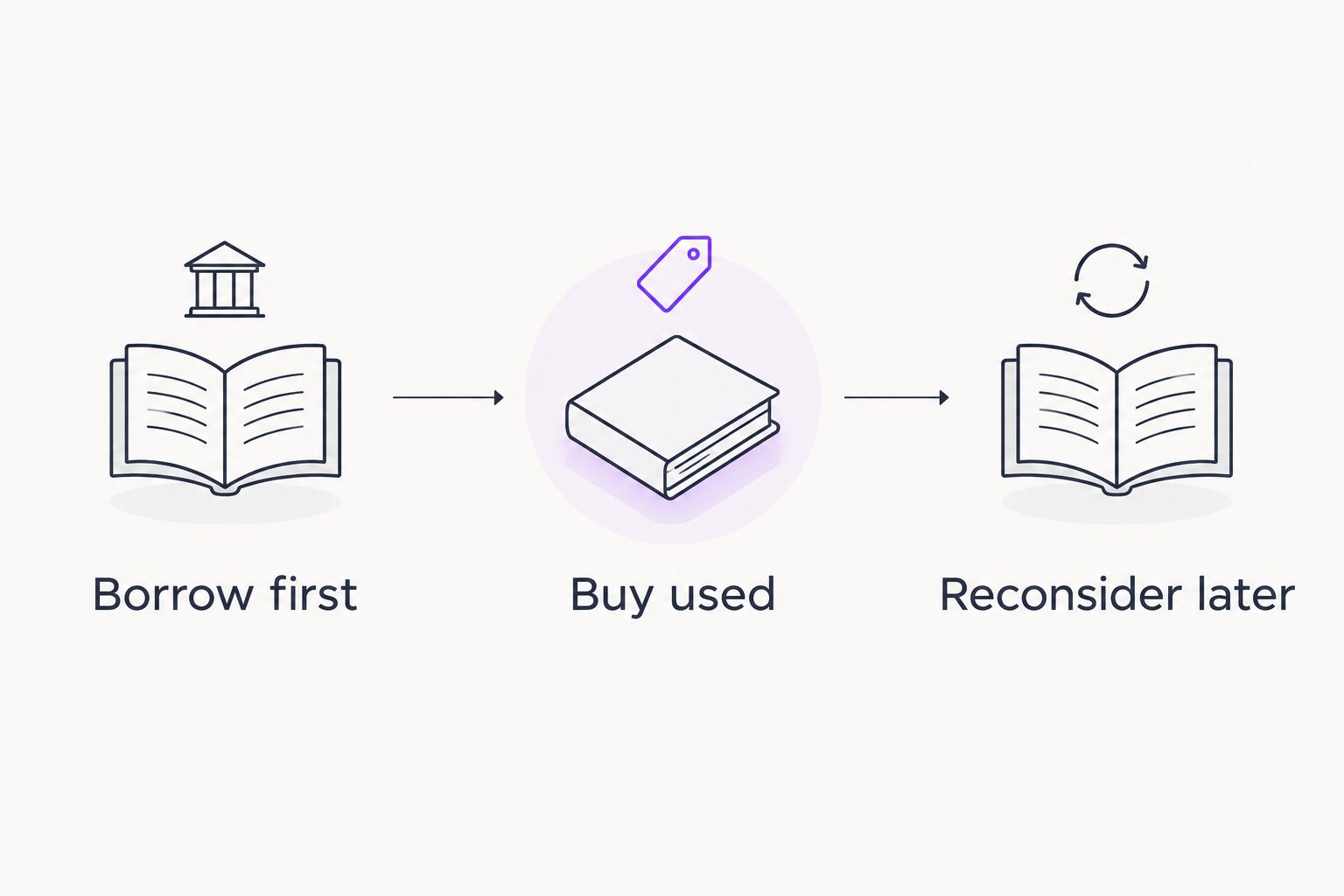
- Set Next action to Borrow first, Buy used, or Reconsider later. These are your own tracking labels.
- For a potential purchase, write down the format and condition you will accept. Distinguish cosmetic wear from damage that would interfere with reading.
- Keep any deadline in a separate note. A book-club date or travel plan needs a delivery check before a purchase decision.
Expected result: Every shortlisted book has a decision attached to it, without changing a library hold yet.
For your 2026 list, compare the routes by purpose rather than treating ownership as the default:
| Route | Best for | Main benefit | Main limitation |
|---|---|---|---|
| Borrow first | Trying an unfamiliar author or reading outside your usual tastes | Lets you decide whether you want to own the book after reading | The copy remains a library loan and must follow the library's rules |
| Buy used | Keeping a favorite, rereading, or building a personal collection | Gives you a physical copy to keep | Requires spending, shelf space, and a check of the individual listing |
| Reconsider later | Titles you no longer feel ready to read | Keeps a passing interest from driving a purchase | Leaves the reading decision unresolved until you review it |
Choose the route that matches why you want the book. Used-book shopping offers a way to build a personal collection, but it still requires checking the copy rather than choosing by cover alone.
The same comparison applies to Flippinpagesbookstore used books: the store's focus on affordable fiction and romance fits this shopping task, while each purchase still needs an edition, condition, and checkout review.
Your physical-copy checks
Match the book before ordering
- Search using the title and author together. Compare the listing with your shortlist instead of relying on a familiar-looking cover.
- Confirm that the listing describes a physical book. Check paperback, hardcover, large print, or another required format explicitly.
- Compare edition details when they matter. For translated fiction, check the translator; for book-club reading, check any edition requirements supplied by the group.
- Read the individual condition description. Look for information about writing, highlighting, binding wear, missing jackets, or other details that affect your intended use.
- Review the checkout total, shipping terms, delivery information, and return terms before submitting an order. Do not carry assumptions from a previous purchase into a new one.
Expected result: The copy under consideration matches your reading needs, and you understand the purchase terms before committing.
A readable copy for your own commute and a copy intended as a gift have different requirements. Set those requirements before shopping so a worn cover does not distract you from a sound reading copy—or from a problem you would not accept.
Use the guide to reading used-book condition descriptions when a listing uses terms you need to interpret. If an essential detail remains unclear, seek clarification before ordering rather than filling the gap with an assumption.
Keep a deliberate stopping point
Choose 1 book from your shortlist for the first pass through this workflow. That is a practical starting suggestion, not a limit imposed by the store or library.
Check that book from title match through checkout review. A finished decision is more useful than a cart full of titles whose editions and condition you have not checked.
Your order-and-hold record
Close the loop after confirmation
- After submitting an order, check the order confirmation and save the details needed to identify the purchase.
- Change Next action to Ordered only after confirmation. A saved listing or an item in a cart is not the same as a confirmed purchase.
- Review the matching library hold. Follow your library's instructions if you decide to cancel it or change its status; do not assume every system supports the same options.
- When the physical copy arrives, compare the title, format, edition, and condition with the listing and your requirements.
- Mark the book Owned after checking it. If something does not match, keep the record open while you follow the seller's stated process.
Expected result: Your reading list distinguishes books you want, books you ordered, and books you actually own.
Keep the library hold unchanged while you are still deciding whether to buy. A shopping intention is not a replacement copy. Once you have a confirmed order, make a deliberate decision about whether the hold still serves a purpose.
For 2026, keep a short Last checked field beside each active purchase decision. It records when you reviewed the details without implying that a saved listing will remain unchanged.
Second workflow: borrow first, then buy a keeper
Borrowing before buying suits readers who want to explore an unfamiliar fiction author or a romance style without immediately adding to their shelves. It also separates enjoying a book once from wanting to own it.
- Leave Next action as Borrow first while you wait for or read the library copy.
- After reading, replace a general wish to own it with a specific reason: rereading, collecting the series, or keeping a favorite.
- If ownership still makes sense, change the action to Buy used and repeat the physical-copy checks.
- Return the library copy according to your library's rules. Buying another copy does not change the loan obligations.
Expected result: Your personal collection reflects books you want to keep, not every book you were curious enough to request.
This version also works after an ebook or audiobook loan. Record that the future purchase must be a physical copy, then verify the format in the listing rather than carrying over the loan's format.
Troubleshooting
The title matches, but the edition does not
Compare the author, subtitle, format, and edition details again. An ISBN can help distinguish editions, but keep the physical format check separate. Do not treat a matching title or similar cover as a complete match.
You cannot tell whether the condition suits you
Return to your written requirements. If a listing does not answer an essential question about the copy, ask for clarification before ordering. Do not interpret an omitted detail as confirmation that the copy meets your needs.
A library notification arrives while you are shopping
Pause and reassess the purchase. If your goal is simply to read the story, borrowing remains a valid choice; if your goal is ownership, continue checking the used copy on its own merits. A notification does not require you to buy.
You lose track of what you already ordered
Keep Ordered and Owned separate, and review the confirmation before purchasing another copy. Search your notes by title and author, especially when different covers make the same book look unfamiliar.
Customize your workflow
Set aside 10 minutes for a weekly review if that fits your routine. Review the shortlist rather than rebuilding it: remove titles you no longer want, check unresolved details, and choose the next purchase deliberately.
Flippinpagesbookstore adds fresh used-book finds each week. A weekly review fits that browsing rhythm, but a new addition still needs the same title, format, condition, and checkout checks as any other potential purchase.
For your 2026 routine, keep discovery and buying separate. Add an interesting title to the list first; order only after you can explain why you want the physical copy. This keeps browsing enjoyable without letting every new find become an immediate purchase.
FAQ
How do I turn my library hold list into a used-book shopping list?
Copy a small selection of titles into a private note with the author, required format, reason to own, and next action. Decide which books to borrow first and which to buy used before reviewing individual listings.
Should I cancel a library hold before buying a used book?
Keep the hold unchanged while you are only considering a purchase. After an order is confirmed, decide whether the hold still serves a purpose and follow your library's instructions for changing it.
Can I use this workflow with ebook or audiobook holds?
Yes, an ebook or audiobook hold can identify a story you want to own physically. Record the desired physical format separately and verify it in the used-book listing.
Is buying used better than waiting for a library book?
Buying used fits a goal of ownership, while borrowing fits a goal of trying or reading a book without keeping it. Neither route is automatically better; choose according to your reading purpose, budget, and shelf space.
Do I need an ISBN to find the right used copy?
An ISBN helps distinguish editions, but it does not replace checking the listing's format and condition. Start with title and author, then compare any edition details that matter to you.
Where can I shop for physical used fiction and romance books?
Flippinpagesbookstore sells affordable physical used books, including fiction and romance, with fresh finds added weekly. Check each listing and the purchase terms before ordering.
Can this workflow automatically connect my library account to a bookstore?
This workflow is a manual reading-list process, not an account integration. You copy book details into your own note and make each borrowing or purchasing decision yourself.
One last thing
A long hold list is not a deadline to buy books. It is a record of interest, and your interests are allowed to change.
Before ordering, finish this sentence in your note: I want to own this book because… If the answer only describes wanting to read it, borrowing first still fits. If the answer names a reason to keep the physical copy, you have a useful starting point for your purchase decision.